




Driving the 2020 Corvette Stingray
Road and track impressions of the all-new midengine Corvette from a veteran engineer and magazine tester.
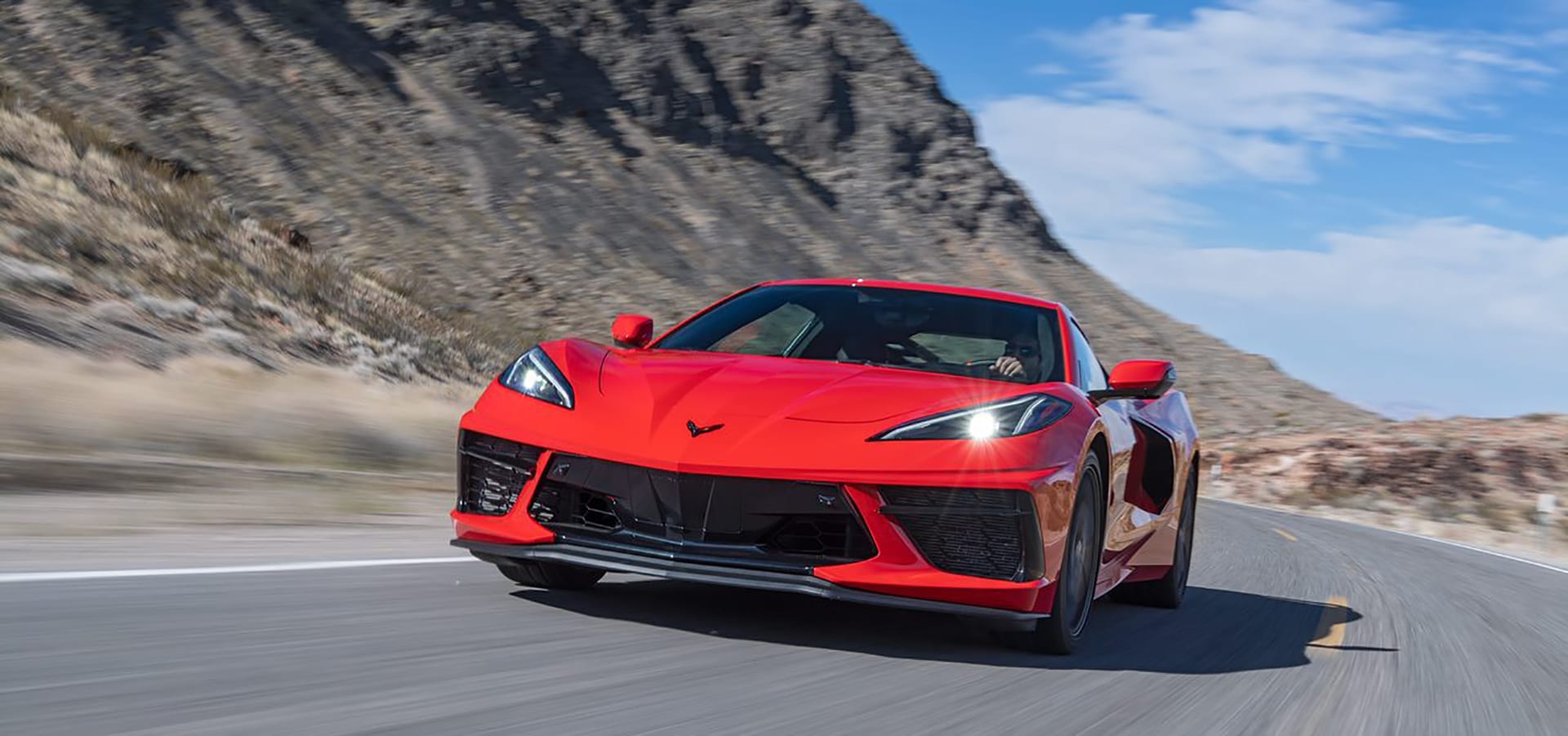
Grasping the true beauty of Chevy’s new 2020 Corvette supercar demands a deep dig. You must venture beyond the exciting-to-a-fault exterior skin and the lavish stitched-leather, buffed-metal, and carbon-fiber-embellished interior. You have to look past the revolutionary powertrain and chassis engineering. Nor will you discover the 2020 Corvette’s place in the cosmos by summing up its performance stats.
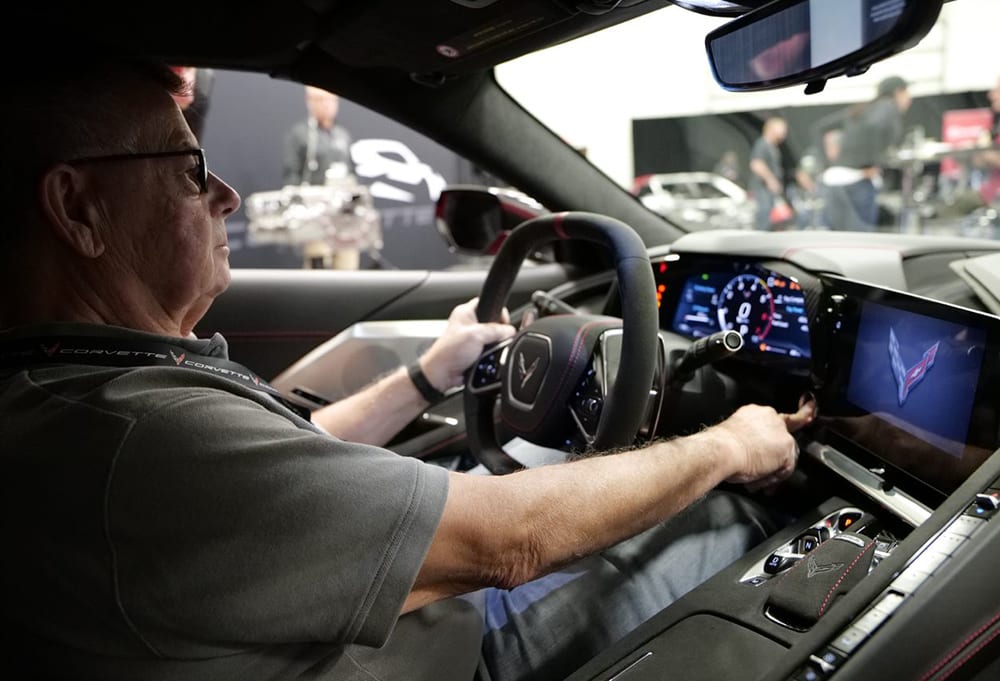
In fact, beyond the major improvement in acceleration from rest (0-60 mph [97 km/h] easily cracking the 3-sec. barrier), several indices—curb weight, Cg height, polar moment of inertia, drag coefficient and frontal area—have moved in the wrong direction. In the end, driving this car is the only means of gauging the leap the Corvette engineers have achieved with their rejuvenation of “America’s sports car.”
The first surprise is a quiet, pleasant ride over less-than-perfect pavement. A cabin unencumbered by noise and turbulence even with the roof panel stowed. Steering that locks onto straight paths and sweeping bends with fierce determination. The balance and predictability at the limit of cornering adhesion is rewarding to drivers ranging from rank amateurs to veteran track stars. Gathering up a slide is a cinch. The brake pedal is equally reassuring with its immediate response, linear force-versus-deceleration calibration and ample stopping-power reserves.
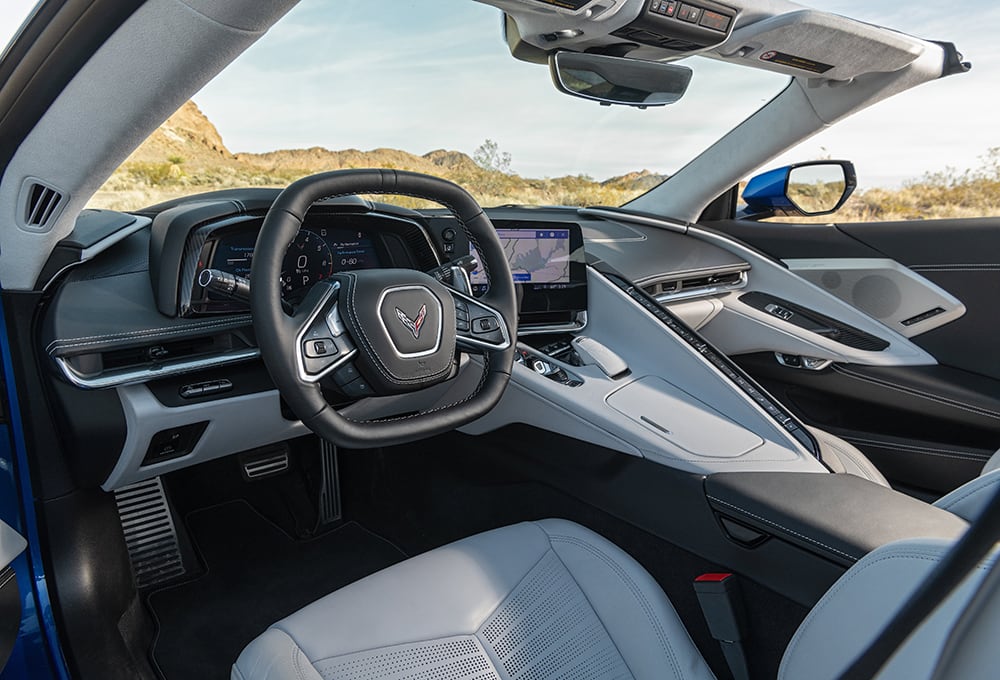
There are two design highlights worth noting. The first is the square-corner steering wheel that shouts “why didn’t I think of that?” It’s both instantly engaging and highly functional by providing an unrestricted view of the comprehensive electronic instrument cluster. The second advance is dispatching the clutch pedal to the retirement home. There’s no denying that two clutches are better than one in this instance. The paddle-shifted 8-speed automatic provides a wealth of functions no “stick” can match: quicker shifting, seamless operation and the ideal gear for every situation.
Of course, hardcore traditionalists will miss their pedal and shifter pets, but I predict that even they will come to enjoy the Corvette’s new dual-clutch automatic.
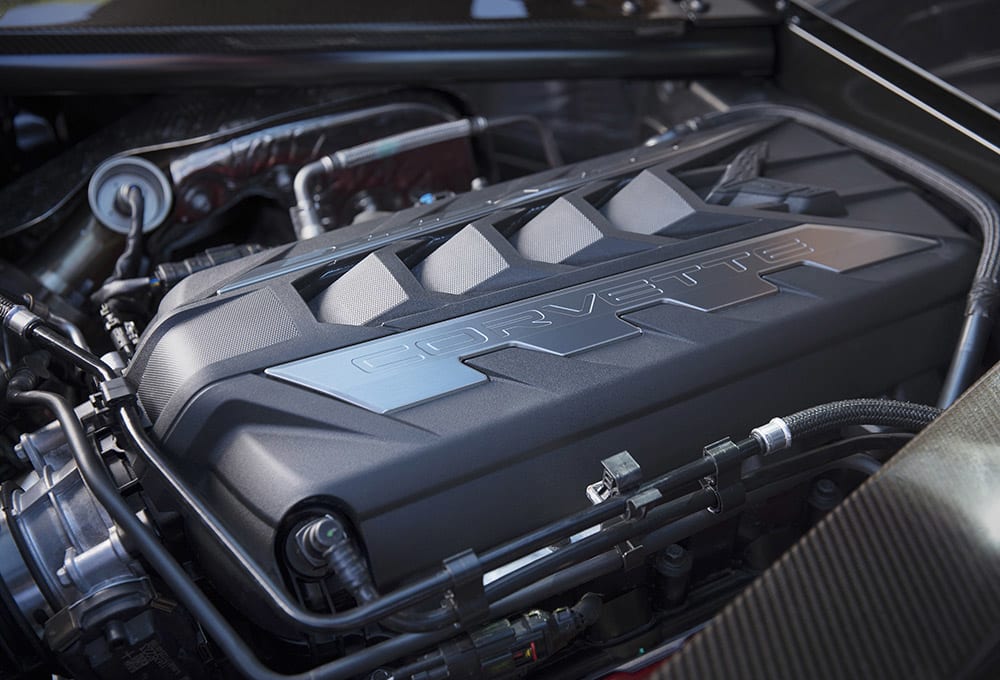
There are a few venial sins to mention. The weird engine cover does not flatter the exceptional engineering residing below. The bundling board that splits the cockpit into two zones can make the cabin feel claustrophobic. Rear-three-quarter visibility is poor and not fully resolved by the wide-angle view of the optional camera-image rearview mirror.
Also, there is one driving attribute that those Porsche owners who make the leap to the new Corvette will pine for: steering feedback. While C8’s steering response and effort are both superb, there’s little evidence at the steering-wheel rim of that’s going on at the tire-to-road interface. Once the final software calibrations are in place and Bowling Green is cranking out perfect Corvettes, we’d love to see the engineering team focus on improving this important detail.
More From SAE Media Group
Automotive Engineering
Ford’s Max Mustang Brings ‘World Class’ into the Sports Coupe Conversation
Automotive Engineering
NAIAS 2022: Seventh-Generation of Ford Mustang Is Highest Performer Yet
Automotive Engineering
What We’re Driving: 2018 BMW M5
Automotive Engineering
Chevrolet Unveils 2024 Corvette E-Ray Hybrid
Automotive Engineering
2025 BMW M5 First Drive: Stuffed like Schnitzel with PHEV Tech
Automotive Engineering
Ford’s Latest Mustang Improves the Breed

Automotive Engineering
Tuning the 2024 Corvette E-Ray for Exceptional Drivability

Automotive Engineering
2019 Chevrolet Corvette ZR1
Automotive Engineering
Volkswagen Unveils New-Generation Golf R
Automotive Engineering
NAIAS 2019: Shelby GT500 Most Powerful and Advanced Mustang in Ford History
Automotive Engineering
What We’re Driving: 2020 Nissan Sentra 2.0 SR CVT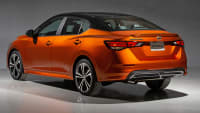
Automotive Engineering
2018 Jeep Wrangler Unlimited Rubicon
Automotive Engineering
2019 Suzuki Jimny
Automotive Engineering
Cadillac Reveals 2025 CT5-V and CT5-V Blackwing with More Tech
Automotive Engineering
Tackling the Elements with the Ineos Grenadier Quartermaster and Wagon
Automotive Engineering
2018 Ford Fiesta Active
Automotive Engineering
Hyundai Puts the N in Performance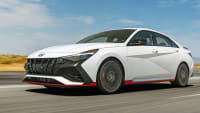
Automotive Engineering
2018 Toyota Corolla
Automotive Engineering
2020 Range Rover Evoque
Automotive Engineering
2020 Toyota Camry TRD
Automotive Engineering
Tested: 2025 Mercedes-Benz G 580 Spins up a Winner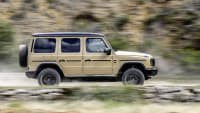
Automotive Engineering
Engineering the 2020 Chevrolet Corvette
Automotive Engineering
What We’re Driving: 2020 BMW X3 M Competition
Automotive Engineering
Dodge Debuts Charger Daytona SRT Concept Electric Musclecar
Automotive Engineering
First Drive: 2026 Hyundai Palisade
Off-Highway Engineering
No Fear of Loading: Driving the 2025 Ram Heavy Duty
Automotive Engineering
2025 Kia Carnival MPV Hybrid Brings Unplugged PHEV Power
Automotive Engineering
Porsche Wet Mode Integrates Tech Under One Umbrella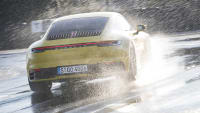
Top Stories
INSIDERDefense
 New Raytheon and Lockheed Martin Agreements Expand Missile Defense Production
NewsAutomotive
 Ford Announces 48-Volt Architecture for Future Electric Truck
INSIDERManufacturing & Prototyping
 Active Strake System Cuts Cruise Drag, Boosts Flight Efficiency
ArticlesTransportation
 Accelerating Down the Road to Autonomy
INSIDERMaterials
 How Airbus is Using w-DED to 3D Print Larger Titanium Airplane Parts
Road ReadyTransportation
Webcasts
Electronics & Computers
 Cooling a New Generation of Aerospace and Defense Embedded...
Power
 Battery Abuse Testing: Pushing to Failure
Connectivity
 A FREE Two-Day Event Dedicated to Connected Mobility
Automotive
 Quiet, Please: NVH Improvement Opportunities in the Early Design Cycle
Transportation
 Advantages of Smart Power Distribution Unit Design for Automotive &...
Aerospace
 Sesame Solar's Nanogrid Tech Promises Major Gains in Drone Endurance