




CES 2020: Mercedes VISION AVTR Concept a Beacon for Sustainability
Inspired by the James Cameron film “Avatar,” the recyclable concept envisions a completely new interaction between humans, machines and nature.
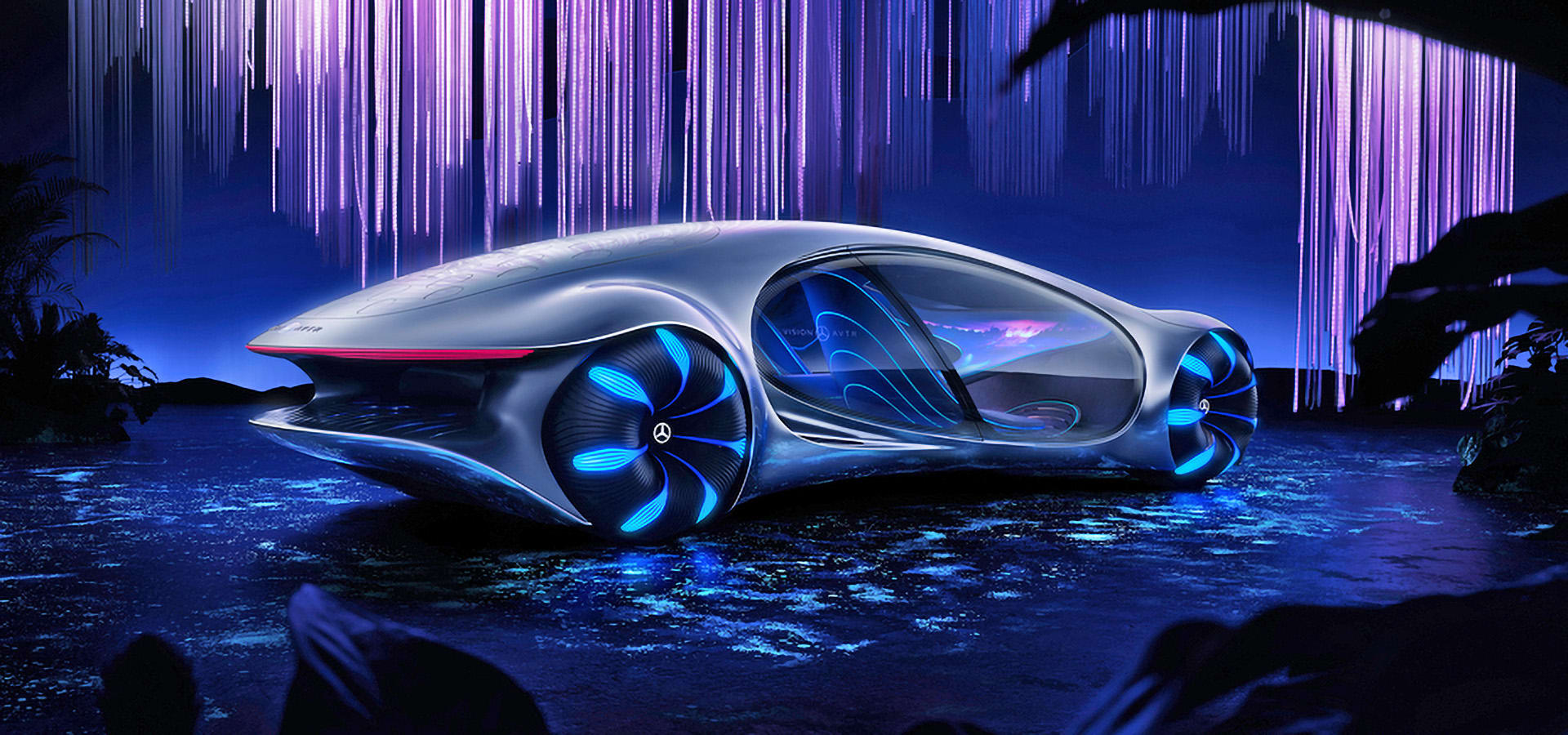
At the keynote for the 2020 Consumer Electronics Show (CES) in Las Vegas, Mercedes-Benz unveiled its VISION AVTR concept vehicle, which represents a far-forward look at the company’s products in terms of design, materials and technologies. Inspired by the James Cameron film Avatar (with the director on hand at CES for its reveal), and representing a sustainable vision of zero-emission mobility, the VISION AVTR concept was introduced by Ola Källenius, M-B’s chairman of the board.
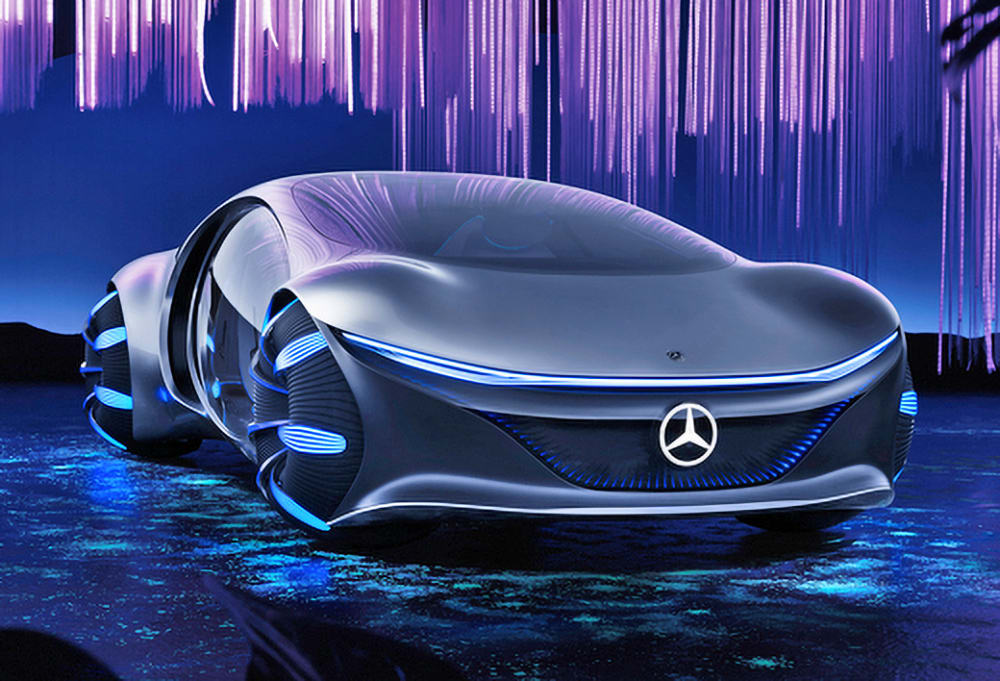

The fully-electric, AWD, 4-seat concept features a 110-kWh battery and a 700-km (434-mi.) range, and is M-B’s idea of sustainable luxury – a form of electromobility “in harmony with people and nature.” The VISION AVTR concept uses 100%-recyclable organic battery technology and leverages a host of artificial intelligence (AI) to maximize vehicle performance and efficiency, including integrated solar-panels designed to provide power back to the grid.
James Cameron’s Avatar team reportedly collaborated closely with the M-B engineering team on the concept to inspire new forms of interaction with a vehicle. AVTR is also an acronym for Advanced Vehicle TransfoRmation, embodying the future mobility vision of Mercedes-Benz designers, engineers and trend researchers for the distant future.
At the CES keynote, Källenius emphasized the idea of auto manufacturing as a sustainable enterprise both in terms of materials and in the energy required for propulsion. “The philosophy of reduce, reuse and recycle will lead us to our ultimate goal: the zero-impact car – a car that uses technology to provide maximum fascination for people but has zero negative impact on the planet,” he said. “This may be in the distant future. But it's our goal nonetheless.”
All-new design and UX
The VISION AVTR uses what M-B calls a holistic concept that fuses styling by combining the design themes of the exterior, interior and user experience (UX), a design structure labeled “inside-out.” Inspired by several creatures from the movie Avatar, its stretched "One Bow" organic design supposedly offers some keen insight into M-B’s future design language.

There is no steering wheel, with the tiller replaced by a multifunctional control element in the center console. Owners place a hand on the control unit to wake up the vehicle, and it can recognize an owner by their heartbeat and respiratory pattern. By lifting a hand, a menu is projected onto the owner’s palm, permitting a selection of functions. A dash converted into a “curved display module” to is used to present info and connect passengers to the outside world.
Compostable battery chemistry
A first for M-B, the VISION AVTR concept uses a battery featuring a graphene-based organic cell chemistry that is free of rare-earth elements and metals. The materials of the battery are recyclable and even compostable, making them free from fossil resources and looping the vehicle into part of the “circular economy.” That sustainable vision extends to the interior, which uses M-B’s vegan Dinamica leather, and the AVTR’s floor is covered by a fast-growing rattan called Karuun, harvested by hand in Indonesia.
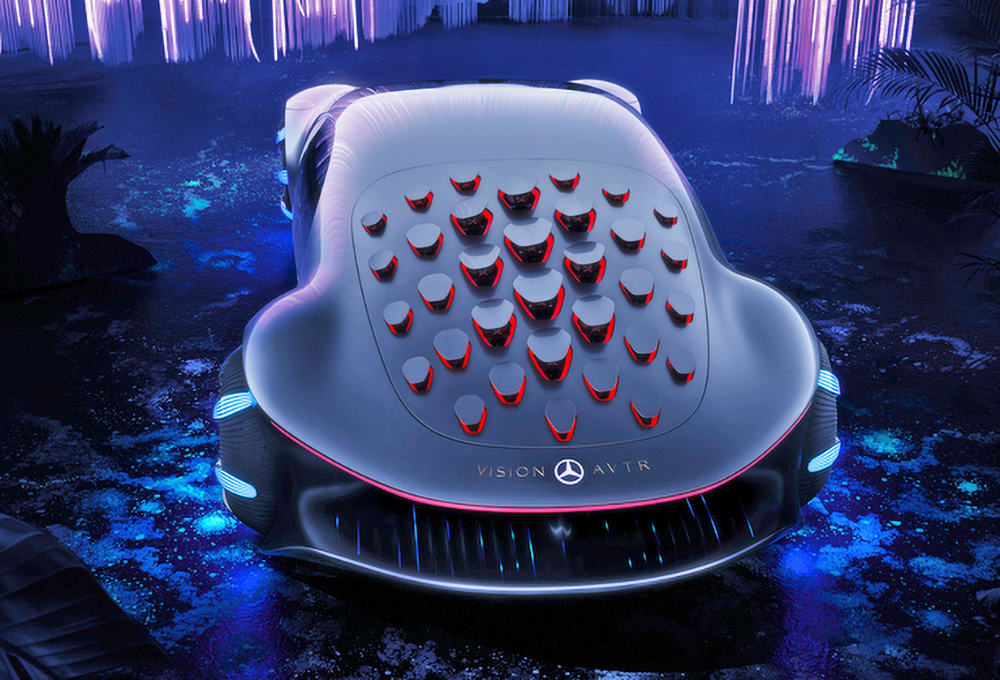
The AWD M-B concept can power the front and rear axles in opposite directions, permitting it to “crab” sideways at angles of up to 30 degrees, giving it animal-like movements. That theme is carried over to the 33 scales on the back of the AVTR, what M-B calls "bionic flaps," which can communicate with the driver or those that can see the car through flowing movements and gestures.
“The aim of the VISION AVTR is to show us a signpost for a livable future, even if it will probably never be built. The VISION AVTR makes speculative science visible and tangible,” said Alexander Mankowsky, futurologist at Mercedes-Benz. “The VISION AVTR serves as an imaginative guide to a future in which our relationship with ourselves, nature and technology has changed. Human beings see themselves as part of the biosphere and are in contact with it. The future luxury of Mercedes-Benz will be based on this.”
More From SAE Media Group
Automotive Engineering
Ford Unveils 2021 Mustang Mach-E Electric Vehicle
Automotive Engineering
Volvo’s Electric High-Wire Act
Automotive Engineering
Hau Thai-Tang Is Engineering a New Ford
Automotive Engineering
2025 Ram 1500 REV Driving Range Would Jump to Head of Class
Automotive Engineering
All-Electric Nissan Ariya Handles Ultra-Cold Temps on Pole to Pole Trek
Battery Technology
Cobalt-Free Cathodes for Lithium-Ion Batteries
Automotive Engineering
BEV-Agnostic’ Systems Require Attention
Off-Highway Engineering
Mercedes-Benz Refurbishes ‘Like-New’ High-Voltage Batteries for Electric Trucks
Automotive Engineering
Mercedes-Benz Product Boss: Europe, North America EVs, EV Charging to Rapidly Get Better
Automotive Engineering
2025 Hyundai Ioniq 5 Brings All the Right Updates
Automotive Engineering
Tested: 2025 Mercedes-Benz G 580 Spins up a Winner
Battery & Electrification Technology
Ultracapacitor Solutions to Address Energy-Storage Needs of Vehicles
Automotive Engineering
Elevate: Hyundai’s New Four-Wheel Drive, Four-Legged Off-Road Vehicle
Automotive Engineering
Battery Leasing Spurs VinFast’s EV Offensive
Automotive Engineering
NAIAS 2019: Infiniti Debuts QX Inspiration SUV Concept
Automotive Engineering
Mercedes Proposes “In-Drive Brakes” for Better EVs
Battery & Electrification Technology
Volvo Trucks’ Battery Chemistry of Choice: NCA
Battery & Electrification Technology
Advancing Battery Technology: The 2022 Battery Show Preview
Automotive Engineering
Slate Unveils Bare-Bones EV Mini Truck
Automotive Engineering
Elaphe Readies In-Wheel Motors for OEM EVs After 2030
Automotive Engineering
Engineering ‘Electron Guzzlers’
Automotive Engineering
BEV Streamliner Tops 350 Mph for U.S. Speed Record
Battery Technology
Advancing Battery Technology: THE 2021 BATTERY SHOW Preview

Battery & Electrification Technology
Advancing Battery Technology: The 2023 Battery Show Preview
Automotive Engineering
VW Introduces Singular ID.Buzz in Three-Row Layout
Automotive Engineering
Honda Ready with First North American Crossover EV
Automotive Engineering
Ford Engineers a Tech Barrage with 2020 Lincoln Aviator
Top Stories
INSIDERManufacturing & Prototyping
 How Airbus is Using w-DED to 3D Print Larger Titanium Airplane Parts
INSIDERManned Systems
 FAA to Replace Aging Network of Ground-Based Radars
NewsTransportation
 CES 2026: Bosch is Ready to Bring AI to Your (Likely ICE-powered) Vehicle
NewsSoftware
 Accelerating Down the Road to Autonomy
EditorialDesign
 DarkSky One Wants to Make the World a Darker Place
INSIDERMaterials
 Can This Self-Healing Composite Make Airplane and Spacecraft Components Last...
Webcasts
Defense
 How Sift's Unified Observability Platform Accelerates Drone Innovation
Automotive
 E/E Architecture Redefined: Building Smarter, Safer, and Scalable...
Power
 Hydrogen Engines Are Heating Up for Heavy Duty
Electronics & Computers
 Advantages of Smart Power Distribution Unit Design for Automotive...
Unmanned Systems
 Quiet, Please: NVH Improvement Opportunities in the Early Design...
