




Mercedes-Benz Refurbishes ‘Like-New’ High-Voltage Batteries for Electric Trucks
Reworked CB400 batteries expand the truck maker’s spare parts portfolio for the first-generation Mercedes-Benz eActros 300/400 and the eEconic.
Remanufacturing engines for medium- and heavy-duty trucks is nothing new to the industry. Reworking high-voltage batteries for reuse in electric trucks is a newer practice. Used batteries are often recycled or find a second life in stationary energy storage systems. Mercedes-Benz Trucks is all in on the approach, launching the new reworked CB400 battery for first-generation eActros 300/400 and eEconic trucks.

The so-called “Genuine Reworked Batteries” offer a resource-efficient and economically attractive alternative to brand-new replacement batteries, the manufacturer says, providing customers with like-new quality, tested safety and full functionality.
“Refurbishing batteries for vehicle use has gained significant momentum in recent years,” a spokesperson of Daimler Truck AG told SAE Media. “As sustainability and circular economy principles become increasingly important, more companies are actively exploring ways to test, refurbish and reuse batteries.”
Widespread adoption of battery refurbishing practices still varies greatly depending on factors such as region, manufacturer, infrastructure and technological maturity, the spokesperson said, adding that for Daimler Truck, “the refurbishment of batteries is an important part of our sustainability strategy.”
Meeting series standards
The company says a student project in 2021 kickstarted an “interdisciplinary innovation initiative” that now serves as a blueprint for the refurbishment of high-voltage batteries.
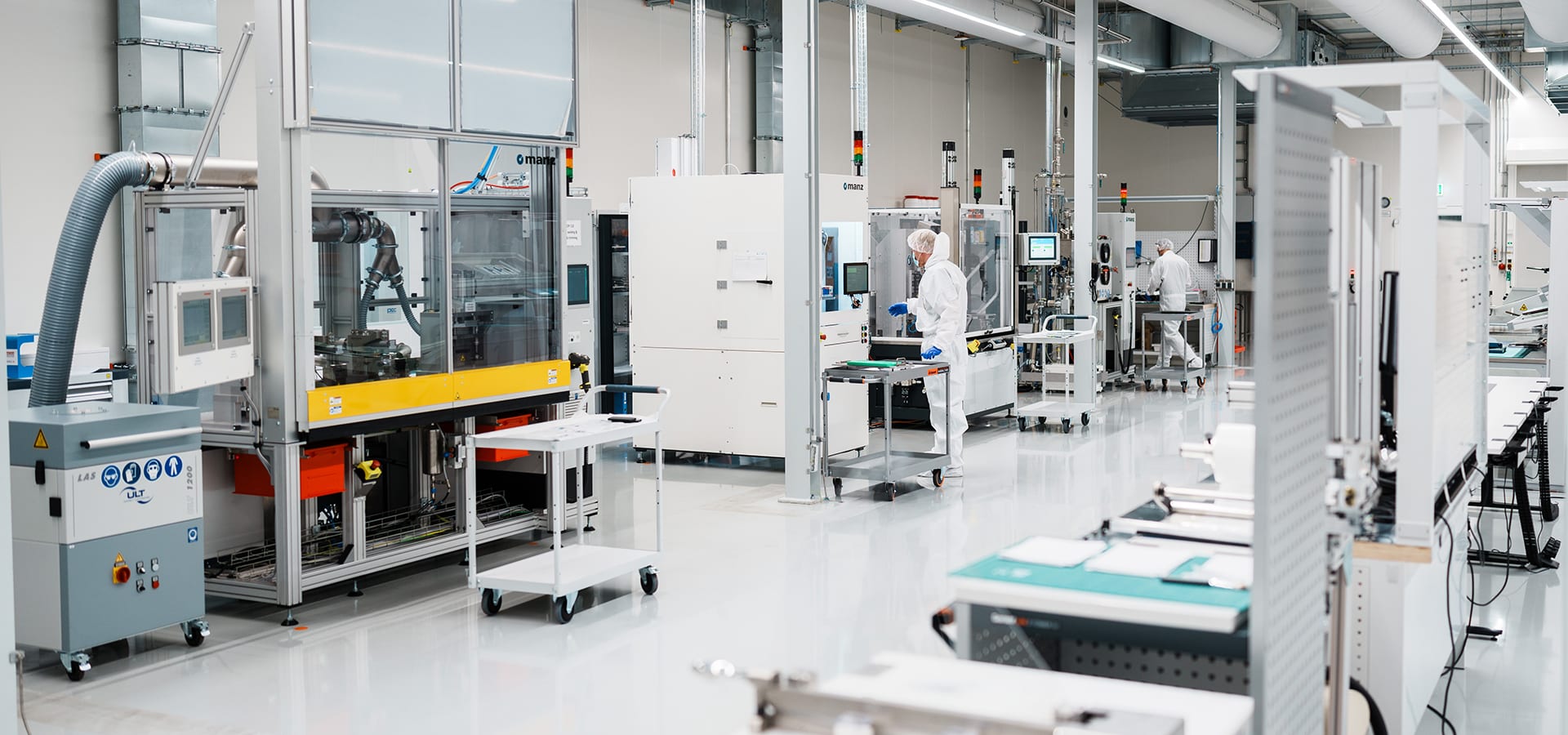
The project to develop the CB400 reworked battery was realized at the “Kompetenzzentrum für emissionsfreie Mobilität” (Competence Center for Emissions-free Mobility, or KEM in German) in Mannheim, Germany. The center for battery technologies and high-voltage systems is located near the series production facilities. Used CB400 batteries from customer vehicles are collected there, disassembled, thoroughly cleaned and refurbished to the latest series standards.
Compared to new production, reusing individual components saves around one-third of CO₂e emissions, the manufacturer claims. Batteries that are not suitable for refurbishment are immediately recycled. The company says it is possible that after reuse in vehicles, the refurbished batteries could essentially find third-life use in stationary energy storage systems, for example.
After a used battery is collected, engineers must determine if it is suitable to be refurbished for vehicle use. “The key factors are the overall condition of the battery, the State of Health of the entire battery pack, and most importantly, the nature of any potential failure,” the spokesperson said. “Since the battery was originally developed and manufactured for use in trucks, our primary goal is to keep it in truck applications for as long as it meets our technical and safety standards.”
The CB400 reworked batteries meet Mercedes-Benz Trucks’ series standards for functionality and safety. Each battery is equipped with the current software version and undergoes rigorous functional and leak tests. The manufacturer’s parts warranty also applies to the reworked batteries, which are available in various performance levels to improve compatibility with the battery packs installed in the vehicle.

The refurbishment process does present certain challenges to the Mercedes-Benz Trucks technical team. Not surprising, the main challenge is bringing the battery back to an “as-good-as-new” condition. “This includes meeting all the quality criteria applied to new batteries, such as airtightness, cleanliness and passing end-of-line testing,” the spokesperson said.
He called out a couple of other challenges as well. “Unlike fully automated production lines, the refurbishment process is more manual, requiring high precision. Additionally, we need to ensure that the State of Health spread between the refurbished battery pack and the other battery packs in the vehicle remains within a defined tolerance range.”
With this new offering, the truck maker not only addresses repair needs for existing vehicles but also lays the groundwork for future reworked solutions. Production of the first-generation eActros 300 and 400 models will cease by the end of the year, but demand for reliable and cost-effective spare parts for those trucks will continue.
Feeding future battery designs
The proximity of the competence center to the Battery Technology Center (BTC) in Mannheim allows the team to directly integrate its learnings into the development of new battery platforms. Insights gained from the CB400 project are already being incorporated into the development of the next generation, such as the CEB500 battery for the Mercedes-Benz eActros 600.
“The colleagues who initiated and are driving this refurbishment project are also deeply involved in the development of next-generation batteries,” the spokesperson said. “Their experiences and lessons learned directly feed into future battery designs.”
The company also is currently working on a comprehensive eco-design guideline. “Once finalized, it will be integrated into our standard development processes to ensure that future battery generations are designed with sustainable refurbishment in mind from the beginning,” he said.
The BTC, which covers an area of more than 10,000 m2 (107,640 ft2), combines product and process development with production for Daimler Truck’s battery-electric commercial vehicles. The development team focuses on creating assembly concepts and systems for battery packs.
Two production areas are established within the BTC: one for pilot-scale cell production to build process knowledge, and the other for prototypical manufacturing of battery packs for test benches and test vehicles. The Mannheim site is preparing for series assembly of the next battery generation.
Mercedes-Benz Trucks can’t share exact figures for how many batteries will be refurbished for vehicle use. “Each battery case is assessed individually to ensure we extract the maximum potential from it,” the spokesperson said. “This approach also enables us to gather valuable insights that help continuously improve the process and our long-term strategy.”
More From SAE Media Group
Automotive Engineering
Hydrogen Storage in a Box!
Off-Highway Engineering
Nikola Producing Battery-Electric Trucks, Fuel-Cell EVs Coming
Off-Highway Engineering
Brownout for Commercial-Vehicle Electrification?
Off-Highway Engineering
Webasto Delivers Battery System for Zeus EV Chassis
Off-Highway Engineering
Volvo Trucks’ Battery Chemistry of Choice: NCA
Automotive Engineering
Battery Show 2022: Wireless EV Charging, Scaling Gigafactories
Off-Highway Engineering
ABS Ramps up Commercial-Vehicle Battery-Pack Assembly
Off-Highway Engineering
Battery Innovation Key for Commercial and Off-Highway EVs
Off-Highway Engineering
Making the Case for Battery-Electric Fleet Power
Off-Highway Engineering
Mega Push for Heavy-Duty EV Charging
Off-Highway Engineering
Mercedes-Benz Goes Long with EActros 600 Electric Truck
Off-Highway Engineering
Eaton and BAE Gear up a New Electrified Truck
Automotive Engineering
Reducing the Battery Materials Supply Risk
Off-Highway Engineering
Bigger Barrier to CBEVs: Batteries or Infrastructure?
Off-Highway Engineering
BEV Truck Manufacturers Charge Ahead at 2022 NTEA Show
Off-Highway Engineering
LFP Battery-Cell Production for Electric CVs Planned in U.S.
Off-Highway Engineering
Blue Arc Amps up for EV Production
Off-Highway Engineering
Hydrogen Lightens the Load for Heavy Trucks
Automotive Engineering
Wireless Road Charging for EVs to Debut in 2023
Automotive Engineering
Hydrogen Industry Vet Says Fuel Cells Still a ‘Go’
Off-Highway Engineering
Hydrogen ‘Inevitable’ for Commercial Vehicles
Off-Highway Engineering
Daimler Launches New EV Truck Brand for U.S. Market
Off-Highway Engineering
ZF, Freudenberg Developing Integrated Fuel-Cell and E-Drive System
Automotive Engineering
Novelis Creates First Aluminum Sheet Battery Enclosure for Mass Electric Vehicle Production
Off-Highway Engineering
Batteries Not the Only Route to EV Efficiency
Tech Briefs
EV Battery Recycling Still Being Defined
Automotive Engineering
Sustainable Ecosystem Model Involves Multiple Partners
Off-Highway Engineering
Catering to Off-Highway EVs’ Unique Thermal Need
Automotive Engineering
Making H2 Fuel Cells Happen
Automotive Engineering
Engineering ‘Electron Guzzlers’
Top Stories
NewsRF & Microwave Electronics
 Microvision Aquires Luminar, Plans Relationship Restoration, Multi-industry Push
INSIDERAerospace
 A Next Generation Helmet System for Navy Pilots
INSIDERDesign
 New Raytheon and Lockheed Martin Agreements Expand Missile Defense Production
INSIDERMaterials
 How Airbus is Using w-DED to 3D Print Larger Titanium Airplane Parts
NewsPower
 Ford Announces 48-Volt Architecture for Future Electric Truck
ArticlesAR/AI

Webcasts
Electronics & Computers
 Cooling a New Generation of Aerospace and Defense Embedded...
Automotive
 Battery Abuse Testing: Pushing to Failure
Power
 A FREE Two-Day Event Dedicated to Connected Mobility
Unmanned Systems
 Quiet, Please: NVH Improvement Opportunities in the Early Design Cycle
Automotive
 Advantages of Smart Power Distribution Unit Design for Automotive &...
Energy
 Sesame Solar's Nanogrid Tech Promises Major Gains in Drone Endurance