




NRL’s Hybrid Tiger UAV Soars at Demonstration
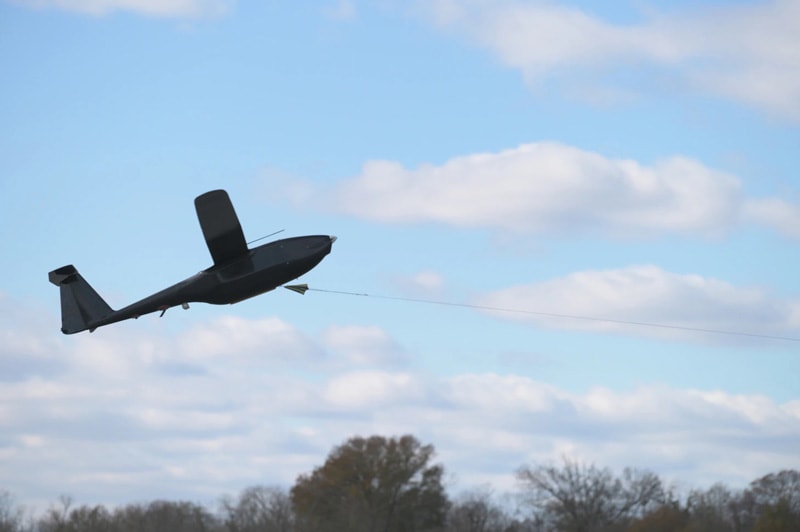
U.S. Naval Research Laboratory engineers recently demonstrated Hybrid Tiger, an electric unmanned aerial vehicle (UAV) with multi-day endurance flight capability. The team integrated technologies developed in prior NRL power and energy programs into a single UAV to achieve multi-day endurance with a Group 2 UAV. Group 2 UAVs are typically in the 21-55 pound weight class and normally operate below 3,500 feet above ground level at speeds less than 250 knots. This was the first time Hybrid Tiger flew through a complete 24-hour period, its longest flight to date.
“Extrapolating the flight endurance of Hybrid Tiger from the recent flight data suggests it can reach the program goal flight endurance,” said Richard Stroman, Ph.D., a mechanical engineer from the NRL Chemistry Division. “The results validated our extensive simulation efforts, because the flight endurance is almost exactly what was predicted by our simulation.”
Flight simulations suggested flight endurances predicted for summer conditions are realistic at lower latitudes and with greater solar energy.
“The flight was effectively a performance test in worst-case conditions: temperatures falling below zero degrees Celsius, winds gusting to 20 knots, and relatively little solar energy as we approached the solar solstice Dec. 21,” Stroman said. “Despite all of that, Hybrid Tiger performed well.”
New solar-integrated wings provided daytime power and supplement a redesigned power management system. “This power management system hybridizes solar energy with other on-board energy sources including battery-electric and a hydrogen fuel cell in a lightweight form factor, suitable for airborne craft, as well as ground-based unmanned systems,” said Stearns Heinzen, Ph.D., an aerospace engineer from NRL Tactical Electronic Warfare Division.
The program’s researchers are also developing energy-aware power management algorithms, which vary operational modes and generate a vehicle navigation strategy based on weather forecasts and locally observed opportunities for energy harvesting. Autonomous soaring, for example, is used to gain altitude from thermal updrafts when they are available. Hybrid Tiger combines multiple power sources with different advantages to achieve extreme endurance. A high-pressure hydrogen fuel tank and fuel cell system provides nighttime power. High-efficiency photovoltaics provide power during daylight hours.
Hybrid Tiger was developed and demonstrated with Department of Defense needs in mind, yet its technologies are also valuable for non-defense scientific applications such as atmospheric research and commercial applications.
More From SAE Media Group

Tech Briefs
Thermochromic Photovoltaic Windows
Tech Briefs
Can We Expect Hydrogen Fuel Availability?
Power Electronics INSIDER
Black Metal Could Give a Heavy Boost to Solar Power Generation
Off-Highway Engineering
Emerson Supports Scalability of Fuel Cell Systems
Power Electronics INSIDER
Perovskite Solar Cells — From the Lab to the Manufacturing Floor

Aerospace INSIDER
Two Tactical Edge Hydrogen Generation Trailer Prototypes in Development
Photonics & Imaging Technology INSIDER
Solar Cell Does Double Duty for Renewable Energy
Aerospace INSIDER
Navy Completes 73-Hour Nonstop Flight of Solar-Powered UAS

Off-Highway Engineering
SAE WCX 2022: Paving the Way for the Hydrogen Highway
Automotive Engineering
Hydrogen Storage in a Box!
Off-Highway Engineering
Nikola Producing Battery-Electric Trucks, Fuel-Cell EVs Coming
Tech Briefs
POTION Can Reduce Aircraft Fuel Consumption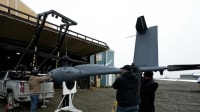
Photonics Tech Briefs INSIDER
New Solar Energy Storage Technique Could Boost Solar Cell Usage
Aerospace & Defense Tech Briefs
Alakai Technologies Unveils the World’s First Hydrogen-Powered Urban Air Mobility Vehicle
Aerospace & Defense Tech Briefs
Delivering Operational Energy to Enhance Warfighter Capability

Tech Briefs
Wearable Solar Thermoelectric Generator
Off-Highway Engineering
Hydrogen’s Humming in Power Generation

Off-Highway Engineering
GM Hydrotec Boss Readies Fuel Cells for Commercial Deployment
Off-Highway Engineering
The Future of Carbon-Neutral Fuels for Heavy-Duty Machines
Top Stories
INSIDERDefense
 New Raytheon and Lockheed Martin Agreements Expand Missile Defense Production
NewsAutomotive
 Ford Announces 48-Volt Architecture for Future Electric Truck
INSIDERManufacturing & Prototyping
 Active Strake System Cuts Cruise Drag, Boosts Flight Efficiency
ArticlesTransportation
 Accelerating Down the Road to Autonomy
INSIDERMaterials
 How Airbus is Using w-DED to 3D Print Larger Titanium Airplane Parts
Road ReadyTransportation

Webcasts
Electronics & Computers
 Cooling a New Generation of Aerospace and Defense Embedded...
Power
 Battery Abuse Testing: Pushing to Failure
Connectivity
 A FREE Two-Day Event Dedicated to Connected Mobility
Automotive
 Quiet, Please: NVH Improvement Opportunities in the Early Design Cycle
Transportation
 Advantages of Smart Power Distribution Unit Design for Automotive &...
Aerospace
 Sesame Solar's Nanogrid Tech Promises Major Gains in Drone Endurance