




Preliminary Development of an Integrated Mobility, Lethality, and Survivability Soldier Performance Testing Platform
Developing a methodology that incorporates objective measures of performance and is sensitive to changes in soldier-system equipment could help guide equipment manufacturers during product development and acquisition.
In 2017, the US Army announced their modernization priorities as a means of maintaining their military strength. Six specific areas were targeted for focus improvement and development, with the first five being specific technologies or end products. The sixth was “Soldier Lethality” or a soldier’s ability to shoot, move, communicate, protect and sustain by improving human performance and decision making. In an effort to support this priority area for those trying to make clothing and individual equipment (CIE) acquisition and development decisions, there is a desire for an integrated or holistic objective tool to measure soldier performance, specifically mobility, lethality and survivability incorporating underlying measures of human factors, biomechanics and cognition.
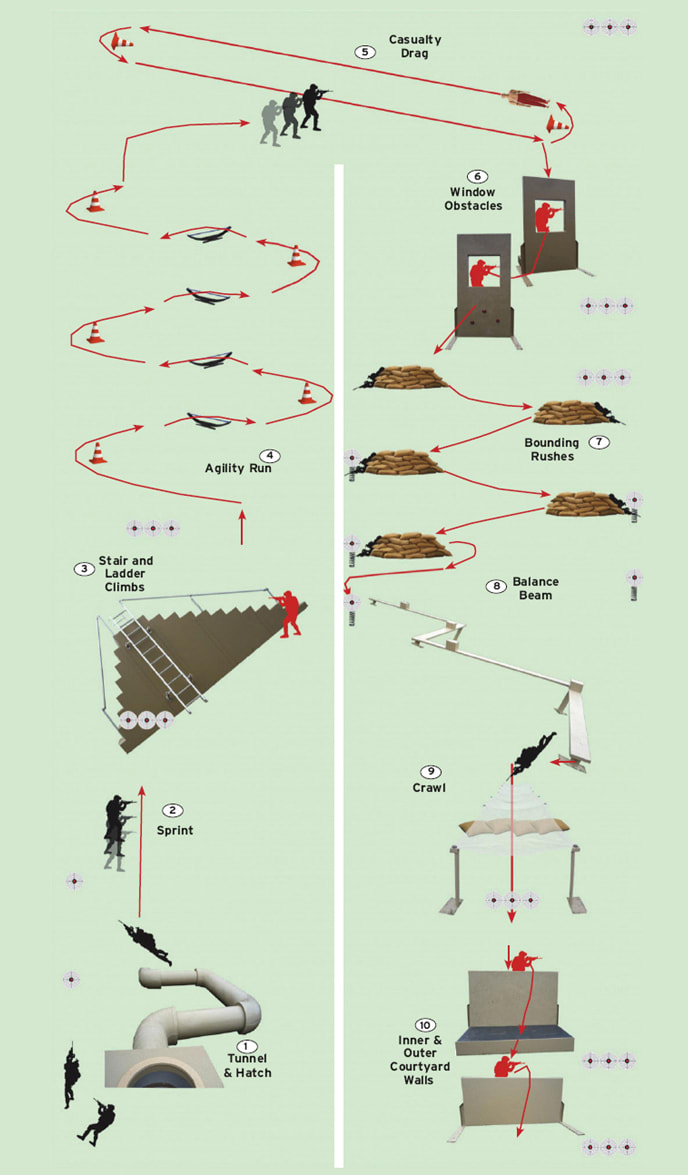
Defense research organizations from Australia, Canada, Singapore and the United States use the Load Effects Assessment Program (LEAP), a military mission obstacle course originally developed by the US Marine Corps, to assess the impact of CIE on dismounted warfighter performance and, specifically, mobility. The standardized LEAP test platform includes a 10-station obstacle course, in addition to static simulated rifle firing, vertical jump, and weight transfer activities.
Previous studies investigating completion times for military task-oriented obstacles (i.e., jumping, running, crawling, climbing) and obstacles courses have been able to differentiate CIE designs and configurations. In the last 5 years, a number of studies have been completed using similar versions of the LEAP obstacle course. That testing has shown that course performance is affected by differences in CIE. The LEAP course has also shown to be sensitive to changes in gross weight and in percent body weight carried.
Additionally, previous marksmanship performance research had shown sensitivity to CIE encumbrance when using live fire. Multiple studies have shown that weapons simulator/training systems are predictive of live-fire qualification scores. Moreover, simulated marksmanship has also shown to be sensitive to CIE encumbrance level comparisons and allows testers to assess compatibility and performance degradations in an easy, quick, low cost, and safe manner. The simulated marksmanship tasks have used static and on-the-move shooting at single and multiple targets to demonstrate these differences in performance when wearing CIE products. They have also integrated basic cognitive decision-making elements (go-no-go tasks), but with only high-level mobility differences seen across CIE encumbrance levels.
By integrating these mobility and marksmanship methodologies, with additional developmental methodologies in the areas of cognitive decision-making and survivability metrics, the LEAP Mobility, Lethality and Survivability (LEAP-MLS) was conceived. This research provides an initial proof of concept of this developmental test platform. This study is a first step in developing a methodology that incorporates objective measures of performance and is sensitive to changes in soldier-system equipment, thus helping to inform the soldier performance trade space during product development and acquisition, using a single, standardized and controlled event.
Twenty active duty soldier volunteers executed the course in three levels of CIE encumbrance, in a repeated measured design of experiments. All participants were active duty Army personnel, with a majority (all but three) having an infantry military occupational specialty. The test participants had a mean age of 24.85 ± 5.11 years. Their years in service ranged from less than a year to over thirteen, with a mean of 4.5 ± 3.48 years. Five had combat deployment experience. The test participants had a mean weight of 189.15 ± 27.27 lbs and mean height of 69.68 ± 1.96 inches.
All twenty participants executed the course in three configurations that represented three levels of CIE encumbrance: unloaded, minimal-encumbrance, and maximal-encumbrance. The baseline (natural unloaded body) included the participant, their duty uniform, a helmet, and a surrogate (training aid) M4 weapon (with sensor and optics). The minimal-encumbrance configuration included all the components of the Unloaded in addition to body armor weighing approximately 23 kg. The maximal-encumbrance configuration included the components of the minimal configuration kit and additional items that are associated with the Grenadier duty position, such as additional 40 mm grenade, with a weight of approximately 25–30 kg. Although this kit is not much heavier than the minimal-encumbrance, it has the maximum amount of bulk around the torso of the body that a dismounted soldier could experience when wearing body armor.
This work was done by Stephanie A. T. Brown and K. Blake Mitchell for the Army Combat Capabilities Development Command Soldier Center. For more information, download the Technical Support Package (free white paper) below. ARL-0230
This Brief includes a Technical Support Package (TSP).
Preliminary Development of an Integrated Mobility, Lethality, and Survivability Soldier Performance Testing Platform
(reference ARL-0230) is currently available for download from the TSP library.
Don't have an account?
More From SAE Media Group
Aerospace & Defense Tech Briefs
Evaluation of Three Extremity Armor Systems
Aerospace & Defense Tech Briefs
Real Time Physiological Status Monitoring
Aerospace & Defense Tech Briefs
Exploring the Impact of Fuel Data Acquisition Technology on the USMC Expeditionary Energy Command and Control System
Aerospace & Defense Tech Briefs
3D Data Acquisition Platform for Human Activity Understanding
Aerospace & Defense Tech Briefs
Formal Process Modeling to Improve Human-Decision-Making During Test and Evaluation Range Control
Aerospace & Defense Tech Briefs
Developing a 6DoF Aircraft Munitions Optical Tracking System
Aerospace & Defense Tech Briefs
Designing for the Connected Battlespace
Motion Design INSIDER
MIT Engineers Design a Robotic Replica of the Heart’s Right Chamber
Electronics & Sensors INSIDER
Self-Powered Sensor Automatically Harvests Magnetic Energy

Aerospace & Defense Tech Briefs
Adapting US Army Acquisition to Ensure the Reliability and Safety of Autonomous Vehicles
Aerospace & Defense Tech Briefs
WMD Detection Technology


Aerospace & Defense Tech Briefs
Five Missile-Tracking Satellites Launched
Aerospace Manufacturing and Machining INSIDER
Counter UAS Systems Tested Against Swarms of 50 Drones in Latest Yuma Exercise
Aerospace & Defense Tech Briefs
Development and Verification of Body Armor Target Geometry Created Using Computed Tomography Scans
Tech Briefs
Facility Focus: Army Test and Evaluation Command
Aerospace & Defense Tech Briefs
Loitering Munition
Aerospace & Defense Tech Briefs
Correlational Analysis of Speech Intelligibility Tests and Metrics for Speech Transmission
Aerospace & Defense Tech Briefs
Process for Testing Aeromedical Equipment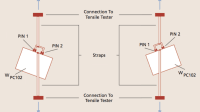
Aerospace INSIDER
F-35 Completes First Flight with Technology Refresh 3 Upgrades
Aerospace & Defense Tech Briefs
Information Warfare: Staying Protected at the Edge
Aerospace & Defense Tech Briefs
A Rainfield Simulator for Hypersonic Testing
Aerospace & Defense Tech Briefs
Loitering Munitions Systems
Defense INSIDER
Army Aviation Team Achieves Software Success in Live Fire Test
Motion Design INSIDER
3D-Printed Revolving Devices Can Sense How They Are Moving

Overview
The document titled "Preliminary Development of an Integrated Mobility, Lethality, and Survivability Soldier Performance Testing Platform" presents a study aimed at creating a comprehensive testing platform to evaluate the impact of military clothing and equipment on soldiers' performance. Authored by Stephanie A.T. Brown and K. Blake Mitchell from the Combat Capabilities Development Command Soldier Center, the report details the methodology and preliminary findings of the research conducted between September 2017 and March 2019.
The study involved twenty soldiers who participated in tests under three different configurations representing varying levels of encumbrance: unloaded, minimal-encumbrance, and maximal-encumbrance. The unloaded configuration included the soldiers in their duty uniforms and a helmet, while the minimal-encumbrance configuration added body armor and essential gear, weighing approximately 23 kg. The maximal-encumbrance configuration included additional items for the Grenadier duty position, bringing the total weight to about 25–30 kg. This setup was designed to simulate the physical demands faced by soldiers in the field.
The research focused on three key performance areas: mobility, lethality, and survivability. Mobility was assessed through obstacle completion timing, while lethality tasks involved both static and dynamic shooting engagements, measuring traditional marksmanship and cognitive decision-making. Survivability was evaluated by quantifying body exposure and the time exposed to threats.
Preliminary results indicated that increasing encumbrance negatively affected soldiers' performance. Specifically, as encumbrance levels rose, obstacle completion times increased, and while marksmanship precision improved during static tasks, shooting efficiency and threat elimination decreased during dynamic tasks. These findings highlight the trade-offs that soldiers face when equipped with varying levels of gear and the potential impact on their operational effectiveness.
The report emphasizes the importance of developing an integrated tool to measure these performance metrics, which could lead to improvements in military training and equipment design. By expanding on the methodology established in this study, the authors aim to enhance capabilities for the U.S. Army and its international partners, ultimately contributing to better soldier performance in combat scenarios.
In conclusion, this document serves as a foundational step toward creating a robust testing platform that can inform future military equipment and training strategies, ensuring that soldiers are optimally equipped for their missions.
Top Stories
NewsRF & Microwave Electronics
 Microvision Aquires Luminar, Plans Relationship Restoration, Multi-industry Push
INSIDERAerospace
 A Next Generation Helmet System for Navy Pilots
INSIDERDesign
 New Raytheon and Lockheed Martin Agreements Expand Missile Defense Production
INSIDERMaterials
 How Airbus is Using w-DED to 3D Print Larger Titanium Airplane Parts
NewsPower
 Ford Announces 48-Volt Architecture for Future Electric Truck
ArticlesAR/AI

Webcasts
Electronics & Computers
 Cooling a New Generation of Aerospace and Defense Embedded...
Automotive
 Battery Abuse Testing: Pushing to Failure
Power
 A FREE Two-Day Event Dedicated to Connected Mobility
Unmanned Systems
 Quiet, Please: NVH Improvement Opportunities in the Early Design Cycle
Automotive
 Advantages of Smart Power Distribution Unit Design for Automotive &...
Energy
 Sesame Solar's Nanogrid Tech Promises Major Gains in Drone Endurance