




Artificial Intelligence Helps Soldiers Learn Faster

New technology allows U.S. soldiers to learn 13-times faster than conventional methods, and Army researchers said this may help save lives.
At the U.S. Army Research Laboratory, scientists are improving the rate of learning even with limited resources. It's possible to help soldiers decipher hints of information faster and come up with quicker solutions, such as recognizing threats like a vehicle-borne improvised explosive device (IED) or potential danger zones from aerial war zone images.
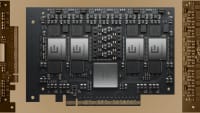
The researchers relied on low-cost, lightweight hardware and implemented collaborative filtering, a well-known machine learning technique on a state-of-the-art, low-power Field Programmable Gate Array platform to achieve a 13.3 times speedup of training compared to a state-of-the-art optimized multi-core system and 12.7 times speedup for optimized GPU systems.
The new technique consumed far less power too. Consumption charted 13.8 watts, compared to 130 watts for the multi-core and 235 watts for GPU platforms, making this a potentially useful component of adaptive, lightweight tactical computing systems.
Dr. Rajgopal Kannan, an ARL researcher, said this technique could eventually become part of a suite of tools embedded on the next generation combat vehicle, offering cognitive services and devices for warfighters in distributed coalition environments. Developing technology for the next generation combat vehicle is one of the six Army Modernization Priorities the laboratory is pursuing.
Kannan collaborates with a group of researchers at the University of Southern California, namely Prof. Viktor Prasanna and students from the data science and architecture lab on this work. ARL and USC are working to accelerate and optimize tactical learning applications on heterogeneous low-cost hardware through ARL's West Coast open campus initiative.
This work is part of the Army's larger focus on artificial intelligence and machine learning research initiatives pursued to help gain a strategic advantage and ensure warfighter superiority with applications such as on-field adaptive processing and tactical computing. Kannan said he is working on developing several techniques to speed up AI/ML algorithms through innovative designs on state-of-the-art inexpensive hardware.
More From SAE Media Group

Defense INSIDER
Department of Defense Establishes New Generative AI Task Force

Aerospace INSIDER
AI-Powered Radar Warning Receiver for Fourth Generation Aircraft
Aerospace & Defense Tech Briefs
New Swarm and Search AI Challenge Combines Machine Learning and UAS to Help Map Wildfires
Aerospace & Defense Tech Briefs
AIA Predicts Flying Air Taxis, Supersonic Air Travel, and Space Industry for 2050
Aerospace & Defense Tech Briefs
Autonomous Surveillance Technologies Relating to Dismounted Soldiers
Aerospace & Defense Tech Briefs
AI Closes the Loop for Composites Manufacturing
Defense INSIDER
Army Trains Robots to "Learn" From Humans
Aerospace & Defense Tech Briefs
ADS-B Classification Using Multivariate Long Short-Term Memory


Defense INSIDER
Study Uses AI to Estimate Unexploded Bombs from Vietnam War


Defense INSIDER
The Army's New Supercomputer is Named After ENIAC Programmers

Defense INSIDER
AI Research Strengthens Certainty in Battlefield Decision-Making
Defense INSIDER
Identifying Optimal Designs for Deep Neural Network Accelerators
Aerospace & Defense Tech Briefs
A Supercomputer for Aerospace and Defense Systems Modeling and Simulation
Tech Briefs
A3ML: Anti-Money Laundering
Autonomous Vehicle Engineering
Kontron’s Embedded Boards Help Drive Autonomy Forward
Off-Highway Engineering
AI Moves into Military Boards and Subsystems
Aerospace & Defense Tech Briefs
New Cyber Algorithm Shuts Down Malicious Robotic Attacks



Top Stories
INSIDERDefense
 New Raytheon and Lockheed Martin Agreements Expand Missile Defense Production
NewsAutomotive
 Ford Announces 48-Volt Architecture for Future Electric Truck
INSIDERManufacturing & Prototyping
 Active Strake System Cuts Cruise Drag, Boosts Flight Efficiency
ArticlesTransportation
 Accelerating Down the Road to Autonomy
INSIDERMaterials
 How Airbus is Using w-DED to 3D Print Larger Titanium Airplane Parts
Road ReadyTransportation

Webcasts
Electronics & Computers
 Cooling a New Generation of Aerospace and Defense Embedded...
Power
 Battery Abuse Testing: Pushing to Failure
Connectivity
 A FREE Two-Day Event Dedicated to Connected Mobility
Automotive
 Quiet, Please: NVH Improvement Opportunities in the Early Design Cycle
Transportation
 Advantages of Smart Power Distribution Unit Design for Automotive &...
Aerospace
 Sesame Solar's Nanogrid Tech Promises Major Gains in Drone Endurance