




Adaptive Materials Could Help Protect Rotorcraft

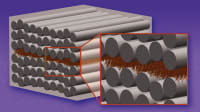
Engineers developed a technique that causes a composite material to become stiffer and stronger on-demand when exposed to ultraviolet light. This on-demand control of composite behavior could enable a variety of new capabilities for future Army rotorcraft design, performance, and maintenance.
The composite materials could become 93% stiffer and 35% stronger after a five-minute exposure to ultraviolet light. Future structures based on this work may lead to new composites with controlled structural damping and low weight that could enable high-speed rotorcraft concepts that are currently not feasible.
More From SAE Media Group
Tech Briefs
Technique Creates Adaptive Materials
Aerospace & Defense Tech Briefs
‘Nanostitches’ Enable Lighter and Tougher Composite Materials
Aerospace & Defense Tech Briefs
Burner Rig Testing of A500® C/SiC

Tech Briefs
Fiber-Metal Laminate Manufacturing Technique
Aerospace INSIDER
AFRL, Universities Partner on 3D-Printed Composites
Tech Briefs
Compact, Lightweight, CMC-Based Acoustic Liner

Tech Briefs
Aerogel-Fiber Layered Laminate System
Aerospace INSIDER
Ceramic Matrix Composites Offer Lighter, More Durable Engine Parts

Tech Briefs
Thin Heat Shield for Superfast Aircraft

Tech Briefs
Deployable Composite Boom
Aerospace & Defense Tech Briefs
Thermoplastic Composites to Play Enhanced Role in Next-Generation Aerospace Applications

Aerospace INSIDER
Composites Self-Heal at Very Low Temperatures
Aerospace INSIDER
Air Force Explores Use of Thermoplastic Fin for F-16

Aerospace Manufacturing and Machining INSIDER
Researchers Push Limits in High-Temp, Polymer Additive Manufacturing
Aerospace Manufacturing and Machining INSIDER
Can This Self-Healing Composite Make Airplane and Spacecraft Components Last for Centuries?
Aerospace & Defense Tech Briefs
Sensing Applied Load and Damage Effects in Composites with Nondestructive Techniques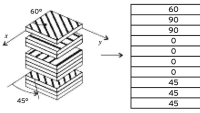
Aerospace & Defense Tech Briefs
Designing Sensory and Adaptive Composite Materials
Aerospace INSIDER
NASA Develops Unique Materials for Next Generation Aircraft
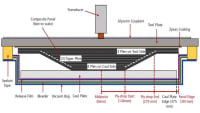

Aerospace INSIDER
Composite Metal Foam Outperforms Aluminum for Aircraft Wings
Top Stories
INSIDERManufacturing & Prototyping
 How Airbus is Using w-DED to 3D Print Larger Titanium Airplane Parts
INSIDERManned Systems
 FAA to Replace Aging Network of Ground-Based Radars
NewsTransportation
 CES 2026: Bosch is Ready to Bring AI to Your (Likely ICE-powered) Vehicle
NewsSoftware
 Accelerating Down the Road to Autonomy
EditorialDesign
 DarkSky One Wants to Make the World a Darker Place
INSIDERMaterials
 Can This Self-Healing Composite Make Airplane and Spacecraft Components Last...
Webcasts
Defense
 How Sift's Unified Observability Platform Accelerates Drone Innovation
Automotive
 E/E Architecture Redefined: Building Smarter, Safer, and Scalable...
Power
 Hydrogen Engines Are Heating Up for Heavy Duty
Electronics & Computers
 Advantages of Smart Power Distribution Unit Design for Automotive...
Unmanned Systems
 Quiet, Please: NVH Improvement Opportunities in the Early Design...
