




Airborne Sense-and-Avoid Radar for UAVs
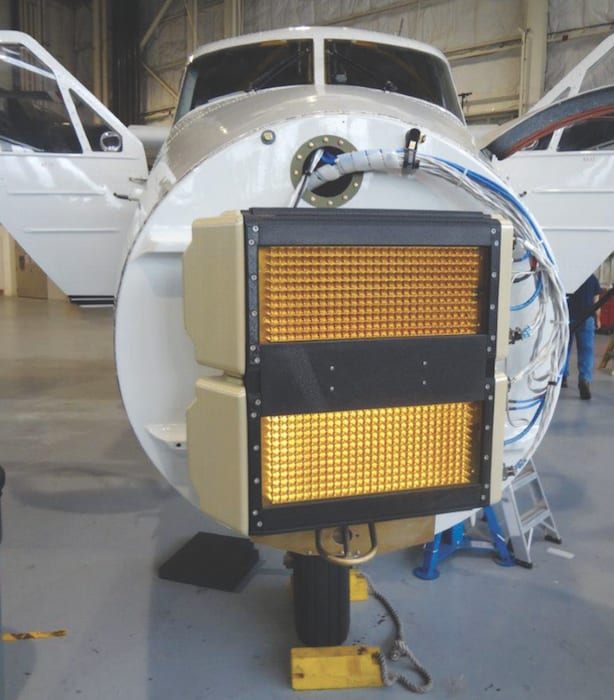
Widespread use of unmanned aerial vehicles (UAVs) within the National Airspace System is limited because of regulatory restrictions on their access to shared airspace. The Airborne Sense and Avoid (ABSAA) Radar Panel, a phased array antenna developed by MIT Lincoln Laboratory, has the potential to facilitate the introduction of UAVs into the national airspace.
The lightweight sensor enables an onboard sense-and-avoid system that performs quick and repeatable scanning of the search region, meets the exacting surveillance timeline demanded of a sense-and-avoid system, and is reliable. The ABSAA panel satisfies the constrained size, weight, and power requirements for small platforms such as UAVs, and supports both aircraft-detecting and weather-sensing modes in a single, multifunction aperture.
More From SAE Media Group

Aerospace & Defense Tech Briefs
Effectiveness of Inter-Vehicle Communications and On-Board Processing for Close Unmanned Autonomous Vehicle Flight Formations
Aerospace INSIDER
GA-ASI Introduces New Eagle Eye Radar
Tech Briefs
Airborne Sense-and-Avoid Radar Panel
Aerospace & Defense Tech Briefs
Drone Control System
Aerospace INSIDER
Northrop's New Multifunction Active Electronically Scanned Array


Aerospace & Defense Tech Briefs
Pathfinder Radar ISR and SAR Systems: Tactical Eyes for the Warfighter
Aerospace & Defense Tech Briefs
Quantifying Autonomous Soaring on a Surveillance and Communications Relay Mission

Aerospace & Defense Tech Briefs
Low Cost Air Traffic Control for Drones
Aerospace INSIDER
New Cognitive 'MIMO' Drone Radar Completes Flight Testing in Germany
Aerospace & Defense Tech Briefs
Autonomous Collaborative Platform
Aerospace INSIDER
FAA to Replace Aging Network of Ground-Based Radars
Aerospace & Defense Tech Briefs
Digital Radar Warning Receiver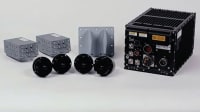
Aerospace & Defense Tech Briefs
Playing Defense — Uncertain Regulations Stall the Implementation of Counter-UAS Technology in The U.S.
Aerospace & Defense Tech Briefs
Intelligent Parachute Rescue System
Aerospace & Defense Tech Briefs
Australian Air Surveillance Radar Upgrade
Tech Briefs
Next-Generation Radar for the F-35 Lightning II

Aerospace & Defense Tech Briefs
Connectors Lighten the SWaP Burden in UAV/MUMT Aircraft Electronics
Aerospace INSIDER
GA-ASI Announces Gray Eagle 25M for Multi-Domain Operations
Aerospace & Defense Tech Briefs
MQ-25 Vehicle Management Computer Upgrade
Aerospace & Defense Tech Briefs
Automatic Drone Detection System


Aerospace & Defense Tech Briefs
Counter-Drone Technology

Top Stories
NewsSensors/Data Acquisition
 Microvision Aquires Luminar, Plans Relationship Restoration, Multi-industry Push
INSIDERRF & Microwave Electronics
 A Next Generation Helmet System for Navy Pilots
INSIDERWeapons Systems
 New Raytheon and Lockheed Martin Agreements Expand Missile Defense Production
NewsAutomotive
 Ford Announces 48-Volt Architecture for Future Electric Truck
INSIDERAerospace
 Active Strake System Cuts Cruise Drag, Boosts Flight Efficiency
ArticlesTransportation

Webcasts
Aerospace
 Cooling a New Generation of Aerospace and Defense Embedded...
Energy
 Battery Abuse Testing: Pushing to Failure
Power
 A FREE Two-Day Event Dedicated to Connected Mobility
Automotive
 Quiet, Please: NVH Improvement Opportunities in the Early Design Cycle
Electronics & Computers
 Advantages of Smart Power Distribution Unit Design for Automotive &...
Unmanned Systems
 Sesame Solar's Nanogrid Tech Promises Major Gains in Drone Endurance