




Sound-Off: How to Simulate the Impacts of an Exoskeleton
Over the past decade, warfighters’ personal loads have increased, leading to more injuries, pain, and discomfort. To relieve the burden, the military is investigating performance-enhancing exoskeletons. But how does an exoskeleton impact the soldier wearing it?
With funding from the U.S. Army, RE2 Robotics has developed the Biomechanical Exoskeleton Simulator System (BESS) to accurately model injury risk, gait, and forces or torque on the user’s muscles.

Dr. Andrew B. Mor, Principal Investigator for RE2 Robotics, leads the simulation efforts.
In a Tech Briefs presentation titled “Advances in Wearable Technologies,” an attendee asked Mor:
What assumptions can you make about the mechanical boundary or interface between the subject and the exoskeleton?
Dr. Andrew B. Mor: The assumptions that we're making in our current iteration are that the contacts are effectively point contacts between the exoskeleton and the user skeleton, mainly because that is the constraint in how the forces are incorporated into OpenSim .
We know that, even with the exoskeleton we're simulating and validating with now, the interface is through about a one- or two-inch-wide strap. But at this point we're isolating the contact into a single force/torque sensor input, and effectively welding that force and torque into a point on the skeleton in the model.
In the future, when we go to more deformable contacts, I see extending that to having a pressure array that's being applied to the model in OpenSim.
What do you think? Share your comments and questions below.
More From SAE Media Group
Motion Design
New Products

Aerospace & Defense Tech Briefs
Digital Twins: How The Digital Replica Concept Is Used By Robotic Systems
Medical Design Briefs
Five-Fingered Robot Gets a Grip

Sensor Technology
Digital Twins for Industry

Medical Design Briefs
Winter 2022 Resource Guide
Battery Technology
Using Multiphysics to Predict and Prevent EV Battery Fire
Automotive Engineering
DSpace Launches Simphera AV Development Simulator

Aerospace Manufacturing and Machining INSIDER
How Airbus is Leveraging Digital Twins for a Smarter Approach to Manufacturing

Aerospace INSIDER
Streamlining Jet Engine Design
Off-Highway Engineering
Siemens Improves Optimization for Engine Development
Medical Design Briefs
Breakthrough Analysis Tools
Tech Briefs
Product of the Month

Motion Design
CAD Model Offers Robots Precise Pick-and-Place Solutions
Aerospace INSIDER
Accelerating Climate-Compatible Aircraft Design with AI
Aerospace & Defense Tech Briefs
Analyzing Aircraft Antenna Placement and Performance with Unified Modeling and Simulation


Aerospace & Defense Tech Briefs
Using Advanced Computational Engineering Software to Meet Aerospace & Defense Industry Challenges

Motion Design INSIDER
Making Robotic Assistive Walking More Natural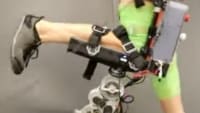

Top Stories
INSIDERManufacturing & Prototyping
 How Airbus is Using w-DED to 3D Print Larger Titanium Airplane Parts
NewsAutomotive
 Microvision Aquires Luminar, Plans Relationship Restoration, Multi-industry Push
INSIDERAerospace
 A Next Generation Helmet System for Navy Pilots
INSIDERDesign
 New Raytheon and Lockheed Martin Agreements Expand Missile Defense Production
ArticlesAR/AI
 CES 2026: Bosch is Ready to Bring AI to Your (Likely ICE-powered) Vehicle
Road ReadyDesign

Webcasts
Semiconductors & ICs
 Advantages of Smart Power Distribution Unit Design for Automotive...
Unmanned Systems
 Quiet, Please: NVH Improvement Opportunities in the Early Design...
Electronics & Computers
 Cooling a New Generation of Aerospace and Defense Embedded...
Power
 Battery Abuse Testing: Pushing to Failure
AR/AI
 A FREE Two-Day Event Dedicated to Connected Mobility
