




NASA Uses Electric Propulsion in Experimental Plane
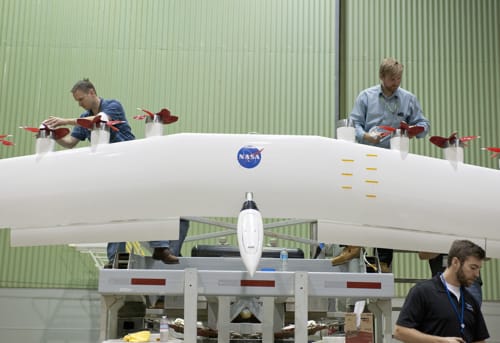
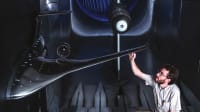
NASA is researching ideas that could lead to developing an electric propulsion-powered aircraft that would be quieter, more efficient, and more environmentally friendly than today's commuter aircraft. The proposed piloted experimental airplane is called Sceptor, short for the Scalable Convergent Electric Propulsion Technology and Operations Research. The concept involves removing the wing from an Italian-built Tecnam P2006T aircraft and replacing it with an experimental wing integrated with electric motors.
Researchers are integrating Sceptor aircraft systems with a NASA Armstrong Flight Research Center flight simulator for pilots to evaluate handling qualities. Researchers also will be able to study balancing the power demands of the motors with batteries and then a turbine. Sceptor could be a solution to greater fuel efficiency, improved performance, and ride quality and aircraft noise reduction.
More From SAE Media Group
NASA Spinoff
Battery Innovations Power All-Electric Aircraft

Aerospace & Defense Tech Briefs
Small UAV Satcom System
Aerospace & Defense Tech Briefs
MagniX and AeroTEC to Fly All-Electric ECaravan May 28
Motion Design INSIDER
Plane Flies with No Moving Parts
Aerospace INSIDER
Soft Magnetic Materials Are Key to Electric Aircraft
Aerospace INSIDER
Researchers Advance Propulsion Toward Low-Carbon Aircraft
Aerospace & Defense Tech Briefs
Hybrid Electric Aircraft Demonstrator
Aerospace & Defense Tech Briefs
Engineering an Aircraft Hydrogen Powertrain


Aerospace & Defense Tech Briefs
Air Racing Is Going Electric

Aerospace INSIDER
NASA, GE Complete Historic Hybrid-Electric Propulsion Tests

Aerospace & Defense Tech Briefs
Rolls-Royce’s Race to Develop the World’s Fastest All-Electric Aircraft
Tech Briefs
AUVSI XPONENTIAL 2019: A Flying Sea Glider
Motion Control and Automation Technology INSIDER
NASA Demonstrates Aircraft Electric Propulsion
Aerospace & Defense Tech Briefs
Rising Star Awards: Women in Engineering Aerospace Winner - Heather Cummings
Aerospace INSIDER
NASA and Industry Electrify Commercial Aviation
Aerospace & Defense Tech Briefs
An X-Plane for Everyone?
Aerospace INSIDER
Collins Aerospace Completes Preliminary Design of 1MW Electric Motor
Aerospace INSIDER
Aircraft with Hybrid Engine Can Recharge in Flight
Motion Design INSIDER
Tailless Jet Flies Free with Novel Control Technique
Aerospace Manufacturing and Machining INSIDER
GE Concludes Phase 1 Testing on XA100 Adaptive Cycle Engine
Top Stories
NewsSensors/Data Acquisition
 Microvision Aquires Luminar, Plans Relationship Restoration, Multi-industry Push
INSIDERRF & Microwave Electronics
 A Next Generation Helmet System for Navy Pilots
INSIDERWeapons Systems
 New Raytheon and Lockheed Martin Agreements Expand Missile Defense Production
NewsAutomotive
 Ford Announces 48-Volt Architecture for Future Electric Truck
INSIDERAerospace
 Active Strake System Cuts Cruise Drag, Boosts Flight Efficiency
ArticlesTransportation

Webcasts
Aerospace
 Cooling a New Generation of Aerospace and Defense Embedded...
Energy
 Battery Abuse Testing: Pushing to Failure
Power
 A FREE Two-Day Event Dedicated to Connected Mobility
Automotive
 Quiet, Please: NVH Improvement Opportunities in the Early Design Cycle
Electronics & Computers
 Advantages of Smart Power Distribution Unit Design for Automotive &...
Unmanned Systems
 Sesame Solar's Nanogrid Tech Promises Major Gains in Drone Endurance