




GE Concludes Phase 1 Testing on XA100 Adaptive Cycle Engine
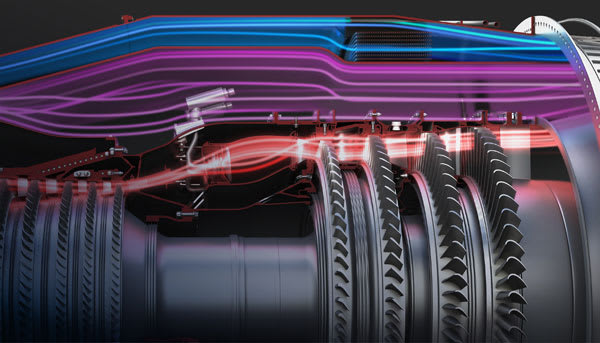
GE has concluded phase 1 testing on its second XA100 adaptive cycle engine as part of the U.S. Air Force’s Adaptive Engine Transition Program (AETP). Phase 1 testing took place at GE’s Evendale, Ohio, altitude test facility and enabled GE to continue gathering high-quality performance data validating the engine’s transformational propulsion capability. Phase 2 tests will begin at the U.S. Air Force’s advanced testing facilities at Arnold Engineering Development Complex (AEDC) in the first quarter of 2022.
“Phase 1 testing allowed us to further characterize the operation of the engine and puts us in a great position to begin Phase 2 testing at AEDC,” said David Tweedie, GE Edison Works’ general manager for Advanced Combat Engines. “We continue to burn down risk with full-scale engine testing, which is why the XA100 is the lowest risk, most capable, and fastest approach to keep the F-35 a preeminent fighter platform for the long term.”
GE’s XA100 became the world’s first ever flight-weight, three-stream adaptive cycle engine in December 2020 before initiating tests on its second engine in August 2021. GE’s engine is uniquely designed to fit both the F-35A and F-35C without any structural modifications to either airframe, enabling better aircraft range, acceleration, and cooling power to accommodate next-generation mission systems.
The XA100-GE-100 engine combines three key innovations to deliver a generational change in combat propulsion performance: 1) An adaptive engine cycle that provides both a high-thrust mode for maximum power and a high-efficiency mode for optimum fuel savings and loiter time. 2) A third-stream architecture that provides a step-change in thermal management capability, enabling future mission systems for increased combat effectiveness. And 3) extensive use of advanced component technologies, including ceramic matrix composites (CMC), polymer matrix composites (PMC), and additive manufacturing.
These revolutionary innovations increase thrust 10%, improve fuel efficiency by 25%, and provide significantly more aircraft heat dissipation capacity, all within the same physical envelope as current propulsion systems. The XA100’s improved fuel efficiency provides significant reduction in carbon emissions. The engine will also operate on any U.S. Air Force-approved biofuels.
More From SAE Media Group
Motion Design INSIDER
Megawatt Electrical Motor Could Help Electrify Aviation
Aerospace INSIDER
Honeywell Develops Cooling System Upgrade for F-35 Engine
Aerospace INSIDER
Collins Aerospace Completes Preliminary Design of 1MW Electric Motor
Aerospace & Defense Tech Briefs
2050 Aircraft Engine Designs Go Radical, Part 1
Tech Briefs
Novel Turboelectric Aircraft Design
Aerospace INSIDER
Boeing Selects New Electric Power Generation System for B-52 Bomber
Tech Briefs
Meringue-Like Material Reduces Aircraft Noise
Aerospace & Defense Tech Briefs
SAE International Issues, Revises Technical Reports for Aerospace Engineering
Aerospace & Defense Tech Briefs
Parker Aerospace and GKN Aerospace to Develop Passive Cooling Solutions for Next-Generation Aircraft Engines

Aerospace & Defense Tech Briefs
Ceramic Matrix Composites in Aircraft Engines Projected to Double over Five Years, Stratview Research Predicts
Aerospace & Defense Tech Briefs
Aerospace Composites Experts Will Meet in Wichita This Month, Focusing on Validating Repairs Techniques
Aerospace INSIDER
Why Hybrid-Electric is a Key Solution for Decarbonizing Aviation
Aerospace Manufacturing and Machining INSIDER
Collins Opens $14 Million Aerospace Additive Manufacturing Facility in Iowa
Aerospace & Defense Tech Briefs
Boeing’s 777X Finally Gets Its Engines

Aerospace INSIDER
Aircraft with Hybrid Engine Can Recharge in Flight

Automotive Engineering
Demand up for Composite-Grade, High-Performance Plastics Across Aerospace, Automotive
Aerospace & Defense Tech Briefs
UAV Turbines Designs Purpose-Built Microturbine Engine for Class 3 and 4 UAVs
Aerospace INSIDER
Delta Air Lines, JetZero to Design Commercial Blended Wing Body Airliner

Aerospace & Defense Tech Briefs
Boeing and NASA Unveil Lightweight, Ultra-Thin, More Aerodynamic Transonic Truss-Braced Wing Concept
Aerospace & Defense Tech Briefs
Lockheed Martin and Arconic Collaborate on 3D Printing and Advanced Aerospace Materials

Tech Briefs
2025 Award Finalists
Aerospace Manufacturing and Machining INSIDER
Can This Self-Healing Composite Make Airplane and Spacecraft Components Last for Centuries?

Top Stories
NewsRF & Microwave Electronics
 Microvision Aquires Luminar, Plans Relationship Restoration, Multi-industry Push
INSIDERAerospace
 A Next Generation Helmet System for Navy Pilots
INSIDERDesign
 New Raytheon and Lockheed Martin Agreements Expand Missile Defense Production
INSIDERMaterials
 How Airbus is Using w-DED to 3D Print Larger Titanium Airplane Parts
NewsPower
 Ford Announces 48-Volt Architecture for Future Electric Truck
ArticlesAR/AI

Webcasts
Electronics & Computers
 Cooling a New Generation of Aerospace and Defense Embedded...
Automotive
 Battery Abuse Testing: Pushing to Failure
Power
 A FREE Two-Day Event Dedicated to Connected Mobility
Unmanned Systems
 Quiet, Please: NVH Improvement Opportunities in the Early Design Cycle
Automotive
 Advantages of Smart Power Distribution Unit Design for Automotive &...
Energy
 Sesame Solar's Nanogrid Tech Promises Major Gains in Drone Endurance