




Rackmount Computer
The Trenton TMS4703 4U rackmount MIL-STD military computer from Trenton Systems (Gainesville, GA) is designed for mounting in a 19" component rack or a transit case. The TMS4703 has flexible MIL-DTL-38999 and MIL-STD-1553 rear I/O connector configurations designed for customer-defined applications. The sealed connectors, plus front- and rear-panel air filters, enable TMS4703 certification to various MIL-STD-810G and MIL-STD-461F standards and test methods. A rugged, lightweight aluminum chassis is used in the TMS4703, and a corrosion-resistant coating is applied to the chassis and fastening hardware.

Other features of the TMS4703 MIL-STD military computer include: configurations available that support single or dual-processor SBCs; backplane options available to support multiple PCI Express, PCI-X and, PCI option cards; and life cycle with 7+ year SBC and backplane availability.
The TMS4703 supports up to ten 2.5" HDDs or SSDs mounted in front-access drive carriers and internal drive bays. System options include one or two 115/230VAC or 18-36VDC power supplies for single or two-in-one system configurations.
For Free Info Click Here
More From SAE Media Group
Aerospace & Defense Tech Briefs
Security IP Module
Aerospace & Defense Tech Briefs
Defining an Open System Architecture Standard for Defense Systems
Aerospace & Defense Tech Briefs
MOSA Enclosure Design for Military Systems
Aerospace & Defense Tech Briefs
VPX: The Rugged Bus Architecture for Embedded Military Applications
Aerospace & Defense Tech Briefs
New Products
Off-Highway Engineering
Defense Agencies Focus on Electronic System Compatibility
Aerospace & Defense Tech Briefs
COM Express: The Architecture to Support the Future of Robotics & Unmanned Systems
Aerospace & Defense Tech Briefs
How Thunderbolt 4 Helps Bring Fault-Tolerant, Distributed Systems to Market
Aerospace & Defense Tech Briefs
3U CompactPCI, OpenVPX Computers
Aerospace & Defense Tech Briefs
OpenVPX Reference Platform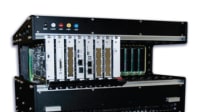
Embedded Technology
48-Channel PCIe Digital I/O Card
Tech Briefs
A Building-Block Approach to COTS Technology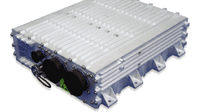
Embedded Technology
Designing CompactPCI Systems with Serial Interfaces
Embedded Technology
3U Rugged Conduction-Cooled Enclosure
Embedded Technology
CompactPCI Steps Into the Future
Embedded Technology
The Evolution of CompactPCI From Parallel to Serial I/O
Aerospace & Defense Tech Briefs
Advancing Embedded Systems with VITA 93: A New Era in Modular I/O for Aerospace and Defense
Aerospace & Defense Tech Briefs
VITA 90: Small Form Factors for UAVs and Other Space Constrained Platforms
Aerospace & Defense Tech Briefs
The Role of Prototype/Test Systems in Next-Generation C5ISR Development
Embedded Technology
Designing High-Speed, Rugged Data Recorders
Off-Highway Engineering
Compact Controller
Embedded Technology
Small Form Factor Computing in OpenVPX

Embedded Technology
Let the Show Begin
Aerospace & Defense Tech Briefs
Card Enclosures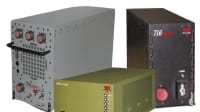
Embedded Technology
VPX SerDes Test Modules
Embedded Technology
EPIC and EBX Enclosures
Embedded Technology
Designing Rugged, Standards-Based Embedded Solutions
Aerospace & Defense Tech Briefs
COTS Computer
Top Stories
INSIDERManufacturing & Prototyping
 How Airbus is Using w-DED to 3D Print Larger Titanium Airplane Parts
INSIDERManned Systems
 FAA to Replace Aging Network of Ground-Based Radars
NewsTransportation
 CES 2026: Bosch is Ready to Bring AI to Your (Likely ICE-powered) Vehicle
NewsSoftware
 Accelerating Down the Road to Autonomy
EditorialDesign
 DarkSky One Wants to Make the World a Darker Place
INSIDERMaterials
 Can This Self-Healing Composite Make Airplane and Spacecraft Components Last...
Webcasts
Defense
 How Sift's Unified Observability Platform Accelerates Drone Innovation
Automotive
 E/E Architecture Redefined: Building Smarter, Safer, and Scalable...
Power
 Hydrogen Engines Are Heating Up for Heavy Duty
Electronics & Computers
 Advantages of Smart Power Distribution Unit Design for Automotive...
Unmanned Systems
 Quiet, Please: NVH Improvement Opportunities in the Early Design...
