




Aircraft Engine Coating Could Triple Service Life and Save Fuel
Researchers at University West in Sweden are using nanoparticles in the heat-insulating surface layer that protects aircraft engines from heat. In tests, this increased the service life of the coating by 300%. The hope is that motors with the new layers will be in production within two years. The surface layer is sprayed on top of the metal components. Thanks to this extra layer, the engine is shielded from heat. The temperature can also be raised, which leads to increased efficiency, reduced emissions, and decreased fuel consumption.
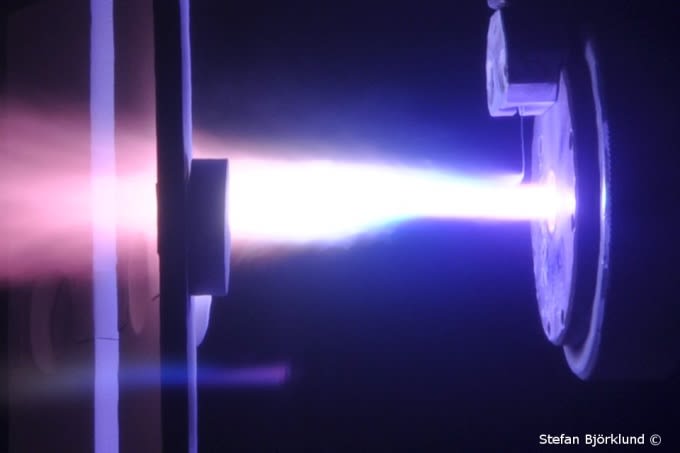
The ceramic layer is subjected to great stress when the enormous changes in temperature make the material alternately expand and contract. Making the layer elastic is therefore important. The new layer has been tested thousands of times in thermal shock tests to simulate the temperature changes in an aircraft engine. The new coating layer lasts at least three times as long as a conventional layer, while it has low heat conduction abilities.
One of the most important issues for the researchers to solve is how they can monitor what happens to the structure of the coating over time, and to understand how the microstructure in the layer works.
More From SAE Media Group
Tech Briefs
Nanotechnology Repairs Engine Damage in Cars


Aerospace & Defense Tech Briefs
Cold Sprayed Coatings with Dual Nanoparticle Reinforcements for Wear and Corrosion Protection
Tech Briefs
High-Temperature Ni-Based Superalloy Composition
Aerospace INSIDER
Ceramic Matrix Composites Offer Lighter, More Durable Engine Parts
Tech Briefs
Thermally Conductive Polymer Films
Aerospace Manufacturing and Machining INSIDER
Hybrid Nanomaterials Hold Promise for Improved Ceramic Composites
Aerospace & Defense Tech Briefs
Limiting Creep in Aerospace Materials
Tech Briefs
Method Enables Wings to be De-Iced in Flight

Aerospace & Defense Tech Briefs
Metal-Plated, High-Temperature Plastics


Aerospace & Defense Tech Briefs
Physics-Guided Neural Network for Regularization and Learning Unbalanced Data Sets
Tech Briefs
Glass Injection Molding

Tech Briefs
Nano-Infused Ceramic Can Report its own Health
Aerospace INSIDER
NASA Develops Unique Materials for Next Generation Aircraft
Tech Briefs
Products of Tomorrow
Tech Briefs
Ruthenium-Doped Thermoelectric Materials
Aerospace INSIDER
Can Neutrons Improve 3D-Printing of Aluminum Aerospace Components?
Aerospace & Defense Tech Briefs
Beyond Boundaries: Elevating Aerospace Design with Fluorosilicones
Aerospace INSIDER
Optical Method Detects Weak Spots in Jet Engine Coatings


Tech Briefs
Using 3D Printing to Strengthen Jet Engines
Tech Briefs
Thin Heat Shield for Superfast Aircraft

Top Stories
NewsSensors/Data Acquisition
 Microvision Aquires Luminar, Plans Relationship Restoration, Multi-industry Push
INSIDERRF & Microwave Electronics
 A Next Generation Helmet System for Navy Pilots
INSIDERWeapons Systems
 New Raytheon and Lockheed Martin Agreements Expand Missile Defense Production
NewsAutomotive
 Ford Announces 48-Volt Architecture for Future Electric Truck
INSIDERAerospace
 Active Strake System Cuts Cruise Drag, Boosts Flight Efficiency
ArticlesTransportation

Webcasts
Aerospace
 Cooling a New Generation of Aerospace and Defense Embedded...
Energy
 Battery Abuse Testing: Pushing to Failure
Power
 A FREE Two-Day Event Dedicated to Connected Mobility
Automotive
 Quiet, Please: NVH Improvement Opportunities in the Early Design Cycle
Electronics & Computers
 Advantages of Smart Power Distribution Unit Design for Automotive &...
Unmanned Systems
 Sesame Solar's Nanogrid Tech Promises Major Gains in Drone Endurance