




Electronic Attack Capability on Unmanned Aircraft
Northrop Grumman Corp.
Falls Church, VA
703-280-2900
www.northropgrumman.com
Northrop Grumman Corporation has integrated and employed an internal miniature electronic attack payload on the Bat unmanned aircraft, marking the first time that such a system was used in operation on a Group III (small, tactical) system.
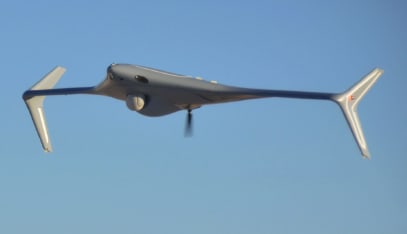 The Pandora electronic attack capacity, integrated in less than two months, is a low-cost derivative of Northrop Grumman's upgraded digital APR-39 systems. The lightweight, multifunction payload provides electronic attack, support, and protection. Northrup Grumman showcased the system’s capabilities late last year in a demonstration that involved the jamming of radars during the Marine Aviation Weapons and Tactics Squadron One (MAWTS-1) Weapons and Tactics Instructor (WTI) event at Naval Air Weapons Station China Lake, CA.
Bat is a tactical, runway-independent, unmanned aircraft that can be launched from land or sea. Its flexible design allows for quick installation of a variety of payloads and enables rapid, expeditionary deployment. During a 2013 Weapons and Tactics Instructor (WTI) event, the Bat completed multiple flights in collaboration with fixed wing and other unmanned platforms.
For Free Info Click Here
More From SAE Media Group
Aerospace & Defense Tech Briefs
F/A-18 Infrared Search and Rescue System
Aerospace & Defense Tech Briefs
Unmanned Aerial Vehicle
Aerospace & Defense Tech Briefs
F-16 Upgrades

Aerospace & Defense Tech Briefs
Autonomous Collaborative Platform
Aerospace INSIDER
Radar and Weapons Upgrades for Netherlands Air Force MQ-9A Reapers
Tech Briefs
Next-Generation Radar for the F-35 Lightning II
Aerospace & Defense Tech Briefs
Foreign Counter-Unmanned Aerial Systems: Developments in the International Arms Markets
Tech Briefs
Novel Control Method in Tailless Aircraft

Aerospace & Defense Tech Briefs
Mobile Counter Unmanned Aircraft System
Aerospace & Defense Tech Briefs
Flight Testing Microvanes and Riblets

Aerospace & Defense Tech Briefs
Mini-Unmanned Aircraft System
Aerospace & Defense Tech Briefs
Unmanned Demonstrator Aircraft for Maritime Surveillance
Aerospace & Defense Tech Briefs
Multi-Role Close Air Support Weapon
Aerospace INSIDER
US Marine Corps to Get MQ-9A Extended Range Unmanned Aircraft Systems
Aerospace INSIDER
A-10 Warthog to Get New Mission Computer
Aerospace & Defense Tech Briefs
Excalibur Flight Test and Modification
Aerospace & Defense Tech Briefs
Remotely Piloted Air Systems
Aerospace & Defense Tech Briefs
The B-52’s New Active Electronically Scanned Array Radar System
Aerospace INSIDER
EA-37B Compass Call: The US Air Force's New Electronic Attack Aircraft
Aerospace & Defense Tech Briefs
The New Airbus Wingman Aircraft
Aerospace INSIDER
Helsing Unveils New Autonomous Fighter Jet 'CA-1 Europa'
Aerospace INSIDER
First F-15Es Equipped With EPAWSS Ready for Flight
Aerospace Manufacturing and Machining INSIDER
Northrop Grumman Developing Next Generation F-35 Radar Upgrade
Aerospace INSIDER
European KC-135s Get Real Time Cockpit System Upgrades
Aerospace INSIDER
AFMC Completes First Ever Flight of F-35 with F-22 Software
Aerospace INSIDER
MQ-1C Completes First Air-Launched Effect Flight Demonstration
Aerospace INSIDER
AI Algorithms Fly Uncrewed XQ-58A Valkyrie Drone for Three Hour Sortie
Top Stories
NewsAutomotive
 Microvision Aquires Luminar, Plans Relationship Restoration, Multi-industry Push
INSIDERDesign
 A Next Generation Helmet System for Navy Pilots
INSIDERWeapons Systems
 New Raytheon and Lockheed Martin Agreements Expand Missile Defense Production
NewsPower
 Ford Announces 48-Volt Architecture for Future Electric Truck
INSIDERAerospace
 Active Strake System Cuts Cruise Drag, Boosts Flight Efficiency
ArticlesTransportation

Webcasts
Aerospace
 Cooling a New Generation of Aerospace and Defense Embedded...
Test & Measurement
 Battery Abuse Testing: Pushing to Failure
Internet of Things
 A FREE Two-Day Event Dedicated to Connected Mobility
Transportation
 Quiet, Please: NVH Improvement Opportunities in the Early Design Cycle
Electronics & Computers
 Advantages of Smart Power Distribution Unit Design for Automotive &...
Aerospace
 Sesame Solar's Nanogrid Tech Promises Major Gains in Drone Endurance