




Wheel Force Transducer for Field Testing
The transducer measures forces and moments between a Humvee tire and the road.
This project endeavors to develop, validate, and calibrate cost-effective field test equipment for measuring tire characteristics on vehicles while driving off-road. The four wheel force transducers are designed for use on the High Mobility Multipurpose Wheeled Vehicle (HMMWV or Humvee).
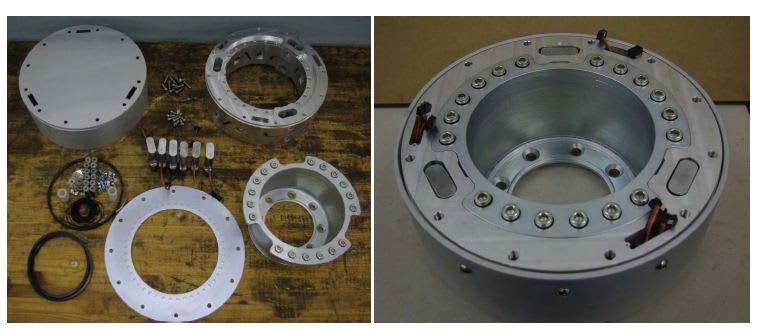
The forces and moments between the tire and the road must be measured on a HMMWV vehicle. There are many derivatives of the HMMWV with large differences in mass. The M1165A1 w/B3 version was used. The gross weight of this vehicle is 12,100 pounds. The space envelope, and therefore basic dimensions available to fit the transducer, is dictated by the rim.
Due to the suspension components on the inside of the wheel, the transducer must be mounted to the outside of the standard rim. The wheel force transducer replaces part of the rim so that the rim is connected to the hub via the force transducer. To achieve this, the standard rim is modified. Modification is simple and involves cutting out the center portion of the outer part of the original rim to the same diameter as the unmodified inner rim.
Apart from finalizing the dimensions and layout, the detail design addressed two aspects; namely, sealing and strength. V-ring seals are used to seal the spaces between the different parts of the wheel force transducer to prevent foreign objects from entering the transducer. These seals make the transducer splashproof and seal against dust, sand, mud, etc. It will, however, not be waterproof when submersed.
Strength was analyzed by performing a finite element analysis (FEM) on two load cases that are considered to be worst-case. The applied load in each case is 50 kN (or 5000 kg). This means that the vehicle can land with the full vehicle weight on one wheel, and that only one of the six load cells in the wheel force transducer can carry the entire load. This resembles an extreme load case.
Finite element analysis results indicated that the load cell flanges can be manufactured from aluminum 7075 alloy in the T6 heat treatment condition. The use of aluminum also has advantages in terms of weight and corrosion. The mass of the wheel transducer is 21 kg and the HMMWV hub adapter is 8 kg, giving a total mass of 29 kg in the HMMWV application. The existing HMMWV tire and rim weigh around 70 kg. The change in unsprung mass caused by the wheel force transducer is therefore deemed acceptable.
Material test specimens were tested at different fully reversed tension-compression force values and the number of cycles until failures were counted. The initial fatigue life of the specimens was not satisfactory, but it was found that increasing the radius and polishing significantly increases the fatigue life. The original flange design was subsequently modified to reduce the stress concentration at the critical point by increasing the radius and adding more material. The results were again verified with finite element analysis. The flanges are now expected to have a life in excess of 1 million cycles at the extreme load case.
A test flange was manufactured and fatigue tested. Initial fatigue testing indicated that the load cells and load cell pins are not strong enough. The load cell pin diameter was subsequently increased from 12 mm to 17 mm, and the shoulder in the initial pin design was removed to eliminate the stress concentration. The 12-mm-diameter spherical bearings were replaced with 17-mm bearings. The load cell design was changed to reduce stress concentrations and the load bearing area was increased.
Fatigue testing on the test rig was stopped when the top aluminum test piece completed 1.1 million cycles and the bottom piece 1.3 million cycles without any visible cracks. This life is considered more than adequate as this means that the vehicle can drive, with the full vehicle load on a single wheel, for more than 3600 km. As the wheel force transducer is a piece of test equipment that will only be used under controlled conditions for dedicated tests, this life is more than acceptable.
This work was done by P.S. Els of the University of Pretoria, South Africa, for the U.S. Army International Technology Center – Atlantic. ARL-0140
This Brief includes a Technical Support Package (TSP).
Wheel Force Transducer for Field Testing
(reference ARL-0140) is currently available for download from the TSP library.
Don't have an account?
More From SAE Media Group

Aerospace & Defense Tech Briefs
Cracking of Aluminum Panels Repaired With Composite Patches
Tech Briefs
Vacuum Attachment for XRF Scanner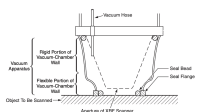
Aerospace & Defense Tech Briefs
Performance of Steel Stud Walls Subjected to Blast Loads
Aerospace & Defense Tech Briefs
Microcompression Tests of a BMG and a Tungsten/BMG Composite
Power Electronics INSIDER
An Electrifying Improvement in Copper Conductivity
Motion Design INSIDER
NYU Tandon Researchers Explore a More Frictionless Future


NASA Spinoff
Toxin-Eating Plants
Tech Briefs
First Transformable Nanoscale Electronic Devices

Tech Briefs
Octopus-Inspired Tech Can Operate Underwater
Aerospace & Defense Tech Briefs
Testing Mechanical Properties of Polymer-Based Multi- Phase Particulate Composites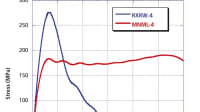
Tech Briefs
VaCNT Makes Up a Promising Membrane Material
Aerospace & Defense Tech Briefs
Beyond Boundaries: Elevating Aerospace Design with Fluorosilicones
Motion Design
Miniature 3D-Printed Actuators to Control Soft Robots

Photonics & Imaging Technology
Leveraging CAD for Precision in Wide Field Star Imaging and Spectroscopy

Motion Design INSIDER
Friction That Cools
Tech Briefs
Thin Film Sensor for Ultra High-Temp Measurement
Motion Design INSIDER
Autonomous Structures Can Be Programmed to Jump Days in Advance
Photonics & Imaging Technology
Large Format Windows: From Material to Mission
Aerospace & Defense Tech Briefs
Expanding Possibilities for Superconducting Qubits With Niobium
Power Electronics INSIDER
Carbon Nanotubes Store Energy
Overview
The document is the final report on the Wheel Force Transducer Research and Development project, authored by Prof. P.S. Els from the University of Pretoria, covering the period from August 2011 to February 2012. The project focuses on developing a concept wheel force transducer capable of measuring the forces and moments between a tire and the road, specifically for High Mobility Multipurpose Wheeled Vehicles (HMMWV) operating in off-road conditions.
The primary objective of this research is to address the significant challenges in obtaining accurate tire characteristics on off-road terrains, which are crucial for developing reliable tire models. Traditional laboratory conditions often fail to simulate the complexities of off-road environments, making field test equipment essential for gathering real-world data. The proposed wheel force transducer represents a critical advancement in this area, aiming to fill the existing gaps in tire testing and modeling knowledge.
The report outlines the design, manufacturing, assembly, and calibration processes for four wheel force transducers intended for use on HMMWVs. It emphasizes the importance of these transducers in enhancing the understanding of tire behavior under various conditions, which is vital for future vehicle modeling and simulation efforts. The document also includes interface drawings to facilitate the fitment of the wheel force transducer to other vehicle types, thereby broadening its applicability.
Additionally, the report discusses plans for further research and development, including a visit to CRELL in mid-2012 to provide feedback on project progress and conduct vehicle testing with telemetry systems. This collaboration aims to evaluate different telemetry options and ensure informed decision-making regarding the transducer's implementation.
The report is unclassified and approved for public release, indicating its significance to the broader research community and potential applications in military and civilian vehicle testing. Overall, this document serves as a comprehensive overview of the project's achievements and future directions, highlighting the importance of innovative testing equipment in advancing tire technology and vehicle performance in off-road scenarios.
Top Stories
INSIDERDefense
 New Raytheon and Lockheed Martin Agreements Expand Missile Defense Production
NewsAutomotive
 Ford Announces 48-Volt Architecture for Future Electric Truck
INSIDERManufacturing & Prototyping
 Active Strake System Cuts Cruise Drag, Boosts Flight Efficiency
ArticlesTransportation
 Accelerating Down the Road to Autonomy
INSIDERMaterials
 How Airbus is Using w-DED to 3D Print Larger Titanium Airplane Parts
Road ReadyTransportation

Webcasts
Electronics & Computers
 Cooling a New Generation of Aerospace and Defense Embedded...
Power
 Battery Abuse Testing: Pushing to Failure
Connectivity
 A FREE Two-Day Event Dedicated to Connected Mobility
Automotive
 Quiet, Please: NVH Improvement Opportunities in the Early Design Cycle
Transportation
 Advantages of Smart Power Distribution Unit Design for Automotive &...
Aerospace
 Sesame Solar's Nanogrid Tech Promises Major Gains in Drone Endurance