




Automotive Engineering - February 2019
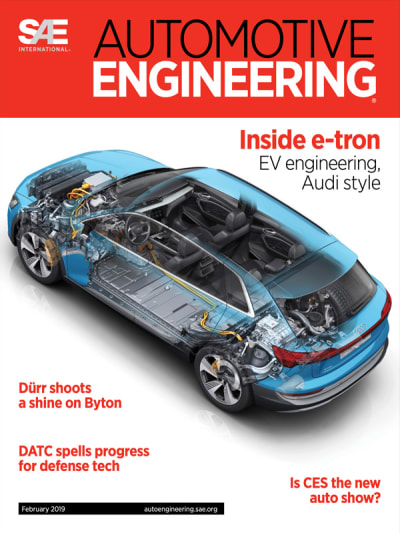
Inside this issue
Overview
The current issue of Automotive Engineering magazine provides a comprehensive overview of the challenges and innovations facing the automotive industry, particularly in the context of electric and autonomous vehicles. The editorial emphasizes the increasing necessity for collaboration among original equipment manufacturers (OEMs), Tier 1 suppliers, and technology firms to navigate the evolving landscape of automotive engineering.
A significant focus of the issue is the financial pressures that global automakers are experiencing, particularly in major markets like China and the U.S. These pressures are compounded by the need to develop electric and self-driving vehicles while also adhering to stricter emissions standards for traditional combustion-engine vehicles. The magazine highlights the recent partnership between Ford Motor Co. and Volkswagen AG, which aims to leverage synergies in commercial vehicle production as a response to these cost challenges. This collaboration is indicative of a broader trend where no single company can afford to operate in isolation, as the complexities of modern automotive development require shared resources and expertise.
The issue also discusses Ford's strategic decisions, including job cuts and the discontinuation of unprofitable vehicle lines, as part of a turnaround strategy for its European operations. Ford's commitment to invest at least billion in autonomous vehicle technology by 2023 is noted, despite the current lack of profitability in this sector. This investment reflects the industry's shift towards innovation and the necessity of adapting to new market demands.
In addition to the financial and strategic aspects, the magazine touches on technological advancements that are shaping the future of automotive engineering. The integration of advanced technologies, such as electric drivetrains and autonomous systems, is crucial for meeting consumer expectations and regulatory requirements. The issue underscores the importance of research and development in these areas, as automakers strive to create vehicles that are not only efficient but also safe and environmentally friendly.
The publication also includes insights into the role of acoustic sensors in enhancing vehicle safety and performance. These sensors are becoming increasingly important in the development of autonomous vehicles, where they can provide critical data for navigation and obstacle detection. The magazine highlights how such technologies are being integrated into new vehicle models, showcasing the industry's commitment to innovation.
Furthermore, the issue features articles that explore the implications of these technological advancements on manufacturing processes. The use of simulation tools, such as COMSOL Multiphysics®, is discussed as a means to improve the accuracy and efficiency of contact modeling in manufacturing. This approach allows engineers to better understand the load-bearing capacity of structures and optimize production methods, ultimately leading to higher quality vehicles.
The magazine also emphasizes the importance of sustainability in automotive engineering. As the industry moves towards electric vehicles, there is a growing need to consider the environmental impact of manufacturing processes and the lifecycle of vehicle components. The issue encourages readers to think critically about how to balance innovation with sustainability, ensuring that the future of mobility is both technologically advanced and environmentally responsible.
In summary, this issue of Automotive Engineering magazine provides a detailed examination of the current state of the automotive industry, highlighting the challenges and opportunities that lie ahead. Through collaboration, investment in technology, and a commitment to sustainability, the industry is poised to navigate the complexities of the modern automotive landscape. The insights shared in this issue serve as a valuable resource for professionals in the field, offering guidance on how to adapt to the rapidly changing environment and drive innovation in automotive engineering.
Features
-
Articles
Byton Details Its EV, Autonomy Vision at CES 2019
Auto, Tech Industries Launch PAVE Coalition for Autonomous-Vehicle Education
2019 E-Tron SUV: Audi Goes Electric
Dürr Builds Advanced Paint Shop for EV Startup Byton
ZF Debuts Enhanced CPUs, Adjusts Autonomous Focus
Regulars
-
What We're Driving
-
Technology Reports
Magna Bringing Configurable Seating Concept to CES
China’s NIO Making EV Battery Swapping Work
-
Road Ready
2019 Toyota RAV4: Doubling down on a Best-Seller
NAIAS 2019: The Tech-Savvy Next-Generation Ford Explorer
Stories
-
News
Elevate: Hyundai’s New Four-Wheel Drive, Four-Legged Off-Road Vehicle
Nvidia’s New Level 2+ Autonomy Platform Is Making Cars Safer Today
NAIAS 2019: Shelby GT500 Most Powerful and Advanced Mustang in Ford History
NAIAS 2019: Infiniti Debuts QX Inspiration SUV Concept
The Future of Autonomous Vehicle Engineering Now Starts in Middle School
McLaren Applied Technologies’ All-Electric, AI-Infused Vision of Formula 1 Racing
Top Stories
NewsSensors/Data Acquisition
 Microvision Aquires Luminar, Plans Relationship Restoration, Multi-industry Push
INSIDERRF & Microwave Electronics
 A Next Generation Helmet System for Navy Pilots
INSIDERWeapons Systems
 New Raytheon and Lockheed Martin Agreements Expand Missile Defense Production
NewsAutomotive
 Ford Announces 48-Volt Architecture for Future Electric Truck
INSIDERAerospace
 Active Strake System Cuts Cruise Drag, Boosts Flight Efficiency
ArticlesTransportation

Webcasts
Aerospace
 Cooling a New Generation of Aerospace and Defense Embedded...
Energy
 Battery Abuse Testing: Pushing to Failure
Power
 A FREE Two-Day Event Dedicated to Connected Mobility
Automotive
 Quiet, Please: NVH Improvement Opportunities in the Early Design Cycle
Electronics & Computers
 Advantages of Smart Power Distribution Unit Design for Automotive &...
Unmanned Systems
 Sesame Solar's Nanogrid Tech Promises Major Gains in Drone Endurance