




Aerospace & Defense Technology - May 2017
Inside this issue
Overview
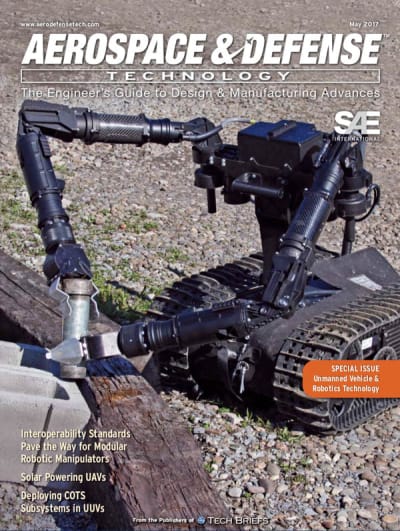
The May 2017 issue of Aerospace & Defense Technology presents a special focus on Unmanned Vehicle and Robotics Technology, highlighting significant advancements and trends in the field. This issue is particularly relevant for professionals and enthusiasts interested in the integration of robotics and unmanned systems across various applications, including military, commercial, and research sectors.
Key Topics Covered
-
Interoperability Standards for Modular Robotic Manipulators: The issue discusses the importance of interoperability standards in the development of modular robotic manipulators. These standards are crucial for ensuring that different robotic systems can work together seamlessly, which is essential for complex operations in dynamic environments. The article emphasizes how these standards can enhance the flexibility and scalability of robotic systems, allowing for easier upgrades and integration of new technologies.
-
Solar Powering UAVs: Another significant topic is the exploration of solar power solutions for Unmanned Aerial Vehicles (UAVs). The article outlines the benefits of using solar energy to extend the operational range and endurance of UAVs. By harnessing solar power, UAVs can reduce their reliance on traditional fuel sources, leading to lower operational costs and a smaller environmental footprint. The discussion includes various solar technologies and their potential applications in enhancing UAV capabilities.
-
Deploying COTS Subsystems in UUVs: The issue also delves into the deployment of Commercial Off-The-Shelf (COTS) subsystems in Unmanned Underwater Vehicles (UUVs). This approach allows for the rapid integration of advanced technologies without the need for extensive custom development. The article highlights case studies where COTS components have been successfully implemented, showcasing the benefits of cost-effectiveness and reduced development time. It also addresses the challenges associated with ensuring reliability and performance in underwater environments.
Editorial Insights
The editorial section features contributions from key figures in the industry, including insights from the managing editor and associate editors. They discuss the evolving landscape of unmanned systems and robotics, emphasizing the need for continuous innovation and collaboration among industry stakeholders. The editorial highlights the role of research and development in driving advancements and the importance of staying abreast of emerging technologies.
Industry Trends and Future Directions
Throughout the issue, various articles touch on broader industry trends, such as the increasing use of artificial intelligence (AI) and machine learning in robotics. These technologies are transforming how unmanned systems operate, enabling them to perform complex tasks autonomously and adapt to changing conditions in real-time. The issue also explores the implications of these advancements for military applications, including surveillance, reconnaissance, and logistics.
Case Studies and Applications
Several case studies are presented, illustrating real-world applications of the technologies discussed. These examples provide readers with a practical understanding of how innovations in unmanned systems are being implemented across different sectors. From military operations to environmental monitoring, the versatility of UAVs and UUVs is showcased, highlighting their potential to address various challenges.
Conclusion
The May 2017 issue of Aerospace & Defense Technology serves as a comprehensive resource for professionals in the unmanned systems and robotics fields. By focusing on interoperability, renewable energy solutions, and the integration of COTS technologies, the issue provides valuable insights into the current state and future directions of the industry. As unmanned systems continue to evolve, the importance of collaboration, innovation, and adherence to standards will be paramount in unlocking their full potential.
This issue not only informs readers about the latest technological advancements but also encourages them to consider the broader implications of these developments for the future of aerospace and defense. With a commitment to excellence in reporting and analysis, Aerospace & Defense Technology remains a vital source of information for those engaged in the rapidly changing landscape of unmanned vehicles and robotics technology.
Features
-
Articles
Fast-Tracking Autonomous Vehicles with Simulation
Developing a Multi-Modal UGV Robot Control Interface
Deploying COTS Subsystems in UUVs
Interoperability Standards Pave the Way for Modular Robotic Manipulators
Tech Briefs
-
Machinery & Automation
Gesture-Based Controls for Robots: Overview and Implications for Use by Soldiers
Identifying the Flow Physics and Modeling Transient Forces on Two-Dimensional Wings
The Scaling of Loss Pathways and Heat Transfer in Small Scale Internal Combustion Engines
Products
Top Stories
INSIDERDefense
 New Raytheon and Lockheed Martin Agreements Expand Missile Defense Production
NewsAutomotive
 Ford Announces 48-Volt Architecture for Future Electric Truck
INSIDERManufacturing & Prototyping
 Active Strake System Cuts Cruise Drag, Boosts Flight Efficiency
ArticlesTransportation
 Accelerating Down the Road to Autonomy
INSIDERMaterials
 How Airbus is Using w-DED to 3D Print Larger Titanium Airplane Parts
Road ReadyTransportation

Webcasts
Electronics & Computers
 Cooling a New Generation of Aerospace and Defense Embedded...
Power
 Battery Abuse Testing: Pushing to Failure
Connectivity
 A FREE Two-Day Event Dedicated to Connected Mobility
Automotive
 Quiet, Please: NVH Improvement Opportunities in the Early Design Cycle
Transportation
 Advantages of Smart Power Distribution Unit Design for Automotive &...
Aerospace
 Sesame Solar's Nanogrid Tech Promises Major Gains in Drone Endurance