




New Report Finds Engine Nozzle Failure Caused Blue Origin Crash
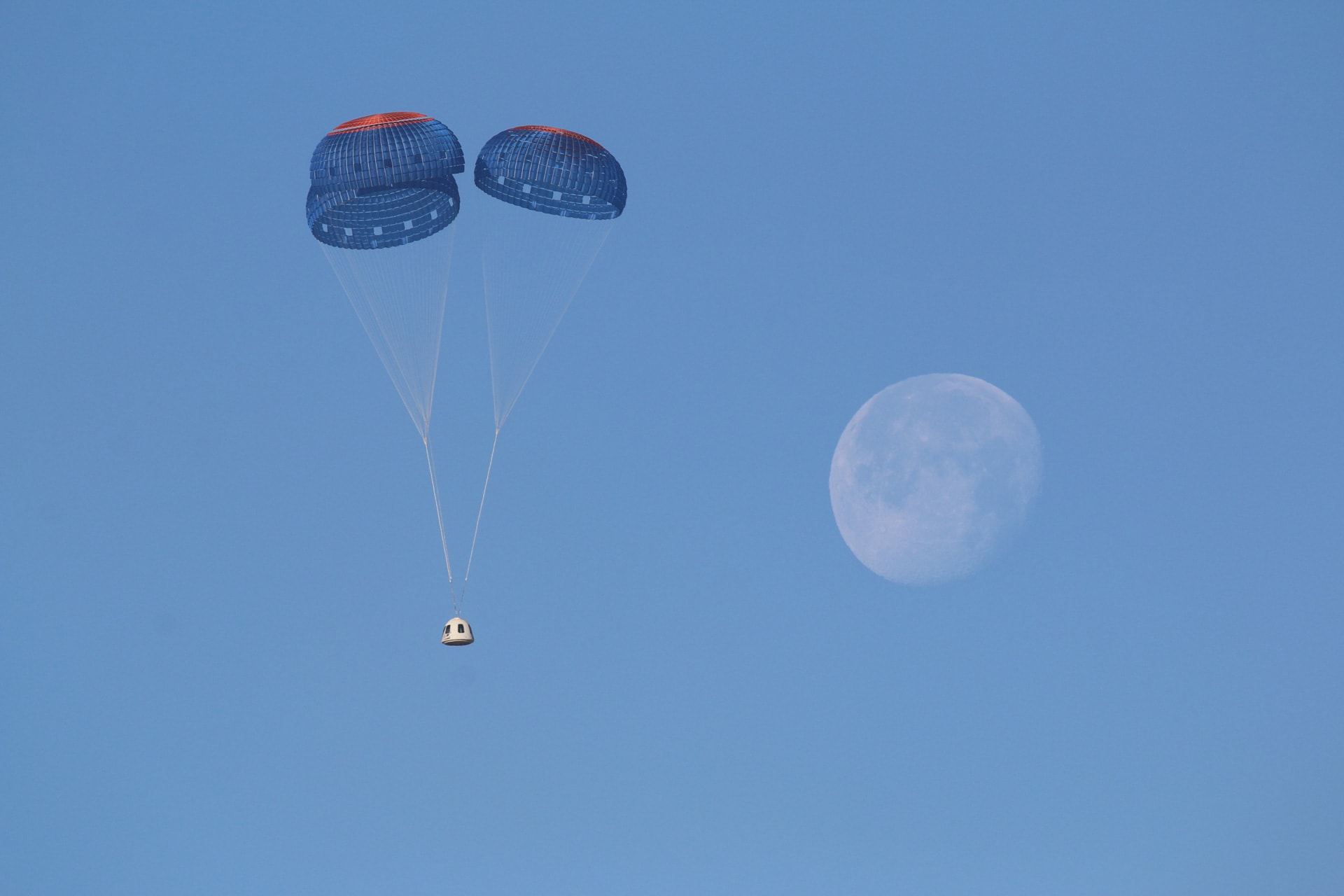
Blue Origin's New Shepard (NS-23) must remain grounded for now, after a Federal Aviation Administration (FAA) investigation found that the suborbital rocket system's Sept. 12, 2022 crash was caused by the failure of an engine nozzle. The FAA, which closed its investigation into the New Shepard crash last week, is requiring Blue Origin to complete 21 corrective actions, including a re-design of the engine and nozzle components before it can resume rocket launch operations.
During the mishap the onboard launch vehicle systems detected the anomaly, triggered an abort and separation of the capsule from the propulsion module as intended and shut down the engine, according to the FAA. The capsule landed safety and the propulsion module was destroyed upon impact with the ground. All debris landed within the designated hazard area. Public safety was maintained at all times with no injuries or public property damage.
Blue Origin posted a response to the FAA's closure of its mishap investigation with a post to its X account that notes, "We’ve received the FAA’s letter and plan to fly soon." The company previously released its own findings into the cause of the rocket's crash in March, stating that the direct cause was the result of a "thermo structural failure of the engine nozzle."
A forensic evaluation of the recovered nozzle fragments also showed clear evidence of thermal damage and hot streaks resulting from increased operating temperatures, according to Blue Origin. The fatigue location on the flight nozzle is aligned with a persistent hot streak identified during the investigation.
The FAA is not releasing the full version of the mishap investigation report because it "contains proprietary data and U.S Export Control information."
More From SAE Media Group
Aerospace INSIDER
Virgin Galactic Reports on Pin Detachment From Recent Spaceflight
Aerospace INSIDER
Blue Origin Rocket Reaches Intended Orbit on First Launch

Aerospace INSIDER
Firefly Alpha Rocket Loses Engine Nozzle During Launch
Aerospace & Defense Tech Briefs
Blue Origin Aims for Crewed New Shepard Launch in 2019
Aerospace & Defense Tech Briefs
Late Paul Allen’s Stratolaunch Company Cancels Launch Vehicle Projects

Aerospace & Defense Tech Briefs
Blue Origin Mission 9 a Success

Aerospace & Defense Tech Briefs
Stratolaunch All-Composite Aircraft Achieves First Flight
Aerospace & Defense Tech Briefs
Stratolaunch Composite Air-Launch Aircraft Pulls the Wheels up During Latest Taxi Test
Aerospace & Defense Tech Briefs
SpaceX Tests Raptor Engine, Prepares for Starship “Hop”
Aerospace & Defense Tech Briefs
Can the Air Force Reach a 24-Hour Launch Window?
NASA Spinoff
Controlled Propulsion for Gentle Landings

Aerospace & Defense Tech Briefs
Electric Propulsion for a Nuclear-Powered Spacecraft

Aerospace & Defense Tech Briefs
Spyder Rocket’s First Hypersonic Flight
Aerospace & Defense Tech Briefs
NASA Invests $44M to Advance ‘Tipping Point’ Space Exploration Technologies

Aerospace & Defense Tech Briefs
Northrop Grumman Wins $792M to Deliver Intermediate, Heavy Versions of OmegA Space Launch Vehicle
Aerospace INSIDER
Boeing Starliner Launch Delayed to Test Helium Leak Repair
Aerospace INSIDER
SpaceX to Develop ISS Deorbit Vehicle for NASA
Aerospace Manufacturing and Machining INSIDER
ULA, Blue Origin to Develop New American Rocket Engine
Aerospace & Defense Tech Briefs
Space Launch Providers Submit Proposals for National Security Space Launch Program
Aerospace & Defense Tech Briefs
Vulcan Rocket Completes First National Security Launch for Space Force
NASA Spinoff
Launch, Return, Repeat
Top Stories
INSIDERManufacturing & Prototyping
 How Airbus is Using w-DED to 3D Print Larger Titanium Airplane Parts
INSIDERManned Systems
 FAA to Replace Aging Network of Ground-Based Radars
NewsTransportation
 CES 2026: Bosch is Ready to Bring AI to Your (Likely ICE-powered) Vehicle
NewsSoftware
 Accelerating Down the Road to Autonomy
EditorialDesign
 DarkSky One Wants to Make the World a Darker Place
INSIDERMaterials
 Can This Self-Healing Composite Make Airplane and Spacecraft Components Last...
Webcasts
Defense
 How Sift's Unified Observability Platform Accelerates Drone Innovation
Automotive
 E/E Architecture Redefined: Building Smarter, Safer, and Scalable...
Power
 Hydrogen Engines Are Heating Up for Heavy Duty
Electronics & Computers
 Advantages of Smart Power Distribution Unit Design for Automotive...
Unmanned Systems
 Quiet, Please: NVH Improvement Opportunities in the Early Design...
