




Balancing Cost, Performance and Weight in Designing UAVs
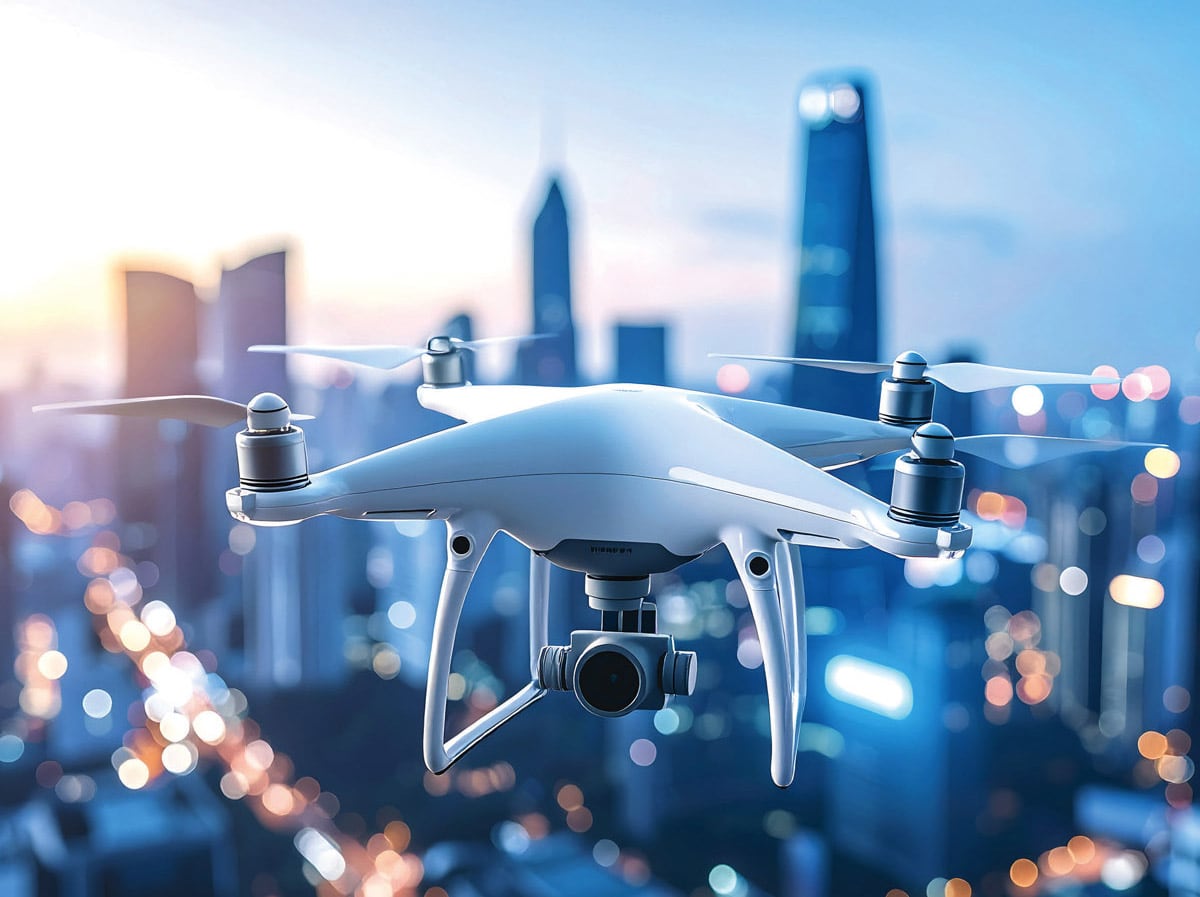
Recent years have seen a significant rise in medium sized drones across a huge range of applications. In agriculture, for example, drones are used to monitor livestock and map soil quality to prevent the over-application of fertilizer. In archaeology, they’ve been used for surveys and to track looting – for example conservation NGOs are using them to monitor biodiversity and prevent poaching.
Traditionally, many of these applications have operated within tightly constrained budgets, often prioritizing affordability over durability. As a result, lower-cost drones using inexpensive components – with inherently higher failure rates – have been the norm, especially for uses in remote or low-risk environments. However, the use of UAVs is increasing rapidly - including their use for delivery in highly populated areas by Amazon, DHL and other logistics firms, meaning the balance between cost and performance is becoming a more pressing concern.

In a report about beyond visual line of sight (BVLOS) drone operations published by the U.S. Department of Transportation Office of Inspector General (OIG) on July 8, 2025, the agency notes that the Federal Aviation Administration had registered 361,000 commercial drones at the beginning of 2024. The report expects that number to grow to 1 million by 2027.
While all systems – be they a cell phone or a sports car – to a greater or lesser extent are subject to size, weight, power and cost (SWaP-C) trade-offs, these constraints are especially prevalent when it comes to the design of UAVs. These systems need to stay airborne for long periods of time, often while carrying large payloads.
Heavier payloads require more power to achieve lift and maintain flight and according to a 2019 study from researchers at the University of Michigan, adding just one kilogram to a drone’s payload can reduce its flight time by up to 30 percent.
Connectors and cable assemblies collectively represent a significant proportion of the UAV system mass and in this article, we will examine how some of the innovations that were developed for the high-reliability connector ranges – for use in military jets or Formula-1 cars – are making their way to lower-cost industrial models. We’ll also look at how this enables OEMs to balance both the performance / reliability demands within the cost pressures being faced by commercial-application UAV developers.

Military UAVs
Before we get to that, let’s first look at tactical UAVs used by the military. These are required to fly up to 160 km, and HALE (high altitude, long endurance) surveillance drones go far further. The nature of their operational environment means they need the ability to function reliably, while working in high-vibration situations, sub-zero temperatures and low-pressure atmospheric conditions. At the same time they need to be as small and lightweight as possible.
Unmanned vehicles such as these integrate interconnect that have been designed with a focus on the SWaP of SWaP-C. They use the latest developments in materials science with alternative layouts that enable lighter, slimmer designs and the smallest possible pitches as well as the best possible electrical conductance.
On the materials side, this means metal alloys, reinforced composites and lightweight thermoplastics. Similarly, conductive materials, such as beryllium copper or thin film coatings of gold are used to increase the electrical conductivity, prevent corrosion and improve mating performance with the minimal of weight addition.
When it comes to design, leading edge connectors offer single and double-row layouts as well as angled (vertical to vertical / vertical to horizontal) variants and the integration of both signal and power on the same device, which enables the reduction of components (and therefore weight) and allows for more aerodynamic designs.
High reliability connectors are also designed to cope with vibration, shock, temperature extremes and low-pressure environments.
Commercial Drones
But the drones intended for use in logistics, or agriculture aren’t leading-edge systems. And cost is very much a primary consideration.
As such, many of the drones used to map nutrients in the soil of a farm, scan archaeological sites, undertake home deliveries, or transport medical supplies to remote areas need to work within exceptionally tight cost constraints while still developing systems that maximize work time (i.e. range), and reliability.
The move to drones for applications such as logistics and medical supply transport brings several benefits. For example, a 2022 paper from Carnegie Mellon University found automated drone delivery in logistics (a sector responsible for 37 percent of all transportation-related CO2 emissions) not only reduced transportation time significantly but also reduced the energy per package by up to 94 percent versus other transport types – with only electric cargo bikes being more efficient.
However, a December 2024 study analyzing the adoption of drones for multi-modal logistics in a healthcare setting published in the journal Transport Economics and Management posited that cost is the biggest barrier to widespread drone uptake. So how can drone manufacturers reduce component costs without risking reliability?
Leveraging Connectors to Reduce Drone Weight
While connector ranges developed for the most demanding environments may be out of reach, the learnings gained in the development of high-reliability technologies are not. Indeed, they are starting to make their way into the lower-cost industrial connectors.
For example, Harwin’s Kontrol range of connectors has been designed for high vibrational stress, with components tested to withstand 20 Gs continuously for 12 hours. Similarly, they incorporate reliable-mating features such as shrouded pins and secure latching mechanisms that help maintain a secure connection despite the vibration that will come from a multi-copter drone’s rotor blades.
Advances that have allowed miniaturization in the flagship ranges are also starting to appear in industrial connectors, with both smaller pitches and mixed layout / hybrid connectors. These enable the combination of both power and signal in a single unit, and therefore reduce the total number of connectors required on the board.
Weight can also be saved through the optimization of the cable assemblies. While metal braids may be needed in some cases to provide durability and EMC shielding, shifting to lighter materials where possible can also have a notable effect on the total mass of the vehicle.
Reducing the number of connectors not only lowers the system weight but also enhances reliability, with the risk of connector misalignment increasing with each connector added.
To counter this, floating connector ranges enable movement in the X and Y axes, which enables greater tolerance when multiple connectors are used to connect the same two PCBs. For example Harwin’s fine-pitch, high-pin-count Flecto board-to-board connector range can withstand up to ±0.5mm misalignment in each axis.
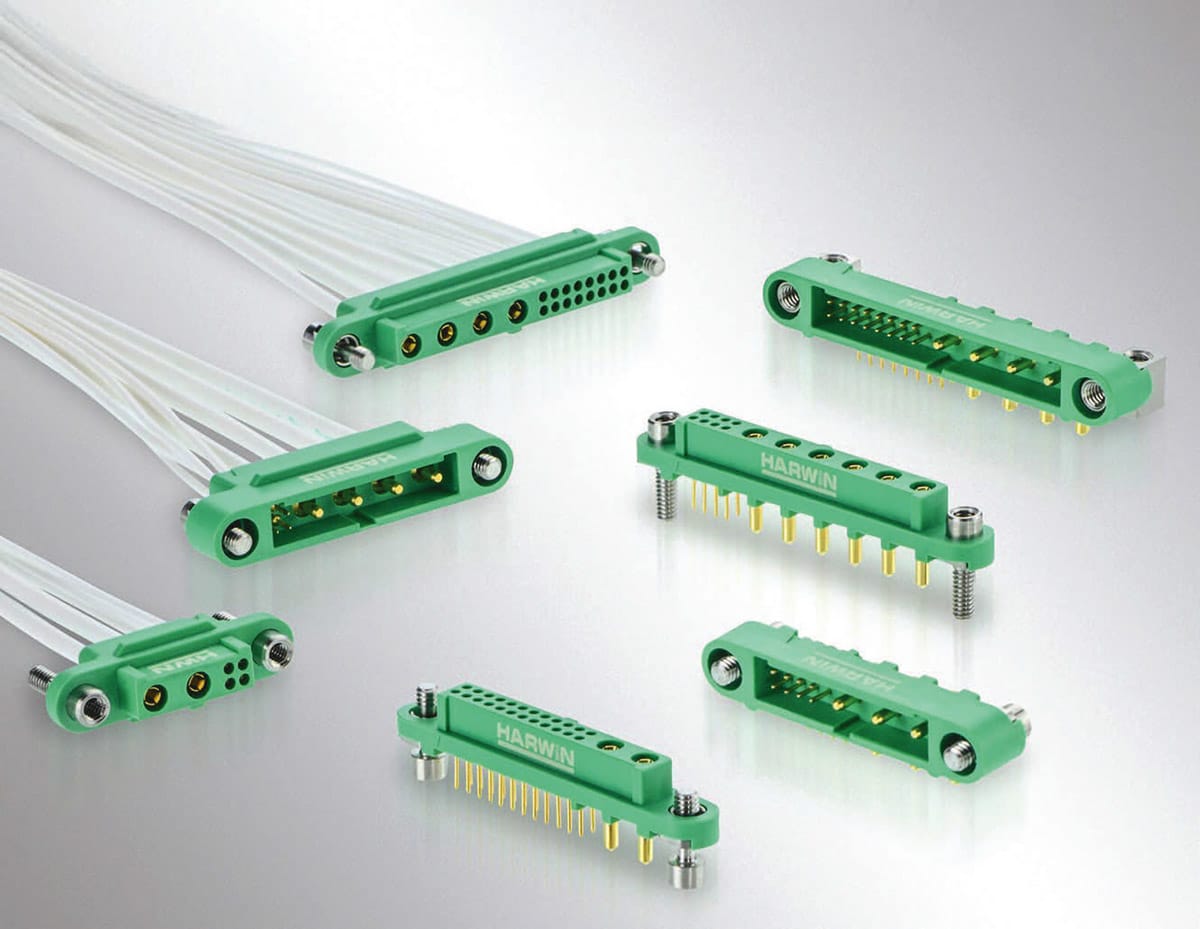
And, in addition to advanced products, reputable suppliers are advancing their offering by providing a range of tools that, for example speed the identification, selection, and prototyping of connector applications.
Vendors will also provide comprehensive documentation to cover everything from product specifications to test report summaries and from product training to tooling instructions. And by working with advanced-technology companies to implement industrial connector ranges with technologies initially developed for high-reliability ranges, system developers can reduce weight without compromising on mandated reliability standards.
Supply Chain Reliability
One final note. With reliability and cost both being vital in commercial drones, it is always tempting to source the best possible deal.
But the trustability of the supplier should be a key factor when sourcing components with counterfeit and low-quality components entering the market. There are even examples of websites taking orders for stock they don’t (and never will) have. Reputable distributors are therefore essential.
Like many other companies, Harwin uses a franchised distribution model with ECIA standards in place to prevent fraudulent or counterfeit parts, for example listing distribution partners listed on the website as well as on TrustedParts.com and any company that claims to be a partner that isn’t on these lists should be avoided.
This article was contributed by Harwin (Portsmouth, UK). For more information, visit here .
More From SAE Media Group
Aerospace & Defense Tech Briefs
Quality by Design: Imperatives for Aerospace and Defense Manufacturing

Aerospace & Defense Tech Briefs
Shielding Aerospace Systems from Electromagnetic Interference
Aerospace & Defense Tech Briefs
Making a Material Difference in Aerospace & Defense Electronics
Aerospace & Defense Tech Briefs
Unlocking the Potential of 3D-Printed Polymers in Aerospace and Defense

Aerospace & Defense Tech Briefs
Scientists Fuse Simulations and Machine Learning to Accelerate Novel Additively Manufactured Materials

Aerospace & Defense Tech Briefs
Remanufacturing Reimagined: How Selective Electroplating Extends Service Life and Reduces the Cost of Aerospace Components
NASA Spinoff
3D Printed Engines Propel Next Industrial Revolution

Aerospace INSIDER
Paris Air Show: New Aerospace Technologies, Updates and Research
Aerospace INSIDER
Using Ultrabright X-Rays to Test Materials for Ultrafast Aircraft
Tech Briefs
5Ws of an All-Electric Delivery Drone
Aerospace INSIDER
Air Force Wind Tunnel Team Takes 3D Printing Program to Next Dimension
Aerospace & Defense Tech Briefs
Designing for Space and Other Extreme Environments
Aerospace & Defense Tech Briefs
Machining Beryllium
Aerospace & Defense Tech Briefs
Testing Military-Grade Adhesive in Extreme Loading Conditions
Aerospace Manufacturing and Machining
Why Heat Exchanger Manufacturers Need to Rethink Design and Fabrication
Aerospace INSIDER
4D Composite Printing Can Improve Drone Wings
Aerospace & Defense Tech Briefs
European Researchers Leverage AI in Manufacturing Rocket Parts
Aerospace Manufacturing and Machining INSIDER
Meeting the Demands of Defense Production and Sustainment Through Additive Manufacturing
Aerospace Manufacturing and Machining INSIDER
How Airbus is Using w-DED to 3D Print Larger Titanium Airplane Parts
Tech Briefs
Videos of the Month
Aerospace & Defense Tech Briefs
Reclaiming Readiness: Advancing US Defense Through Scalable Additive Manufacturing
Aerospace & Defense Tech Briefs
Plasma Electrolytic Oxidation: The Future of Lightweight Designs in Aerospace and Defense
Tech Briefs
Executive Roundtable: Additive Manufacturing

Aerospace INSIDER
Can Neutrons Improve 3D-Printing of Aluminum Aerospace Components?
Top Stories
INSIDERManufacturing & Prototyping
 How Airbus is Using w-DED to 3D Print Larger Titanium Airplane Parts
INSIDERManned Systems
 FAA to Replace Aging Network of Ground-Based Radars
NewsTransportation
 CES 2026: Bosch is Ready to Bring AI to Your (Likely ICE-powered) Vehicle
NewsSoftware
 Accelerating Down the Road to Autonomy
EditorialDesign
 DarkSky One Wants to Make the World a Darker Place
INSIDERMaterials
 Can This Self-Healing Composite Make Airplane and Spacecraft Components Last...
Webcasts
Defense
 How Sift's Unified Observability Platform Accelerates Drone Innovation
Automotive
 E/E Architecture Redefined: Building Smarter, Safer, and Scalable...
Power
 Hydrogen Engines Are Heating Up for Heavy Duty
Electronics & Computers
 Advantages of Smart Power Distribution Unit Design for Automotive...
Unmanned Systems
 Quiet, Please: NVH Improvement Opportunities in the Early Design...
