




Quality by Design: Imperatives for Aerospace and Defense Manufacturing
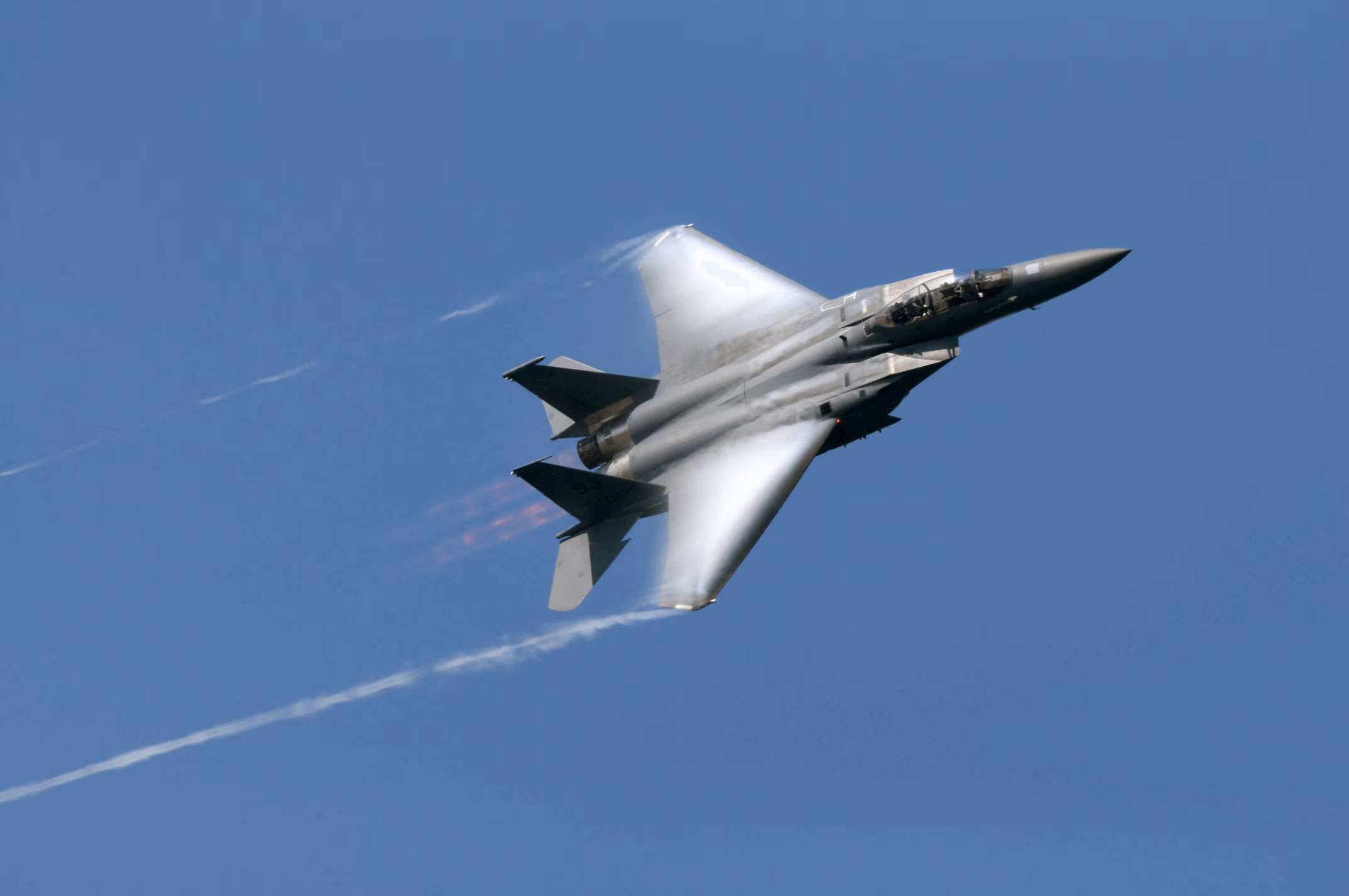
One of the most critical and challenging aspects of modern aerospace and defense manufacturing is the need to infuse quality and reliability into every phase of product development — from initial design and material selection to prototype production, rigorous testing, manufacturing and standards qualification. After all, lives are at stake, so there is no margin for error when ensuring the safety and performance of technologies that must operate flawlessly despite prolonged exposure to extreme environmental, mechanical and thermal stressors.
This article will provide pragmatic insights and best practices for balancing the connector design, manufacturing and testing requirements that are needed to meet evolving demands for product reliability and durability.
Today’s aircraft, spacecraft, missiles and defense systems contain thousands, if not millions, of electronic, electrical, and optical components. Innovative connectors empower these disparate systems to communicate, transmit power and function as cohesive solutions. Not only must aerospace and defense connectors be designed, manufactured and tested in accordance with stringent military, space industry, reliability, and manufacturing quality standards, they have to accommodate unrelenting demands for higher-data rates and reduced size, weight, power and cost (SWaP-C).
The philosophy of “designing in quality” permeates every stage of a product’s lifecycle, starting with initial concepts and designs. This requires holistic thinking and cross-functional collaboration among design engineers, manufacturing engineers, material scientists, quality engineers, supply chain managers and field application engineers. Equally important is embedding the “voice of the customer” to anticipate and react to rapidly growing technology requirements. The result goes beyond improvements in product reliability and longevity, leading to more efficient manufacturing, reduced costs, enhanced safety and ultimately, greater mission success.
Precise Alignment of Features and Functionality

To maintain uninterrupted operation in land, sea and space applications, connectors must withstand intense vibrations, high-impact shock forces, temperature fluctuations, as well as excess moisture, dust and contaminants. The right blend of materials also is required to block corrosion from salt spray and oxidation, which cause rapid deterioration.
Connectors must also be designed to withstand hundreds, or even thousands, of mating cycles without failure, given that lifecycles for aerospace and defense platforms are measured in decades, not years. It is common for aircraft, naval vessels, ground vehicles and satellites to have operational lifespans of 30 to 40 years, or even more.

Ensuring durability necessitates finding and fixing failure points while boosting mechanical resilience, environmental adaptability and operational longevity. Careful evaluation of performance and design trade-offs include improvements to Electromagnetic Interference (EMI) shielding and signal integrity under conditions with high electrical noise. Addressing requirements for sophisticated routing strategies that reduce crosstalk and signal degradation over long distances is paramount, along with advanced shielding to maintain signal fidelity.
During initial product design and subsequent iterations, a proactive, data-driven approach will help optimize connector performance without overcomplication. A push for higher data speeds and smaller form factors adds another degree of difficulty. Advanced aerospace and defense systems, from satellites and unmanned aerial vehicles (UAVs) to soldier-worn equipment and advanced avionics, are shrinking fast. Squeezing more functionality into tighter spaces creates greater density of electronic components and interconnections. Adding more components into smaller spaces also generates more heat, exacerbating thermal-load management challenges.
AirBorn’s SInergy mini-modular hybrid connector family emerged from evaluations of future needs, where customers voiced preferences for modular solutions that could be either signal power or RF. Also desired was the ability to combine several inputs into a single connector for ultimate flexibility. The result: an award-winning line of small form-factor connectors that deliver up to 25Gpbs per lane with military-grade resilience. This makes SInergy ideal for multiple applications, including military heads-up display helmets.
For space applications and certain military environments, interconnects must be designed to withstand ionizing radiation without performance degradation. The rapid rise in space exploration and satellite launches places more emphasis on radiation-hardened (rad-hard) electronics and connectors. As a result, design decisions about rad-hard interconnects must consider specific material choices and shielding options. Among other top design criteria is the contact system, otherwise known as the “heart of the connector.”

Reliability Begins at the Contact
A well-engineered contact system is key to connector dependability because it is responsible for electrical continuity while resisting wear and withstanding vibration. As the crucial enabler of current or signals between two joined circuits or devices, the contact system combines mechanical engineering, electrical engineering, signal integrity design and material science. Signal degradation and mechanical wear are often caused by uneven force distribution or misaligned contacts. An important product design objective is to determine how much force is needed to preserve long-term mechanical and electrical reliability. In mission-critical applications involving frequent vibration, shock and thermal shifts, higher pressure may be required to sustain performance.
Other factors, including contact geometry, spring tension and material selection, are equally important. Conductivity, resistance to corrosion and surface hardness all affect how contacts degrade over time. Choosing the right combination of contact geometry, contact base material, such as beryllium copper or other copper alloys, along with surface finishes, such as gold, are paramount to ensuring connector reliability.
Different contact types, for example, are found in high-end, rugged and reliable connectors. A common design consideration for aerospace and defense is the use of multiple points-of-contact to withstand high vibration and G-forces. Connector designs with up to four points of contact, for example, offer increased stability and signal integrity, making them ideal for aerospace and defense missions. Since these contact systems distribute mechanical loads during vibration/shock using redundant contact paths, they are more capable of delivering uninterrupted performance.
AirBorn’s verSI connector series utilize a four-point contact system to improve reliability and help prevent signal loss or malfunction. If one contact experiences momentary interruption due to vibration or debris, for instance, the other contact points maintain the connection. This makes them well suited for high-speed, high-density signal integrity applications and contributes to a longer lifespan. verSI connectors are qualified for up to 2,500 mating cycles, but some customers have reported unfailing performance beyond 20,000 mating cycles.
The fundamental concept of distributing the electrical and mechanical load across multiple contact points is a cornerstone of aerospace and defense connector design. Thanks to ongoing advancements in material science, plating technologies (like thick gold plating over nickel), and manufacturing precision, highly ruggedized connectors with multiple contact points assure “never fail” reliability.
Manufacturing Precision and Automation
Another top tenet of product quality is designing for manufacturability, which starts with product concepts and prototypes and extends through volume manufacturing and customer delivery. Coordinated efforts between product designers and manufacturing engineers facilitate choices for concepts and prototypes while being mindful of how they impact materials selection, supply chain decisions, manufacturing processes, and ultimately, product cost and time to market.
Rugged and reliable connectors should be produced using precise and automated manufacturing processes. Increasingly, product developers use digital twins, essentially digital models of manufacturing processes, to simulate different scenarios, optimize workflows and predict issues before beginning physical production.
Manufacturing automation can significantly elevate repeatability, accuracy and throughput for higher volumes while reducing human error. Moreover, the intensifying need for miniaturization, especially within the aerospace and defense sector, puts immense pressure on manufacturing processes. Companies want to continually shrink connectors without compromising quality, reliability and ruggedness.
As a Molex company, AirBorn has access to a global manufacturing footprint and the latest developments in automation and process technologies to support the manufacturing of connector contacts, housings and other components. Using automated machining, stamping, plating, molding and robotic assembly enables rapid production while lowering labor costs, optimizing material utilization and reducing waste. Process repeatability is another overarching benefit realized through automation, especially as miniaturized connectors feature very small pitch sizes, high pin counts and tight tolerances.
When components are packed closely, the risk of electromagnetic interference (EMI) and crosstalk increases dramatically. Manufacturing processes must ensure the integrity of shielding, grounding paths and precise impedance control within the connector.
Rigorous Testing and Standards Qualification
Internal testing starts at prototyping and continues through final production to validate performance, durability and longevity. High-reliability connectors for aerospace and defense must meet strict quality standards,
Moreover, depending on intended use, connector performance must be validated according to stringent quality standards, including IPC-620 Class 3 (including space addendum), MIL-STD-202, MIL-STD-810, MIL-DTL-83513, MIL-STD-1344, NASA-STD-87394, NASA ASTM-E595, NASA EEE-INST-002, ECSS-E-ST-10-03C, IPC-A-610 Class 3 and AS9100.

Precise test methods, equipment, and procedures are used for verification, many performed at AirBorn’s ISO/IES 17025 certified lab by a team of in-house test and design engineers. They collaborate with customers to execute test programs, encompassing environmental, mechanical, electrical and materials analysis. Compliance with MIL-SPECs also implies extensive documentation and traceability requirements, often down to raw material batch numbers and individual manufacturing steps. This is crucial for quality audits, failure analysis and lifecycle management.
Most important, engineering teams must stay in lockstep with military standards and industry regulations to ensure new designs and materials undergo extensive testing and demonstrate full compliance. Deploying X-Ray/CT imaging and inspection also are instrumental in catching defects early and ensuring overall product consistency.
Interconnects are not just about connecting two points; they are complex, highly engineered systems that must perform flawlessly under immense pressure, extreme conditions, and with increasingly demanding signal integrity and data transmission rate requirements — all while balancing ever-present SWaP-C constraints. An unflinching focus on quality and innovation starts with a careful balance of capabilities and competencies to achieve unfailing operation of highly reliable electronics and connectivity solutions.
Multi-faceted challenges will continually push the boundaries of materials science, electrical engineering and manufacturing processes, making quality and reliability in interconnect design a constant and continually evolving priority.
This article was written by George Dubniczki, Chief Technology Officer and VP of Engineering AirBorn, a Molex company (Georgetown, TX). For more information, visit www.airborn.com and www.molex.com .
More From SAE Media Group

Aerospace & Defense Tech Briefs
The Future of EMI Shielding Is Lightweight, Flexible, and Ready for Flight
Aerospace & Defense Tech Briefs
Balancing Cost, Performance and Weight in Designing UAVs
Aerospace & Defense Tech Briefs
Making a Material Difference in Aerospace & Defense Electronics
Aerospace & Defense Tech Briefs
Shielding Aerospace Systems from Electromagnetic Interference

Electronics & Sensors INSIDER
MIT Team Takes a Major Step Toward Fully 3D-Printed Active Electronics
Aerospace & Defense Tech Briefs
How Lightweight Coatings Protect Aerospace and Defense Electronics
Tech Briefs
Automated Fabric Circuit and Antenna Fabrication
Aerospace & Defense Tech Briefs
Turbine Flow Meters: Technology-of-Choice for Measuring Critical Fluid Flow Applications
Aerospace & Defense Tech Briefs
Design Guidelines for Military and Aerospace PCBs
Aerospace & Defense Tech Briefs
Solving Signal Interference Challenges in Aerospace and Defense Electronics
Aerospace & Defense Tech Briefs
Unlocking the Potential of 3D-Printed Polymers in Aerospace and Defense
Tech Briefs
2023 Create the Future Design Contest

Aerospace & Defense Tech Briefs
Nett Warrior
Aerospace & Defense Tech Briefs
SAE International Extends Call for Abstracts, Seeks Submissions for AeroTech Conference
Off-Highway Engineering
Addressing Electromagnetic Compatibility in the Context of Aircraft Electrification

Aerospace & Defense Tech Briefs
Dispensable Gels vs Gap Filler Pads
Aerospace & Defense Tech Briefs
Industry Invited to Participate in AeroTech Aerospace and Defense Technical Program
Aerospace & Defense Tech Briefs
Testing EMI Materials for Battlefield Applications
Tech Briefs
3D Printing Stronger Carbon Nanotubes
Aerospace & Defense Tech Briefs
Ghoul Tool: The Weapon-Mountable Counter UAS Transmitter
Automotive Engineering
Power over Coaxial in Automotive: A Simplified Path to Advanced Vehicle Systems

Motion Design
New Products


Aerospace & Defense Tech Briefs
Trends in Military System Thermal Management
Top Stories
NewsRF & Microwave Electronics
 Microvision Aquires Luminar, Plans Relationship Restoration, Multi-industry Push
INSIDERAerospace
 A Next Generation Helmet System for Navy Pilots
INSIDERDesign
 New Raytheon and Lockheed Martin Agreements Expand Missile Defense Production
INSIDERMaterials
 How Airbus is Using w-DED to 3D Print Larger Titanium Airplane Parts
NewsPower
 Ford Announces 48-Volt Architecture for Future Electric Truck
ArticlesAR/AI

Webcasts
Electronics & Computers
 Cooling a New Generation of Aerospace and Defense Embedded...
Automotive
 Battery Abuse Testing: Pushing to Failure
Power
 A FREE Two-Day Event Dedicated to Connected Mobility
Unmanned Systems
 Quiet, Please: NVH Improvement Opportunities in the Early Design Cycle
Automotive
 Advantages of Smart Power Distribution Unit Design for Automotive &...
Energy
 Sesame Solar's Nanogrid Tech Promises Major Gains in Drone Endurance