




Automotive Engineering - April 2025
Inside this issue
Supplements
Overview
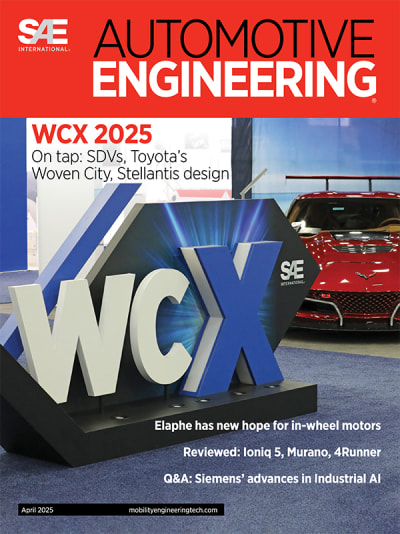
The April 2025 issue of Automotive Engineering presents a comprehensive overview of the latest trends, innovations, and challenges in the automotive industry. This edition is particularly focused on the advancements in electric vehicles (EVs), self-driving technology, and the regulatory landscape affecting the automotive sector.
Key Highlights:
-
WCX 2025 Insights: The issue opens with a detailed report on the recent WCX 2025 event, which showcased cutting-edge technologies and solutions in automotive engineering. Industry leaders gathered to discuss the future of mobility, emphasizing the importance of collaboration among manufacturers, suppliers, and technology providers to drive innovation.
-
Self-Driving Vehicles (SDVs): A significant portion of the magazine is dedicated to the evolution of self-driving vehicles. Experts weigh in on the current state of autonomous driving technology, highlighting both the progress made and the hurdles that remain. The article discusses the importance of regulatory frameworks and public acceptance in the widespread adoption of SDVs. It also features case studies of companies that are leading the charge in this space, showcasing their approaches to safety, technology integration, and consumer education.
-
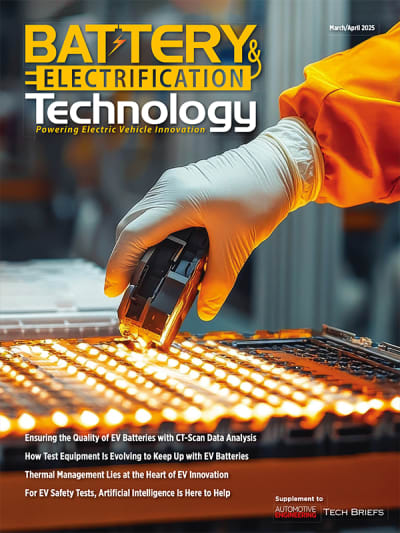
Electric Vehicle Battery Technology: The issue delves into the advancements in EV battery technology, which are crucial for enhancing the performance and range of electric vehicles. It covers innovations in battery chemistry, including solid-state batteries and improvements in lithium-ion technology. The magazine discusses how these advancements can lead to faster charging times, longer lifespans, and reduced costs, making EVs more accessible to consumers.
Regulatory Landscape: The editorial section addresses the ongoing challenges posed by regulatory changes in the automotive industry. It emphasizes the need for stability in regulations to foster investment and innovation. Industry leaders express concerns about the "patchwork quilt" of regulations that can hinder progress and complicate compliance for manufacturers. The article calls for a unified approach to regulations that supports the industry's transition to cleaner technologies.
-
Model Reviews: The magazine features reviews of the latest vehicle models, including the Hyundai Ioniq 5 and Nissan Murano. These reviews provide insights into design, performance, and technological features, helping consumers and industry professionals understand the latest offerings in the market.
-
Q&A with Siemens: A notable Q&A segment features Siemens' initiatives in Industrial AI, discussing how the integration of artificial intelligence can optimize manufacturing processes and enhance product development. The conversation highlights the role of AI in predictive maintenance, quality control, and supply chain management, showcasing how technology can drive efficiency in automotive production.
-
Simulation Apps with COMSOL Multiphysics: The issue also introduces COMSOL Multiphysics, a tool that allows engineers to create and distribute simulation apps. This feature is particularly valuable for collaboration among teams, enabling them to visualize and test designs in a virtual environment before physical production. The article outlines the benefits of using simulation in the design process, including reduced development time and costs.
-
Future of Mobility: The magazine concludes with a forward-looking perspective on the future of mobility. It discusses the potential impact of emerging technologies such as connected vehicles, smart infrastructure, and alternative fuels. The editorial emphasizes the importance of sustainability and innovation in shaping the next generation of transportation solutions.
Overall, the April 2025 issue of Automotive Engineering serves as a vital resource for industry professionals, providing them with the latest insights and developments in automotive technology. It highlights the importance of collaboration, innovation, and regulatory stability in driving the industry forward, while also addressing the challenges that lie ahead in the transition to a more sustainable and technologically advanced automotive landscape.
Features
-
Articles
16 Undeterred, WCX Strides Toward Future
19 Manufacturers Must Take the Wheel to Scale SDV Success
22 How Emerging Technologies Can Transform EV Battery Reliability and Safety
Regulars
-
Editorial
-
Technology Reports
8 Elaphe Readies In-Wheel Motors for OEM EVs After 2030
10 Case Study: Accuracy Is Key in AHP Hydraulics’s New Ball Joint Tester
12 Mitsubishi Fuso Announces Energy Storage Demonstration
13 Building Resilient SDVs: Secure by Design in the Automotive Industry
14 Accelerating Materials Development with Quantum Computing
-
Road Ready
25 2026 Escalade IQL Is Cadillac’s Biggest, Roomiest EV Yet
26 2025 Nissan Murano: Variable Compression to the Mpg Rescue
-
Briefs
19 A Quick and Easy Way to Produce Anode Materials for Sodium-Ion Batteries Using Microwaves
20 A Triple-Layer Battery Resistant to Fire and Explosion
21 Safe and Energy-Efficient Quasi-Solid Battery for Electric Vehicles and Devices
22 Developing Advanced Recycling Technology to Restore Spent Battery Cathode Materials
-
Articles
4 How Test Equipment Is Evolving to Keep Up with EV Batteries
8 Ensuring the Quality of EV Batteries with CT-Scan Data Analysis and Visualization
-
Products
24 New Products
Top Stories
NewsRF & Microwave Electronics
 Microvision Aquires Luminar, Plans Relationship Restoration, Multi-industry Push
INSIDERAerospace
 A Next Generation Helmet System for Navy Pilots
INSIDERDesign
 New Raytheon and Lockheed Martin Agreements Expand Missile Defense Production
INSIDERMaterials
 How Airbus is Using w-DED to 3D Print Larger Titanium Airplane Parts
NewsPower
 Ford Announces 48-Volt Architecture for Future Electric Truck
ArticlesAR/AI

Webcasts
Electronics & Computers
 Cooling a New Generation of Aerospace and Defense Embedded...
Automotive
 Battery Abuse Testing: Pushing to Failure
Power
 A FREE Two-Day Event Dedicated to Connected Mobility
Unmanned Systems
 Quiet, Please: NVH Improvement Opportunities in the Early Design Cycle
Automotive
 Advantages of Smart Power Distribution Unit Design for Automotive &...
Energy
 Sesame Solar's Nanogrid Tech Promises Major Gains in Drone Endurance