




2025 Toyota 4Runner: Capable Across the Lineup
With the sixth-gen 4Runner, Toyota proves it knows how to do this.
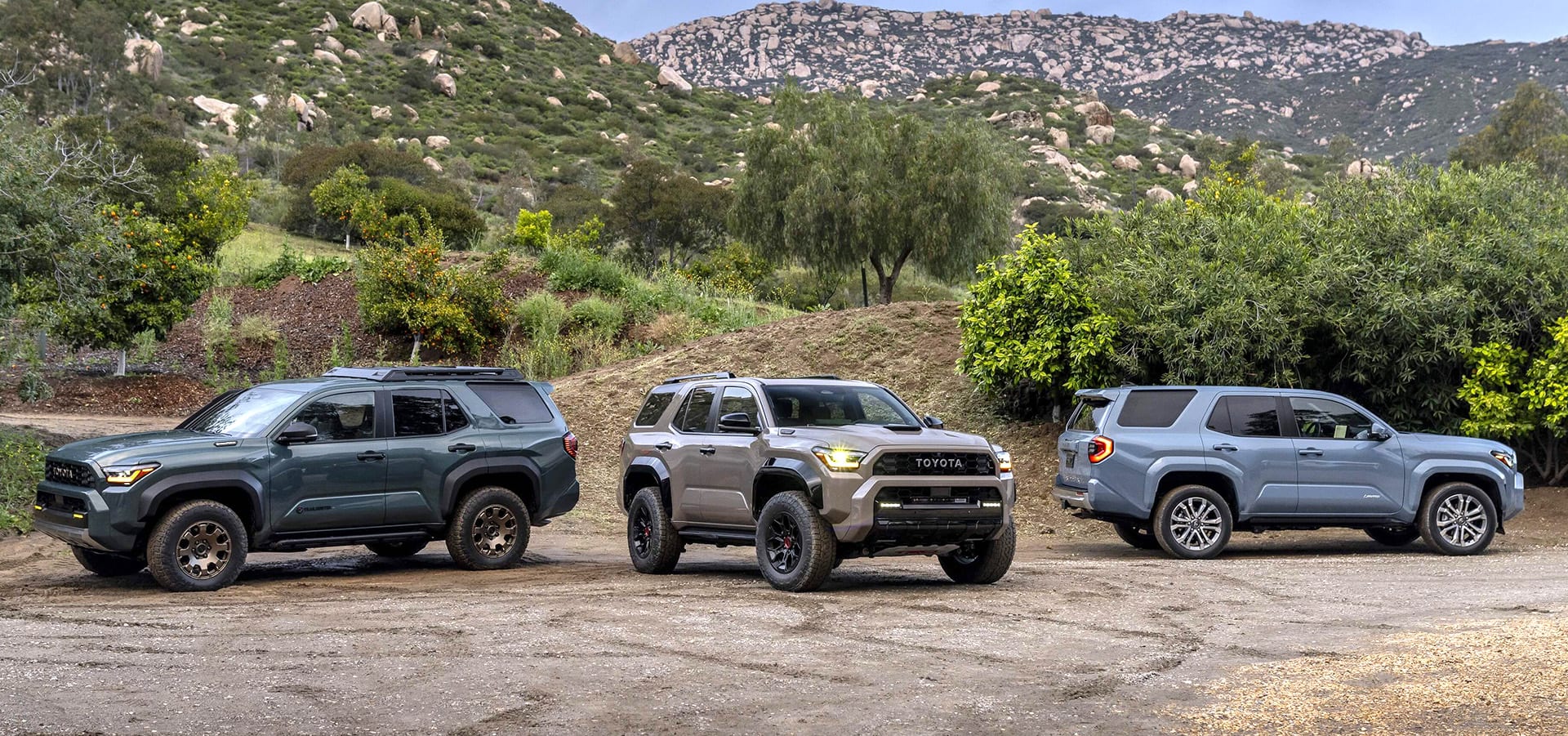
The sixth-generation 4Runner, Toyota’s serious and accessible off-roader, is built at the Tahara Plant in Japan. That’s important because Tahara is also where Toyota builds the Land Cruiser, providing familiarity with SUV manufacturing. (The Land Cruiser is no less serious an off-roader, but given that it starts at $56,700 and the 4Runner $40,770, there is a difference in accessibility.)
Toyota also builds the new Lexus GX, the third generation version with off-road capability that launched last year, at Tahara. But there’s something even more notable about the 4Runner and the Tahara-built SUVs as well as the Toyota Tacoma, Tundra and Sequoia. All these vehicles are based on Toyota’s TNGA-F platform.
Solid structure
When engineering a vehicle that has the body rigidity necessary to handle the torques created by off-road forces while accommodating the daily drives, frame and suspension setups are paramount.
The 4Runner has a boxed high-strength steel ladder frame. While that in and of itself isn’t particularly unusual for off-road-oriented vehicles, what is different here is that Toyota is using laser-tailored blanks to produce the structure. Essentially, the components are produced with varying alloys and gauges, specifically adding thickness only where required in order to provide the level of performance needed. The 4Runner features a multi-link coil rear and double wishbone front suspensions.
Why body on-frame?
There is something else that the 4Runner, Land Cruiser, Tacoma, Tundra, and Sequoia have in common: All these vehicles were developed under the direction of chief engineer Keita Moritsu. Moritsu has been working on TNGA-F-based products since 2017.
One of the distinctive characteristics of the 4Runner since its introduction in model year 1984 is that frame. While competitors like the Nissan Pathfinder started with that architecture, they have since transitioned to unibody structures.
Mortisu said that while that change was made to deal with CAFE requirements, “Body-on-frame is one of the roots of Toyota, part of our culture, so we continue with it,” he said. He also pointed to another reason why Toyota continues to build the vehicle that way: it’s what 4Runner buyers want.
Powertrain offerings
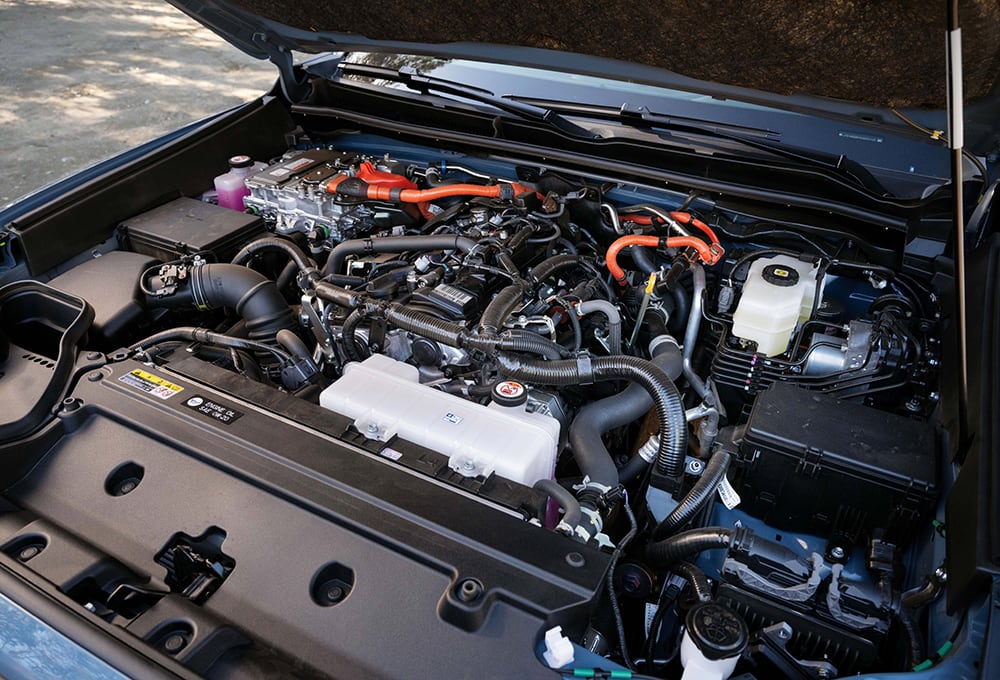
The body-on-frame choice should not indicate any indifference on Toyota’s part as regards CO2 emissions: the 2025 4Runner is available with two different powertrain configurations. The i-Force version uses a 2.4-L turbocharged four-cylinder engine with output of 278 hp (207 kW) and 317 lb-ft (430 Nm). Then there is the i-Force Max, which supplements the 2.4-L engine with a 48-hp motor integrated into the eight-speed automatic transmission. The hybrid produces 326 hp (243 kW) and 465 lb-ft (630 Nm).
The hybrid is available only in models that feature 4WD. The EPA-estimated fuel economy numbers for the i-Force Max are 23 mpg city, 24 highway, and 23 combined. Various i-Force trims offer either 19 mpg city, 25 highway, and 21 combined or 20 city, 24 highway, and 21 combined. So the hybrid provides overall better fuel economy and both permit towing of up to 6,000 pounds. Moritsu said that one of the features he likes about the hybrid is that there is more linear acceleration than that provided by the engine without the electric motor supplement.
Variety, not minimization
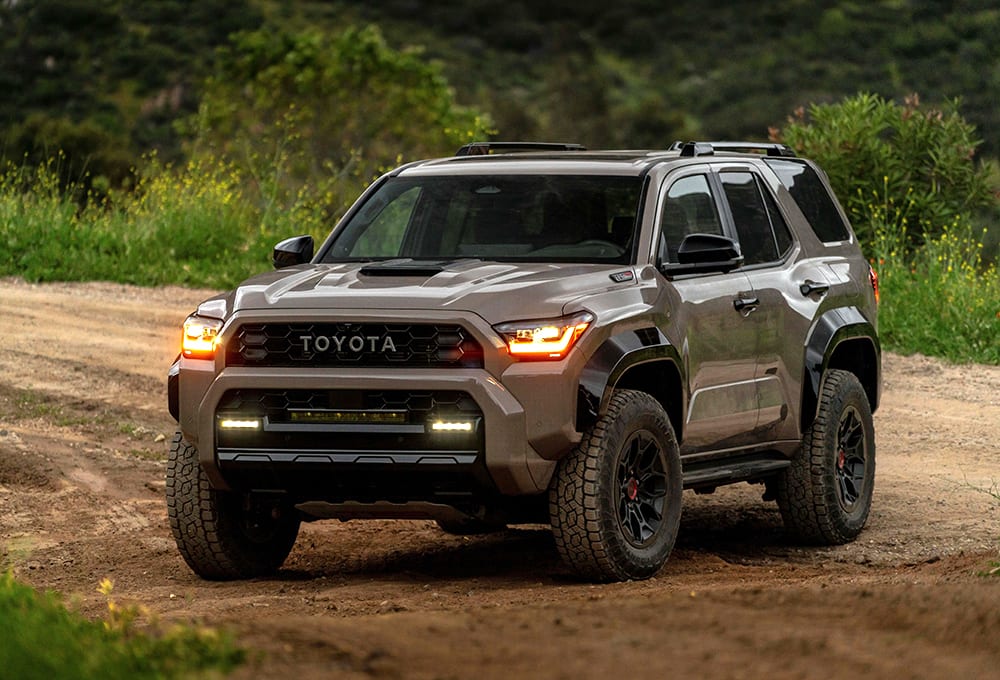
While there is a trend toward complexity reduction in the auto industry – which typically manifests itself in reduced trim-level offerings – that’s not the case with the 4Runner. The SUV is offered in nine grades, everything from the entry-level SR5 to Platinum, to an array of models that are built for off-road performance, like the Trailhunter, which comes standard with Old Man Emu 2.5-inch forged monotube shocks, and the TRD Pro, which has FOX Q53 internal bypass shocks with 2.5-inch aluminum housings and rear remote reservoirs as well as RIGID Industries LED foglamps.
When asked about this variety of model offerings, Moritsu says the decision was made because Toyota wants to address the needs of a wide range of 4Runner loyalists and potential new ones.
Heritage Meets Tech
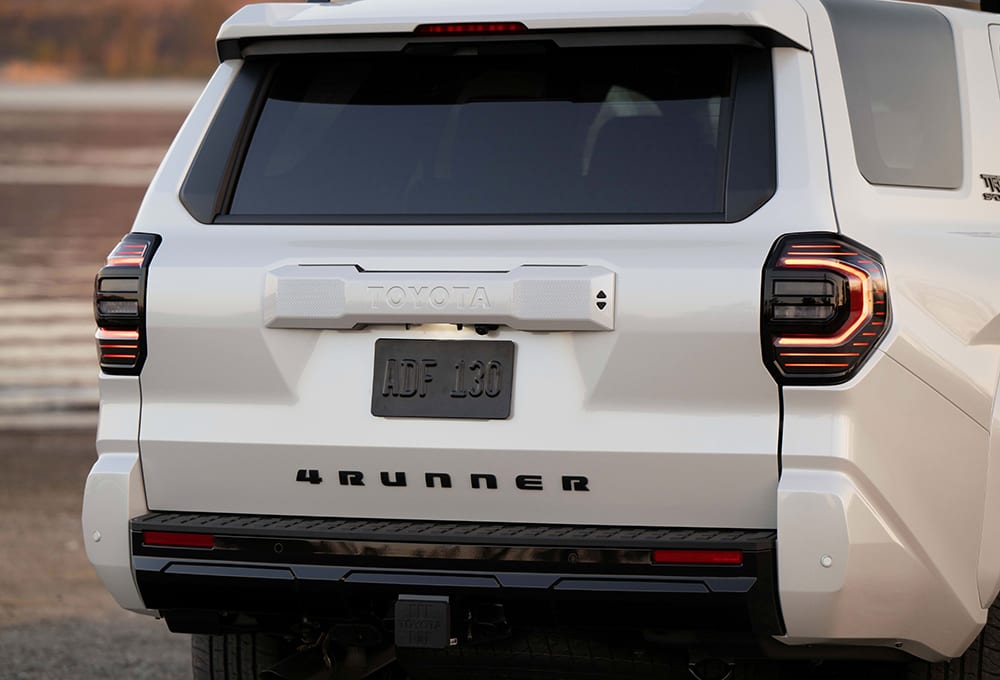
In fact, there was a determined effort made to maintain a thread of “4Runnerness” from the first generation to the sixth. For example, the side glass behind the C-pillar maintains a trapezoidal shape. And, more significantly, the power rear window. Moritsu explained this was something that 4Runner owners found to be an endearing characteristic. But he said that providing the motors and mechanisms that allow the glass to move added mass to the vehicle, which meant that they had to work to offset that mass. Engineers reduced mass in the frame through the use of the tailor-welded blanks, as well as an aluminum hood.
The 4Runner is essentially a North American-centric vehicle, with exterior styling led by the CALTY design team in Michigan (also involved in the design of the current-generation Tacoma). Although there are differences (e.g., the front-end configurations), Moritsu acknowledged that the 4Runner and Tacoma are common from the B-pillar forward.
The 4Runner offers a range of tech, including a 14-inch multimedia touchscreen (particularly handy when front cameras are activated off-road so you can see both sides of the vehicle as well as what’s going to appear once you crest that hill), the camera- and radar-based Toyota Safety System 3.0, Apple CarPlay and Android Auto, and more.The many 4Runner loyalists out there can rest easy, knowing they can get an updated vehicle but still add everything from ARB roof racks to steel skid plates toi transfer cases and rear differential protectors.
More From SAE Media Group
Automotive Engineering
2020 Hyundai Palisade: New Chassis, Atkinson V6
Automotive Engineering
First Electrified Dodge Arrives for 2023 MY
Automotive Engineering
LA Auto Show 2023: Revenge of the Hybrids
Automotive Engineering
Turbocharged Hybrid: 2021 Kia Sorento Revealed
Automotive Engineering
New Lexus SUVs: GX for Show, TX for Dough?
Automotive Engineering
2025 Nissan Murano: Variable Compression to the Mpg Rescue
Automotive Engineering
All-New 2019 Ram 1500 Launches with a Bed-Load of Innovations
Automotive Engineering
Nissan’s New VCR Engine: Worth the Effort?
Automotive Engineering
Ford Amped for New Phase of Hybrid-Electric Offensive
Automotive Engineering
Hyundai Reveals Market-Sized 2022 Tucson SUV
Automotive Engineering
2025 Kia Carnival MPV Hybrid Brings Unplugged PHEV Power
Automotive Engineering
Toyota Punches up the Prius
Off-Highway Engineering
2024 Land Cruiser Returning to Roots
Automotive Engineering
What We’re Driving: Toyota Land Cruiser
Automotive Engineering
2018 Toyota Prius Four Touring
Automotive Engineering
NAIAS 2022: Seventh-Generation of Ford Mustang Is Highest Performer Yet
Automotive Engineering
New York Auto Show 2025: News from the Floor
Automotive Engineering
2018 Los Angeles Auto Show: Hyundai Unveils the 2020 Palisade Midsize SUV as Its Flagship
Automotive Engineering
Chevrolet Unveils 2024 Corvette E-Ray Hybrid
Automotive Engineering
Volvo XC40 3-Cylinder
Automotive Engineering
2022 Toyota Tundra: V8 Out, Twin-Turbo Hybrid Takes Over
Off-Highway Engineering
Truckin’ on Hydrogen
Off-Highway Engineering
Hybrids Are Having a Moment
Automotive Engineering
Ford’s Unibody Maverick Aims to Revitalize the Compact Pickup
Automotive Engineering
Ferrari Reveals SF90, First-Ever Plug-In Hybrid
Automotive Engineering
Toyota’s Multi-Pathway Future on Full Display
Automotive Engineering
2019 New York Auto Show Wrap Up
Automotive Engineering
Nissan Kicks Entry-Level CUV Makes Its U.S. Debut
Automotive Engineering
Making over the World’s Leading Hybrid
Off-Highway Engineering
Caterpillar Reveals Next-Gen Dozers, Excavators, Motor Graders
Top Stories
NewsSensors/Data Acquisition
 Microvision Aquires Luminar, Plans Relationship Restoration, Multi-industry Push
INSIDERRF & Microwave Electronics
 A Next Generation Helmet System for Navy Pilots
INSIDERWeapons Systems
 New Raytheon and Lockheed Martin Agreements Expand Missile Defense Production
NewsAutomotive
 Ford Announces 48-Volt Architecture for Future Electric Truck
INSIDERAerospace
 Active Strake System Cuts Cruise Drag, Boosts Flight Efficiency
ArticlesTransportation

Webcasts
Aerospace
 Cooling a New Generation of Aerospace and Defense Embedded...
Energy
 Battery Abuse Testing: Pushing to Failure
Power
 A FREE Two-Day Event Dedicated to Connected Mobility
Automotive
 Quiet, Please: NVH Improvement Opportunities in the Early Design Cycle
Electronics & Computers
 Advantages of Smart Power Distribution Unit Design for Automotive &...
Unmanned Systems
 Sesame Solar's Nanogrid Tech Promises Major Gains in Drone Endurance