




Automotive Engineering - March 2025
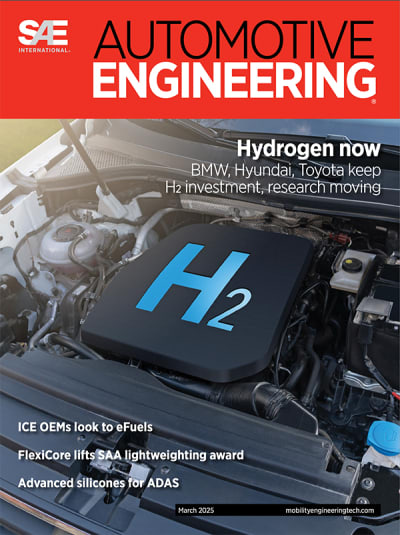
Inside this issue
Overview
The March 2025 issue of Automotive Engineering delves into the latest trends and innovations shaping the automotive industry, with a particular focus on hydrogen power, advanced materials, and the implications of recent political developments on the sector.
Hydrogen Power: A Growing Investment
One of the central themes of this issue is the increasing investment in hydrogen technology by major automakers. Companies like BMW, Hyundai, and Toyota are leading the charge, recognizing hydrogen as a viable alternative to traditional fossil fuels and even battery electric vehicles (BEVs). The issue highlights how hydrogen fuel cells can provide longer ranges and quicker refueling times compared to battery-powered vehicles, making them an attractive option for various applications, including commercial transport and heavy-duty vehicles.
The magazine discusses the challenges that hydrogen technology faces, such as infrastructure development and production costs. However, it emphasizes the potential for hydrogen to play a crucial role in achieving carbon neutrality, particularly in sectors that are hard to electrify. The article features insights from industry experts who outline the necessary steps to scale hydrogen production and distribution, including government support and public-private partnerships.
Advanced Materials for Enhanced Performance
Another significant focus of this issue is the use of advanced materials in automotive engineering. The magazine explores how innovations in materials science are enabling the development of lighter, stronger, and more efficient vehicles. For instance, the use of advanced silicones in Advanced Driver-Assistance Systems (ADAS) is highlighted as a key factor in improving the performance and reliability of these technologies.
The issue also covers the role of composite materials in reducing vehicle weight, which is essential for enhancing fuel efficiency and reducing emissions. Articles discuss the latest advancements in manufacturing techniques, such as 3D printing and automated processes, that are making it easier to incorporate these materials into vehicle designs.
Political Landscape and Its Impact on the Automotive Industry
The editorial section addresses the current political climate and its implications for the automotive industry. With ongoing discussions about tariffs and trade agreements, the magazine emphasizes the need for stability and predictability in the market. It reflects on the potential consequences of tariff threats on the supply chain and production costs, particularly in light of recent political events that have caused uncertainty.
Industry leaders, including Ford CEO Jim Farley, express concerns about how these political dynamics could lead to increased costs and operational chaos. The magazine underscores the importance of a collaborative approach between automakers and policymakers to ensure a favorable environment for innovation and growth.
Sustainability and Future Mobility
Sustainability remains a critical theme throughout the issue. Articles explore how automakers are integrating sustainable practices into their operations, from sourcing materials to manufacturing processes. The magazine highlights initiatives aimed at reducing the carbon footprint of vehicles and promoting circular economy principles.
Additionally, the issue discusses the future of mobility, including the rise of autonomous vehicles and shared mobility solutions. It examines how these trends are reshaping urban transportation and the role of technology in enhancing safety and efficiency.
Conclusion
In summary, the March 2025 issue of Automotive Engineering provides a comprehensive overview of the current state of the automotive industry, with a strong emphasis on hydrogen power, advanced materials, and the impact of political factors. It showcases the innovative spirit of the industry as it navigates challenges and embraces opportunities for growth and sustainability. As automakers continue to invest in new technologies and adapt to changing market conditions, this issue serves as a valuable resource for understanding the future of automotive engineering.
Features
-
Articles
Regulars
-
Editorial
-
Supplier Eye
-
Technology Reports
8 The International Fight over EFuels, Internal Combustion’s Would-Be Savior
12 Hydrogen Storage Tank Options: Not Everything Need Look like a Sausage
14 Power over Coaxial in Automotive: A Simplified Path to Advanced Vehicle Systems
18 Lighter, Recyclable Body Seal from Cooper Standard Wins SAA Award
20 Enhancing E-Motor Design and Thermal Efficiency with Advanced Cooling
Stories
Top Stories
NewsSensors/Data Acquisition
 Microvision Aquires Luminar, Plans Relationship Restoration, Multi-industry Push
INSIDERRF & Microwave Electronics
 A Next Generation Helmet System for Navy Pilots
INSIDERWeapons Systems
 New Raytheon and Lockheed Martin Agreements Expand Missile Defense Production
NewsAutomotive
 Ford Announces 48-Volt Architecture for Future Electric Truck
INSIDERAerospace
 Active Strake System Cuts Cruise Drag, Boosts Flight Efficiency
ArticlesTransportation

Webcasts
Aerospace
 Cooling a New Generation of Aerospace and Defense Embedded...
Energy
 Battery Abuse Testing: Pushing to Failure
Power
 A FREE Two-Day Event Dedicated to Connected Mobility
Automotive
 Quiet, Please: NVH Improvement Opportunities in the Early Design Cycle
Electronics & Computers
 Advantages of Smart Power Distribution Unit Design for Automotive &...
Unmanned Systems
 Sesame Solar's Nanogrid Tech Promises Major Gains in Drone Endurance