




Elektrobit Sees the Future in SMH Afeela Software
Afeela’s strategic software partner thinks Sony Honda Mobility is onto something.
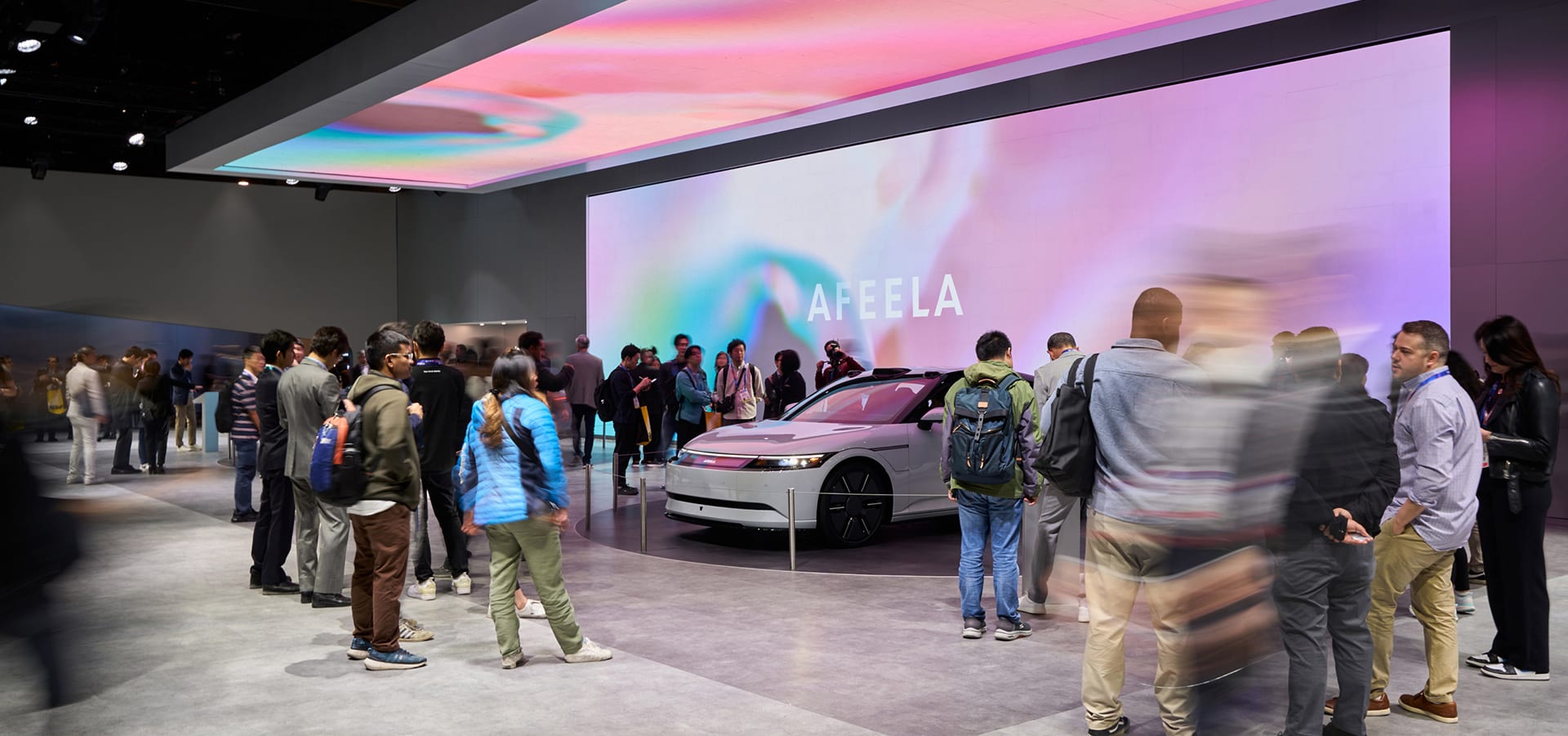
At CES 2025, we sat down with Moritz Neukirchner, senior director of strategic product management for software-defined vehicles for Elektrobit, to talk about his excitement for SDVs and why the Sony Honda Mobility Afeela is a poster child for the new era. Elektrobit is SHM’s strategic software partner on the Afeela.
Q: What can you tell me about the Sony Afeela?
A: When you look at the Afeela, there’s a big pillar-to-pillar screen in there. You can look at it as a content delivery platform, with installable functions. There’s also that screen in the front grill, right? When you look at how is a customer going to interact with the car, they will just behave very differently. Think back to the BlackBerry. They did email, yes, they had contacts, they had a calendar, but then came the iPhone that also had these functions, but the user experience was very, very different. And I think this is one of the key differentiating things that you now see in cars like the Afeela. The user interaction is also different. Right now, for classic vehicles, the customer interaction with an OEM ends at the point of sale. You sell the car and then, well, ‘we’re gonna see you in two years, ’and that’s about it. When you go for SDVs, you want to get into a continuous relationship with your customer. It changes the lifecycle of the vehicle, it changes the way that you interact with your customer and I think the Afeela is one of these lighthouse projects that shows what the customer interaction actually will be with SDVs.
Q: Some of what you’re describing is broadly applicable across all SDVs. Is there anything specific about the work you did on the Afeela?
A: What is interesting about the Afeela is the way we collaborate on the software platform. The interaction that we have there is, in the best meaning of it, very agile. We are quickly iterating through requirements, iterating through features, what we want to build. It’s very much not a waterfall. This is obviously not the part that the customer sees directly, but it shows very much the mindset behind the development. And I think the mindset aspect is extremely important for SDVs, because it’s not really a project that’s focused on the SOP, or just the SOP, but actually on building an experience and enhancing that experience. The updateability becomes part of the value proposition. You wouldn’t buy a new phone today if it didn’t have access to an app store, because it’s an integral part of that value proposition. When I look the Afeela, that value proposition is there and that’s also reflected in the interaction that we have in these very agile processes and the collaboration. It really is where the mentality and development proposition towards the customers fits together really nicely.
Q: How are your teams thinking about presenting these new experiences to the customers?
A: Obviously, you have the App Store kind of thing, but that’s fairly easy and straightforward. What’s going to be extremely interesting is the OEMs are still trying to differentiate quite a bit on the screen topology, screen layout. That’s the place for digital branding. If you want to get to an open app ecosystem, the apps need to be able to connect to the different UX styles of different vendors. Imagine Tiktok needing to be rebuilt for every single phone type, and you can’t really accept that. So the question is, can you customize the visual appearance of apps for the different platforms? With our Theming Engine, we separate the UX design part from the actual coding logic of the applications so you can put a completely different theme on top of and it looks completely different, but you have the same app. You have one release cycle but you can theme it, you can customize it for different brands, you can customize it for different regions. So, taking these customization capabilities, separating them from building the logic of the applications, this is something that we look at, and I think it’s going to be extremely interesting.
More From SAE Media Group
Software Tech Briefs
Mobile Multi-System Overview
Aerospace & Defense Tech Briefs
Automated Flight System Software
Tech Briefs
Grand Prize Winner
Software Tech Briefs
Space Images for NASA JPL Android Version
Automotive Engineering
Built-In Google Vehicle Apps Arrive

Off-Highway Engineering
Compact Hydraulics Configuration Tool
Automotive Engineering
Continental’s New CTO to Lead Retooled R&D Pillar
Tech Briefs
Software Improves Access to NASA Earth Models
Off-Highway Engineering
Not Quite Your Father’s Cab
Photonics Tech Briefs
Laser Measurement Mobile App
Off-Highway Engineering
Perkins Pursues Plug-and-play Connectivity
Tech Briefs
Machine Learning Software for 3D Printing
Software Tech Briefs
Space Images for NASA/JPL
Automotive Engineering
Ford Announces All-New SYNC 4 Connectivity Suite
Automotive Engineering
Full Speed Ahead for Second-Generation Indy Autonomous Racers
Tech Briefs
New App Lets You Check Air Pollution Levels
Automotive Engineering
Reaching the Next Generation of Vehicle Consumers
Tech Briefs
Selecting a Software Programming Platform
Autonomous Vehicle Engineering
Autonomous Timeline: Following the Money
Automotive Engineering
Defrosting Tech Saves EV Battery Energy
Top Stories
NewsSensors/Data Acquisition
 Microvision Aquires Luminar, Plans Relationship Restoration, Multi-industry Push
INSIDERRF & Microwave Electronics
 A Next Generation Helmet System for Navy Pilots
INSIDERWeapons Systems
 New Raytheon and Lockheed Martin Agreements Expand Missile Defense Production
NewsAutomotive
 Ford Announces 48-Volt Architecture for Future Electric Truck
INSIDERAerospace
 Active Strake System Cuts Cruise Drag, Boosts Flight Efficiency
ArticlesTransportation

Webcasts
Aerospace
 Cooling a New Generation of Aerospace and Defense Embedded...
Energy
 Battery Abuse Testing: Pushing to Failure
Power
 A FREE Two-Day Event Dedicated to Connected Mobility
Automotive
 Quiet, Please: NVH Improvement Opportunities in the Early Design Cycle
Electronics & Computers
 Advantages of Smart Power Distribution Unit Design for Automotive &...
Unmanned Systems
 Sesame Solar's Nanogrid Tech Promises Major Gains in Drone Endurance