




Q&A: Three’s Not a Crowd When It Comes to ADAS Sensors
Clement Nouvel, CTO for lidar at Valeo, believes in the three main sensor food groups for ADAS and Level 3 operation: lidar, radar and cameras.
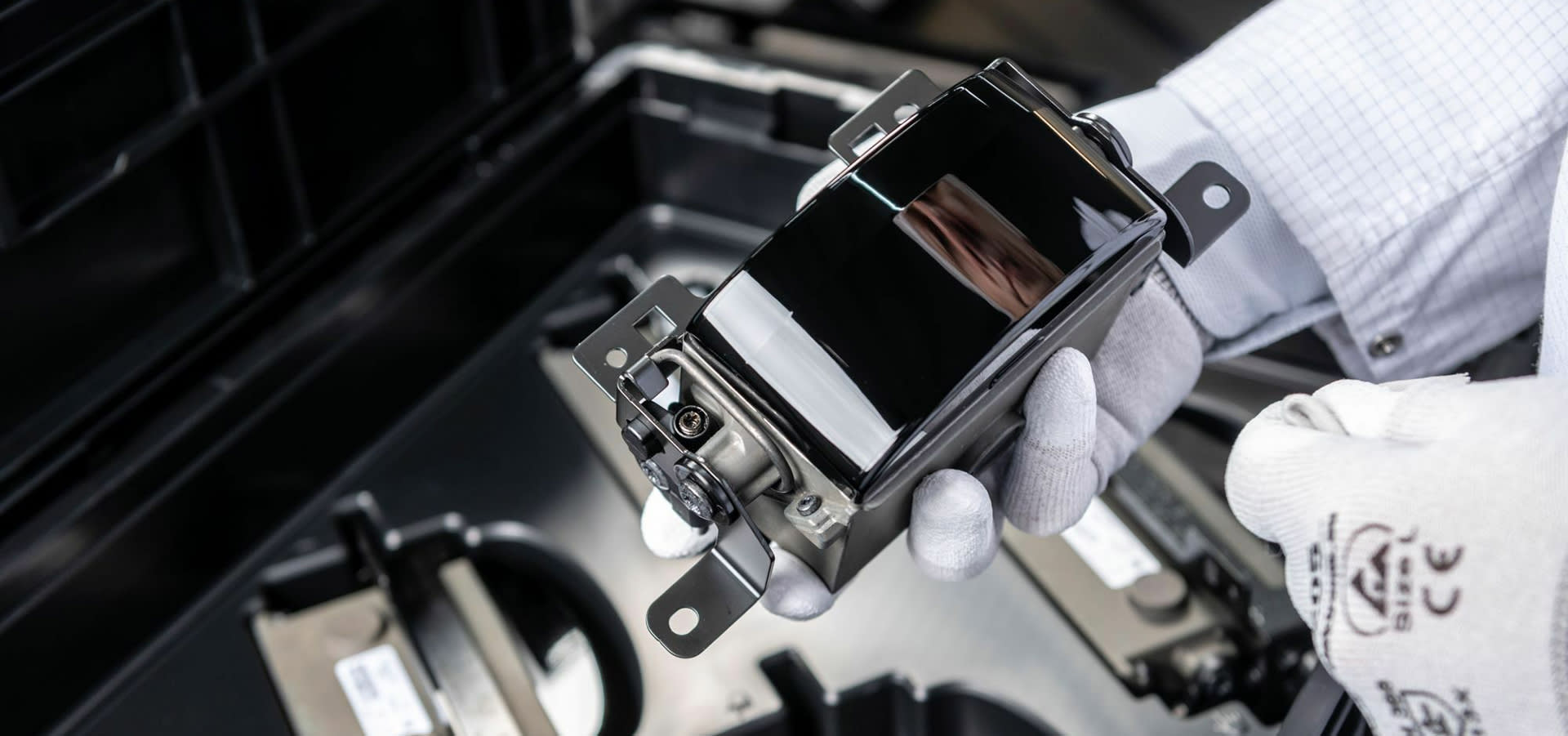
SAE Media spoke with Clement Nouvel, Valeo’s chief technical officer for lidar, about Valeo’s background in ADAS and what’s coming next. Nouvel leads over 300 lidar engineers and the company’s Scala 3 lidar is used on production vehicles from European and Asian automakers.

SAE Media: Let’s start with Valeo’s background in ADAS.
Nouvel: We started investing in lidar, which we call Scala for “scaling lidar,” about 13 years ago. And we were first to the market with Level 3 technology. Our first was a Japan-only, 2021 Honda Legend with five of our first-generation Scala units.
The second is the recently released Mercedes-Benz S-Class, which is operating at Level 3 in Germany and in Arizona and California. So, yes, we can say that Level 3 is enabled only by Valeo and we have a big head start in the industry.
Our latest-generation Scala lidar offers higher [12 times better] resolution, three times better range [now more than 200 meters] and a wider viewing angle [2.5 times wider]. [Valeo claims the first-generation Scala system could map 44,000 points per second, increasing to 260,000 for Scala 2 and to 12.5 million points per second with Scala 3, creating point clouds that are as sharp as a photo.]
SAE Media: Valeo is a believer in all three ADAS technologies: lidar, radar and cameras. But some companies aren’t.
Nouvel: The key here is what technologies do you need to enable the delegation of the driving process to the car. That’s what we call Level 3, and if you look at the industry, there is large consensus that this requires a tech triple: lidar, radar, cameras.
Each technology has its pros and cons and, if I use a camera only, then you would have issues at night or when you're blinded by the sun. Radar has its own shortcomings, and the same is true of lidar. Those who are not opting for lidar are actually not delivering Level 3. That's what we need to keep in mind. The main question is: do you want to read books or watch a video? If you really want the machine to be responsible, then you cannot do that with the right level of reliability and safety without lidar. That's the bottom line. Today, Level 3 requires lidar.
SAE Media: How is Valeo different from its competitors?
Nouvel: There are a lot of startups investing in lidar. There’s a large wave of lidar coming from Chinese technology and investments. But it requires a huge investment to get lidar up and running and make it profitable. For the newcomers, it’s extremely difficult to keep up the pace.
Valeo is already at our third generation of lidar. We've acquired a lot of experience. We are probably the only company in the world able to make progress while not having to invent new lidar technology, or make massive investments. We are doing it step-by-step and that's what sets us apart today.
More From SAE Media Group
Autonomous Vehicle Engineering
Velodyne Preps for Volume Lidar
ADAS & Autonomous Vehicle Engineering
AV Life After Argo AI
Autonomous Vehicle Engineering
New Roles for Lidar in Autonomy’s Lower Levels
Automotive Engineering
Sensitive Subjects
Automotive Engineering
Valeo Debuts New Lidars, EV Tech at CES 2022
Photonics & Imaging Technology
Add LiDAR to ADAS for Pedestrian Safety
Off-Highway Engineering
Veoneer Shows Its Latest Safety and AV Tech
ADAS & Autonomous Vehicle Engineering
Making Sense of Next-Gen ADAS Sensing
Tech Briefs
Is LiDAR Necessary for Autonomous Vehicles?
Off-Highway Engineering
Sensata’s Sensors Aid Blind Spot Monitoring for Tractor-Trailers
Off-Highway Engineering
Uhnder and Spartan to Partner on Hi-rez Radar
Autonomous Vehicle Engineering
MIPI Phone Alliance Standard Aims at Automotive Sensors
Off-Highway Engineering
Forward-Looking Lidar Can Revolutionize Driver-Assistance Systems
Automotive Engineering
Single-chip digital imaging radar heads for 2022 production

Autonomous Vehicle Engineering
GM Announces Door-To-Door Ultra Cruise ADAS
Off-Highway Engineering
ZF Advancing ADAS, Autonomy with Next-Gen Sensors

Automotive Engineering
Q&A: Owl AI Making Better ADAS Systems with Help from Drones
Automotive Engineering
A Hundred Innovations for Renault’s Eolab Concept
Autonomous Vehicle Engineering
The ‘Buzz’ in Driverless Shuttling
Photonics & Imaging Technology
Leap in Lidar Could Improve Safety and Security of New Technology
Sensor Technology
The Sensing Systems That Make ADAS Work
Tech Briefs
Compact 3D LiDAR Imaging System
Automotive Engineering
Are Today’s Sensors Ready for Next-Level Automated Driving?
Tech Briefs
A Laser-Focused Approach to LiDAR
Tech Briefs
A Step Toward More Accurate 3D Object Detection
Top Stories
INSIDERManufacturing & Prototyping
 How Airbus is Using w-DED to 3D Print Larger Titanium Airplane Parts
INSIDERManned Systems
 FAA to Replace Aging Network of Ground-Based Radars
NewsTransportation
 CES 2026: Bosch is Ready to Bring AI to Your (Likely ICE-powered) Vehicle
NewsSoftware
 Accelerating Down the Road to Autonomy
EditorialDesign
 DarkSky One Wants to Make the World a Darker Place
INSIDERMaterials
 Can This Self-Healing Composite Make Airplane and Spacecraft Components Last...
Webcasts
Defense
 How Sift's Unified Observability Platform Accelerates Drone Innovation
Automotive
 E/E Architecture Redefined: Building Smarter, Safer, and Scalable...
Power
 Hydrogen Engines Are Heating Up for Heavy Duty
Electronics & Computers
 Advantages of Smart Power Distribution Unit Design for Automotive...
Unmanned Systems
 Quiet, Please: NVH Improvement Opportunities in the Early Design...
