




MIPI Phone Alliance Standard Aims at Automotive Sensors
The MIPI Alliance, which created standards for smartphone cameras, plans to have a high-speed automotive standard ready by the end of next year.

Smartphones may expand their burgeoning role in the automotive industry. The MIPI (Mobile Industry Processor Interface) Alliance, which created interface standards for smartphone cameras and displays, plans to have a high-speed automotive standard ready by the end of next year. MIPI’s Automotive Working Group plans to complete the MIPI A-PHY, a physical layer specification that moves data from cameras, radar and lidar at 12-24 gigabits per second (Gbps). The group is also developing 48 Gbps technology for displays and other systems.
The group now plans to complete the document late in 2019, so it won’t show up on vehicles for a few years. Matt Ronning, MIPI Automotive Working Group Chairman, noted that this timeframe fits well with the industry’s need for very high bandwidth communication lines. “The real demand comes with autonomous vehicles that will have from 9 to 16 cameras plus radar and lidar,” he said.
The MIPI spec will be complementary to the industry’s shift from CAN to Ethernet, which provides the bandwidth needed when several ADAS systems work together. The interface that’s used for most smart phone cameras provides high speed, but developers must overcome a number of hurdles, particularly in signal-line length.
“Gbit Ethernet is coming next year for cars, but in phones, MIPI is already providing 10 Gbits/second,” said Rick Wietfeldt, MIPI Alliance board member and former chair, MIPI Technical Steering Group. “Mobile is leaps and bounds ahead in speed, but they’re looking at lengths of 15 cm, while automotive needs 15 meters.”
Today, most automotive sensor systems use proprietary interfaces, Lefkin said. Some data links provide power, while others don’t. A faster standard will help developers meet the demands that will come when larger numbers of high resolution sensors transmit data to centralized controllers. “Cameras and radar are really driving the data rates now,” said Peter Lefkin, Managing Director of the MIPI Alliance. “Requirements are going up quickly. A lot of cameras today have 2 Mpixel resolutions, in the fairly near future, they will be going to 8 Mpixels.”
Along with the length of signal lines, automotive applications have more stringent functional safety and electromagnetic coupling requirements. Functional safety introduces a bit of overhead, which must be looked at the earliest stages of standard development, Wietfeldt said. Developers are also looking closely at crosstalk, which can be an issue when many high-speed lines are routed into electronic control units.
Most automotive semiconductor suppliers are members of the Automotive Working Group along with a number of design tool providers and Bosch. Since the consortium was founded in 2004, its membership has grown to more than 300 companies.
More From SAE Media Group
Autonomous Vehicle Engineering
Radar’s Evolving Role in ADAS and the AV Future
Autonomous Vehicle Engineering
Vehicle Sensors Go Longer Range
Automotive Engineering
Sensitive Subjects
Autonomous Vehicle Engineering
New Roles for Lidar in Autonomy’s Lower Levels
Autonomous Vehicle Engineering
Keeping Pace with In-Vehicle Data Speed
Automotive Engineering
Expanding ADAS Roles for Radar and Cameras
ADAS & Autonomous Vehicle Engineering
Making Sense of Next-Gen ADAS Sensing
Automotive Engineering
Q&A: Owl AI Making Better ADAS Systems with Help from Drones
Autonomous Vehicle Engineering
Velodyne Preps for Volume Lidar
Autonomous Vehicle Engineering
GM Announces Door-To-Door Ultra Cruise ADAS
Automotive Engineering
Single-chip digital imaging radar heads for 2022 production
Off-Highway Engineering
Uhnder and Spartan to Partner on Hi-rez Radar
Autonomous Vehicle Engineering
Sensing Enters a New Era
Off-Highway Engineering
Veoneer Shows Its Latest Safety and AV Tech
ADAS & Autonomous Vehicle Engineering
AV Life After Argo AI
Automotive Engineering
Thermal Imaging Makes Its Case for ADAS, AVs
Autonomous Vehicle Engineering
Aptiv Centralizing Computing Power to Speed Autonomous Vehicle Development
Automotive Engineering
New Osram IREDs Enhance Vehicle Vision, less Harmful to Human Eyes
ADAS & Autonomous Vehicle Engineering
Lidar Vs. Everybody in the Onboard Sensor Race
Autonomous Vehicle Engineering
Continental's Lidar in a Flash
Autonomous Vehicle Engineering
Phone Alliance’s Standard Targets Automotive Sensors
Off-Highway Engineering
Data Connectivity in Heavy-Duty Vehicle Environments
Autonomous Vehicle Engineering
Flash! Lidar’s Next Generation Arrives
Autonomous Vehicle Engineering
Sony Jumps into AV Sensors, Software
Automotive Engineering
Valeo Debuts New Lidars, EV Tech at CES 2022
Autonomous Vehicle Engineering
Aptiv’s Satellite Route to ‘Democratizing’ Autonomous Tech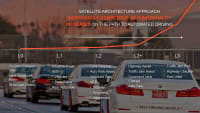
Automotive Engineering
New R&D Boss Details RoboSense’s LiDAR Strategy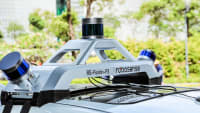

Autonomous Vehicle Engineering
Toposens 3D Sonar Seeks Objects Overlooked by Lidar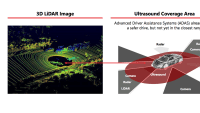
Top Stories
NewsRF & Microwave Electronics
 Microvision Aquires Luminar, Plans Relationship Restoration, Multi-industry Push
INSIDERAerospace
 A Next Generation Helmet System for Navy Pilots
INSIDERDesign
 New Raytheon and Lockheed Martin Agreements Expand Missile Defense Production
INSIDERMaterials
 How Airbus is Using w-DED to 3D Print Larger Titanium Airplane Parts
NewsPower
 Ford Announces 48-Volt Architecture for Future Electric Truck
ArticlesAR/AI

Webcasts
Electronics & Computers
 Cooling a New Generation of Aerospace and Defense Embedded...
Automotive
 Battery Abuse Testing: Pushing to Failure
Power
 A FREE Two-Day Event Dedicated to Connected Mobility
Unmanned Systems
 Quiet, Please: NVH Improvement Opportunities in the Early Design Cycle
Automotive
 Advantages of Smart Power Distribution Unit Design for Automotive &...
Energy
 Sesame Solar's Nanogrid Tech Promises Major Gains in Drone Endurance