




Palantir to Build Prototypes for Army’s First AI-Defined Targeting Station
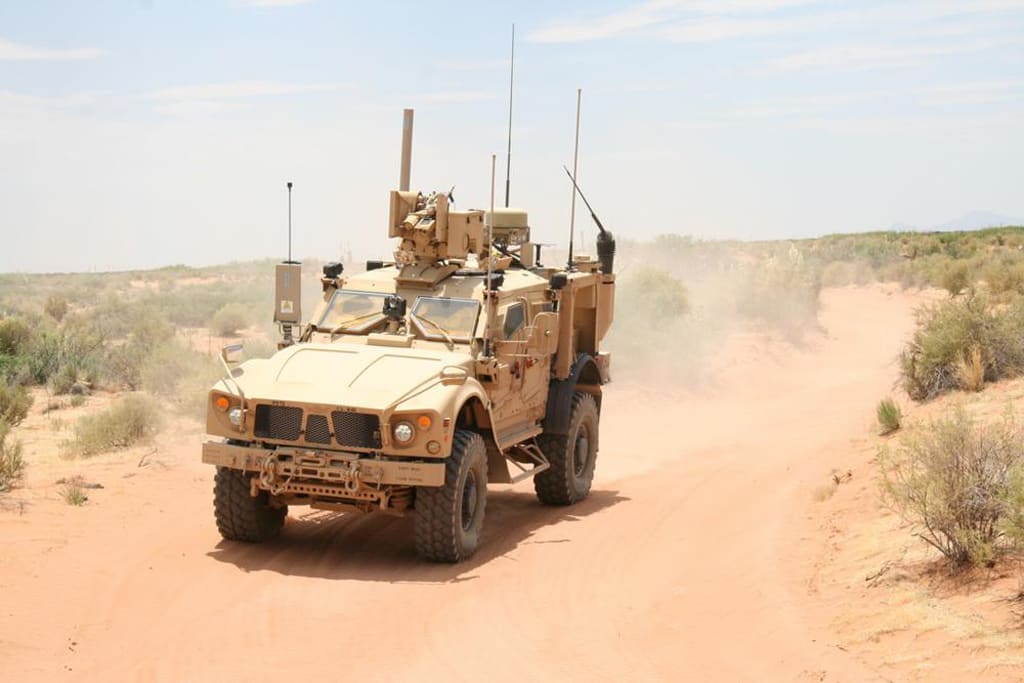
Palantir Technologies has been awarded a prime agreement for the development and delivery of the Tactical Intelligence Targeting Access Node (TITAN) ground station system, the Army’s next-generation deep-sensing capability enabled by artificial intelligence and machine learning (AI/ML). The agreement, valued at $178.4 million, covers the development of 10 TITAN prototypes, including five Advanced and five Basic variants, as well as the integration of new critical technologies and the transition to fielding.
The award was issued by the Army Contracting Command – Aberdeen Proving Ground (ACC-APG). TITAN was launched as a ground sensing station modernization program for the Army in 2021 , to address their “number one” gap in large scale combat operations (LSCO): deep sensing. As a key enabler for the Army’s future in Multi Domain Operations (MDO) and Joint All Domain Operations (JADO), TITAN will be the first Intelligence ground station enabled by AI/ML.
Effectively, the Army intends to use TITAN as an intelligent ground station capable of connecting individual units to a network of ground and space-based sensors that stream real-time targeting data about adversaries to soldiers. The latest award gives the prime selection of TITAN development to Palantir over Raytheon, which has also been involved in the prototyping competition from its 2021 launch.
By accessing sensor data from multiple sensors simultaneously across the space, high altitude, aerial, and terrestrial layers, TITAN provides situational awareness and situational understanding across operations. Fusing that data and using advanced analytics to deliver targetable intelligence to lethal and non-lethal networks reduces the sensor-to-shooter gap and enables Long Range Precision Fires (LRPF), aviation and mission command.
TITAN seeks to enhance the automation of target recognition and geolocation from multiple sensors to reduce the sensor-to-shooter (S2S) timelines through target nominations and fuse the common intelligence picture. Palantir is leading the software development of TITAN, while partnering with several traditional defense companies on some of the hardware aspects, including Northrop Grumman, Anduril Industries, L3Harris Technologies, Pacific Defense, SNC, Strategic Technology Consulting, and World Wide Technology.
AI/ML-enabled capabilities and the first Multi-Link/Multi-Band (ML/MB) antenna are considered critical enabling technologies for TITAN, according to the Army’s description of the program. The sensing station’s ability to merge national and commercial space sensor data through “Direct Downlink and network connections means the Army will have a capability to sense deep into strategic areas of operation, and directly support LRPF as needed against near peer threats,” according to the Army’s description of TITAN.
Palantir’s TITAN solution is designed to maximize usability for Soldiers, incorporating tangible feedback and insights from Soldier touch points at every step of the development and configuration process.
“This award demonstrates the Army’s leadership in acquiring and fielding the emerging technologies needed to bolster U.S. defense in this era of software-defined warfare. Building on Palantir’s years of experience bringing AI-enabled capabilities to warfighters, Palantir is now proud to deliver the Army’s first AI-defined vehicle,” said Akash Jain, President, Palantir USG.
More From SAE Media Group

Aerospace & Defense Tech Briefs
Autonomous Surveillance Technologies Relating to Dismounted Soldiers
Defense INSIDER
Army to Purchase Additional Soldier Borne Sensor Systems
Defense INSIDER
Army Turns to Smart Technology to Protect Military Installations
Aerospace INSIDER
Bombardier to Start Building New Army HADES Prototype Spy Plane
Defense INSIDER
AgilePod Flies on U.S. Air Force MQ-9 Reaper
Aerospace INSIDER
Germany's New Military Surveillance Jet Completes First Flight
Aerospace & Defense Tech Briefs
The Marines New Installation Counter UAS System
Aerospace INSIDER
New Drones and Software Selected for DoD's Replicator 1.2
Defense INSIDER
Army Partners with Marine Corps on 3-D Printed Drones
Aerospace Manufacturing and Machining INSIDER
Counter UAS Systems Tested Against Swarms of 50 Drones in Latest Yuma Exercise
Aerospace & Defense Tech Briefs
Thailand Army Vehicle Computer System Upgrades
Aerospace & Defense Tech Briefs
Aircraft Protection Systems

Defense INSIDER
Army Aviation Team Achieves Software Success in Live Fire Test
Aerospace & Defense Tech Briefs
Autonomous Air Defense Production
Aerospace INSIDER
GA-ASI Announces Gray Eagle 25M for Multi-Domain Operations
Defense INSIDER
Army Gets a Clearer View of Multi-Domain Battlefield


Aerospace & Defense Tech Briefs
WMD Detection Technology
Aerospace & Defense Tech Briefs
Nano-Unmanned Aerial Vehicle
Aerospace & Defense Tech Briefs
Tomahawk to Develop Common Control System for U.K. Human Machine Teaming Project
Aerospace & Defense Tech Briefs
Counter UAS Defense System

Defense INSIDER
Army to Get New IED Detector Technology

Aerospace & Defense Tech Briefs
Assessing the Effectiveness of a Combat UGV Swarm in Urban Operations
Defense INSIDER
Conference to Focus on Counter-Drone Technology
Aerospace & Defense Tech Briefs
Autonomous Collaborative Platform
Top Stories
NewsAutomotive
 Microvision Aquires Luminar, Plans Relationship Restoration, Multi-industry Push
INSIDERDesign
 A Next Generation Helmet System for Navy Pilots
INSIDERWeapons Systems
 New Raytheon and Lockheed Martin Agreements Expand Missile Defense Production
NewsPower
 Ford Announces 48-Volt Architecture for Future Electric Truck
INSIDERAerospace
 Active Strake System Cuts Cruise Drag, Boosts Flight Efficiency
ArticlesTransportation

Webcasts
Aerospace
 Cooling a New Generation of Aerospace and Defense Embedded...
Test & Measurement
 Battery Abuse Testing: Pushing to Failure
Internet of Things
 A FREE Two-Day Event Dedicated to Connected Mobility
Transportation
 Quiet, Please: NVH Improvement Opportunities in the Early Design Cycle
Electronics & Computers
 Advantages of Smart Power Distribution Unit Design for Automotive &...
Aerospace
 Sesame Solar's Nanogrid Tech Promises Major Gains in Drone Endurance