




High-Cycle Life Testing of RF MEMS Switches
MEMS passive circuits are used as phase shifters or tunable filters in phased antenna arrays.
The electromechanical, RF, and charging properties of an "air-gap" capacitive switch enable it to be utilized in high-cycle life testing. Monitoring both high-speed and low-speed switching characteristics provides insight into quantifying the lifetime properties of the switch, and enable estimation of switching lifetime under a variety of operating conditions.
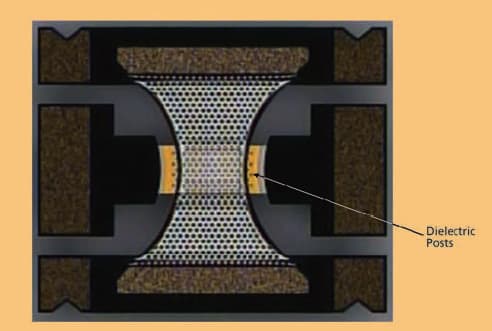
Within this switch, the layer of switch insulator is composed of sputtered silicon dioxide 0.28 μm thick (εr~5.5). The switch insulator is not a continuous sheet of dielectric, but patterned into a series of insulating, hexagonal posts approximately 4 μm across on an 8 μm pitch. The patterned dielectric bumps create an "air-gap" or "proximity" switch, in which a larger percentage of the switch area utilizes air insulator rather than silicon dioxide. This use of patterned dielectric posts reduces the contact area accessible to dielectric charging. Trading off on-capacitance for reduced charging provides the opportunity for switching of moderate capacitance ratios (more like a switched reactance than a high isolation switch) with increased switch longevity.
Prior to the start of life testing, a thorough characterization of the electromechanical, RF, and dielectric charging performance was completed. The bistable switching characteristics of the MEMS devices were tested by probing the switches with a swept voltage through a capacitance meter. These measurements were taken at multiple locations across the wafer. The average pull-in voltage was 30.1V with a standard deviation of 3.8V. The release voltage of the switches was measured to be approximately 17V.
From the switch operating curves and appropriate test structures, the RF capacitive characteristics of the MEMS switch were extracted. The switch itself averages 44 fF of shunt off-capacitance, of which approximately 30 fF is plate capacitance and 14 fF is fringing capacitance. This switch capacitance is partially compensated with inductive feedlines in and out of the switch, yielding an effective shunt capacitance of ~15-20 fF in off-state. In the on-state, the proximity switch described above possesses 0.28 pF to 0.34 pF of on-capacitance. In a 50-ohm system, this switch provides a reactance ratio, approximately (280 ff to 340 ff)/(15 ff to 20 ff), in the range of 15:1 to 20:1. The RF properties of these switches at microwave and millimeter-wave frequencies were measured on a vector network analyzer. The RF insertion loss of the MEMS switch is typical of most modern MEMS switches, with less than 0.1 dB insertion loss through 40 GHz.
Transient current measurements were made over a voltage range of 30-60 volts to quantify the change density as a function of both time and voltage. This characterization was only completed for negative polarity, as this material commonly exhibits significantly higher charging for a positive polarity drive voltage. The test devices used for this characterization were MIM capacitors fabricated on the same wafers as the MEMS switches.
The most effective methods for reducing dielectric charging within MEMS switches are to reduce the operating voltage, reduce the dielectric area, and/or reduce the operating duty cycle. In order to achieve high cycle lifetime, all three of these techniques were utilized to minimize the amount of dielectric charging present in the switch.
The lower limit of operating voltage is determined by the minimum restoring force necessary to ensure that surface forces do not induce stiction of the switch membrane. Further, the minimum control voltage is also determined by the ability to achieve a repeatable tensile stress of the switch membrane during fabrication. Residual stress of aluminum films is dependent on the temperature history of the membrane prior to release. To fabricate these switches, tensile stresses in the 100-150 MPa range are the minimum repeatable values. With the given switch dimensions, this yields switches with approximately 30V pull-in voltage.
By changing from a continuous sheet of dielectric beneath the switch to an array of posts, the active area for charging can be reduced. The dielectric posts of 4-μm-diameter/8-μm pitch used in this switch has a fill factor of 25%, thereby reducing dielectric charging by 25%. This trades off switch capacitance for reduced charging and increased longevity.
In order to obtain high cycle counts in switch lifetime measurements, it is necessary to operate the switch as quickly as possible. With typical switching times of ~5-8 microseconds, operating at cycling frequencies above 50 kHz yields short onor off-times, with most of the period spent in transit between the two states. These switches were operated at 60 kHz, with a cycle period of 16.7 μS. In this case, the effective duty cycle for on-time was on the order of 10%.
The switch was operated at -30V bias using a trapezoidal waveform at a repetition frequency of 60 kHz. The effective duty cycle of the switch was 10%. At this rate, the switch accumulated cycles at the rate of 216 million cycles/hr. The switch was run for a total of 476 hours without failure, accumulating a total of 102.8 billion cycles.
This work was done by C.L. Goldsmith and D.I. Forehand of MEMtronics Corp.; Z. Peng and J.C.M. Hwang of Lehigh University; and John L. Ebel of the Air Force Research Laboratory.
AFRL-0105
More From SAE Media Group
Aerospace & Defense Tech Briefs
Life Tests of a Microwave MEMS Capacitive Switch
Tech Briefs
High-Reliability Radio Frequency MEMS Switch

Electronics Tech Briefs
Microelectromechanical SPDT Switches
Aerospace & Defense Tech Briefs
Improved Magnetic Sensor Based on Giant Magneto-Impedance
Aerospace & Defense Tech Briefs
How High-Reliability Capacitors Support Electrical Power in Military Vehicles
Aerospace & Defense Tech Briefs
High-Voltage, High-Temperature Power Electronics Capacitor
Electronics Tech Briefs
Interdigital Overlay Capacitors for Integrated Circuits
Tech Briefs
New on the Market
RF & Microwave Technology
High-Cycle Life Testing of RF MEMS Switches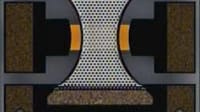
Air Force Research Laboratory Technology Horizons
Textile Capacitor
Tech Briefs
Integrated Capacitive Wheel-Contact Sensors
Tech Briefs
Improved Ion-Channel Biosensors

Battery Technology
Charge Control Methods for Supercapacitors
Tech Briefs
Low-Inductance DC Power Bus
Medical Design Briefs
The Ins and Outs of Connectors in Medical Equipment
Tech Briefs
Torque Sensor Based on Tunnel-Diode Oscillator
Tech Briefs
Ultrahigh-Energy-Density Capacitor
Tech Briefs
Supercapacitors for Wearable Devices
Sensor Technology
MEMS — Smart Sensors for the IoT

Tech Briefs
OMRON’s G9KB PCB Relay
Top Stories
INSIDERDefense
 New Raytheon and Lockheed Martin Agreements Expand Missile Defense Production
NewsAutomotive
 Ford Announces 48-Volt Architecture for Future Electric Truck
INSIDERManufacturing & Prototyping
 Active Strake System Cuts Cruise Drag, Boosts Flight Efficiency
ArticlesTransportation
 Accelerating Down the Road to Autonomy
INSIDERMaterials
 How Airbus is Using w-DED to 3D Print Larger Titanium Airplane Parts
Road ReadyTransportation

Webcasts
Electronics & Computers
 Cooling a New Generation of Aerospace and Defense Embedded...
Power
 Battery Abuse Testing: Pushing to Failure
Connectivity
 A FREE Two-Day Event Dedicated to Connected Mobility
Automotive
 Quiet, Please: NVH Improvement Opportunities in the Early Design Cycle
Transportation
 Advantages of Smart Power Distribution Unit Design for Automotive &...
Aerospace
 Sesame Solar's Nanogrid Tech Promises Major Gains in Drone Endurance