




The Inside Story on Rotary Position Sensors for Electric Vehicle Traction Motors
Wells Vehicle Electronics manufactures more than 1,000 part types for fuel delivery, ignition, and emissions and now is expanding on its expertise in control systems for internal-combustion engines to diversify into electrification for vehicle propulsion. In an interview with SAE’s Automotive Engineering, Greg Burneske, Director, Wells Engineered Products, discusses the advances and advantages behind the company’s first-ever rotary position sensor for electric vehicle (EV) traction motors.

AE: Position sensors for EV motors are crucial — but common. Why is Wells’ new two-axis sinusoidal magnet design such an advantageous upgrade over typical rotary-position sensing technology?
Burneske: In automotive traction motors, you always want the magnetic field that you’re generating with the stator to be orthogonal [at right angles] to the magnets in the rotor. That’s an over-simplification, but it gets more complicated as there are more pole pairs in the motor.
In an electric vehicle application, you really want to optimize the efficiency. And smooth torque throughout the whole range of drivability is important, too, because you want to minimize vibration and resonances in the motor. The way most people achieve that is with variable-reluctance resolvers and transformer type resolvers.
Those work pretty well — but we’re replacing the resolver with something that’s simpler, lighter and smaller. And it’s more accurate. We achieve the accuracy by creating a proprietary magnetization pattern on a ring magnet mounted to the rotor.
AE: How is the pattern created?

Burneske: We use a through-shaft magnet, a ring magnet that goes on the shaft. Now imagine that the pattern on this magnet has a B-field vector; as you go around the circumference of the ring, we’re going to rotate that angle sinusoidally. By measuring the proprietary magnetization on the ring magnet, we always know the position of the rotor. Our sensor can output the position in any format — analog, sin/cos, digital, etc.
AE: In almost any kind of measurement, enhanced accuracy is a good thing. What does it offer for an EV traction motor?
Burneske: With our sensor, all you need is a simple pickup and our proprietary ring magnet. With that, we can create output signals of a resolver without the excitation, without all the copper, without all the mechanical challenges, the weight, the bulk, the expense.
And it is very accurate: accuracy is measured in arc minutes of the electrical angle. Accuracy is somewhat of a function of the diameter of the magnet and how many poles you have — but when you’re driving a motor, you don’t really care about the mechanical accuracy. The accuracy you care about is the angle relative to the poles of the motor.
AE: How does your rotary position sensor compare in terms of performance and cost?
Burneske: Parts count definitely is fewer. Basically, it’s two components: the ring magnet [on the motor shaft] and a simple, compact pickup. We anticipate offering a 25 to 30% cost reduction over resolvers in some applications, and it could be more in others. In addition, our technology is lighter and smaller, with inherent redundancy.
AE: What about applicability to existing traction motors or those currently in the design phase?
Burneske: We can customize to any rotor size or any number of poles. We can go as small as 30 or 40 millimeters in diameter. We can do any number of poles — we’ve got a 12-pole system operating right now in our lab.
More From SAE Media Group
Automotive Engineering
Tula DMD Aims for More-Efficient E-Machines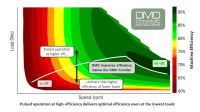
Automotive Engineering
Schaeffler Builds an E-Motor Powerhouse

Aerospace & Defense Tech Briefs
What’s the Best DC Motor for Your Commercial Aerospace Application?
Motion Design
Navigating the Challenges of Motor Commutation
Battery & Electrification Technology
The Impact of Fast Charging on the EV Charging Chain
Battery & Electrification Technology
The Future of Axial- and Radial-Flux Motors
Battery & Electrification Technology
Modeling Considerations for Optimizing EV Motors
Battery & Electrification Technology
Battery Innovation Key for Commercial and Off-Highway EVs
Sensor Technology
Sensors — Powering the Future of Transportation
Off-Highway Engineering
Turntide Cuts Time to Market for Electric Construction Equipment
Automotive Engineering
Protean Electric Aims for Pirouetting Autonomous EVs
Battery & Electrification Technology
New Products
Automotive Engineering
All (Robot) Hands on Deck
Automotive Engineering
Schaeffler Promotes E-Motor Manufacturing Flexibility
Tech Briefs
Sensors, 10-Year Testing Improve FLO Chargers

Motion Design INSIDER
Megawatt Electrical Motor Could Help Electrify Aviation
Automotive Engineering
Orbis Says HaloDrive Axial-Flux Motor Available for In-Wheel, Other Uses
Automotive Engineering
48V Is Coming, and Not Just for EVs
Battery & Electrification Technology
The Road to Net-Zero EV Development Labs
Automotive Engineering
Tula Turns Its Tech Toward EV Motor Control
Automotive Engineering
ACeDrive Consortium Plans More Efficient EV Powertrain

Medical Design Briefs
Compact DC Motors
Automotive Engineering
Equipmake's 'Cool' Motor Technology
Automotive Engineering
Intertek Rethinks the EV Test Facility
Automotive Engineering
Engineering Flexibility into EV Powertrains
Off-Highway Engineering
Electric Mobile Machines Won’t Abandon Hydraulics
Automotive Engineering
Model-Based Analysis of E-Motor Designs
Top Stories
NewsSensors/Data Acquisition
 Microvision Aquires Luminar, Plans Relationship Restoration, Multi-industry Push
INSIDERRF & Microwave Electronics
 A Next Generation Helmet System for Navy Pilots
INSIDERWeapons Systems
 New Raytheon and Lockheed Martin Agreements Expand Missile Defense Production
NewsAutomotive
 Ford Announces 48-Volt Architecture for Future Electric Truck
INSIDERAerospace
 Active Strake System Cuts Cruise Drag, Boosts Flight Efficiency
ArticlesTransportation

Webcasts
Aerospace
 Cooling a New Generation of Aerospace and Defense Embedded...
Energy
 Battery Abuse Testing: Pushing to Failure
Power
 A FREE Two-Day Event Dedicated to Connected Mobility
Automotive
 Quiet, Please: NVH Improvement Opportunities in the Early Design Cycle
Electronics & Computers
 Advantages of Smart Power Distribution Unit Design for Automotive &...
Unmanned Systems
 Sesame Solar's Nanogrid Tech Promises Major Gains in Drone Endurance