




Boeing to Leverage Intel 18A Fabrication in Next Generation Aerospace Microelectronics
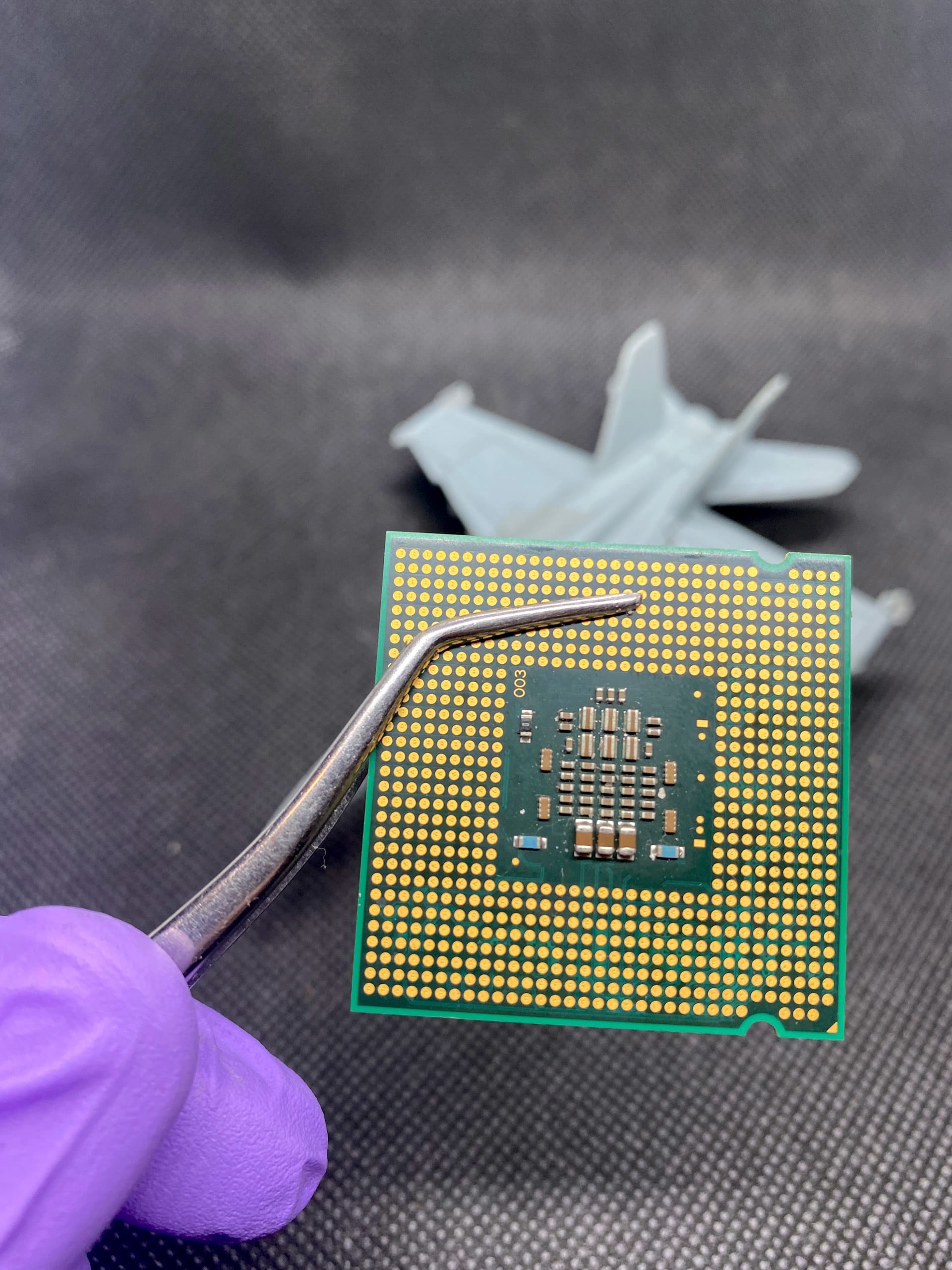
Boeing is working with Intel under a new strategic collaboration to advance semiconductor technology across the aerospace industry, with the intent to create next-generation microelectronics applications in artificial intelligence, secure computing and next generation flight systems.
The collaboration will allow Boeing to leverage Intel 18A technology, a state-of-the-art Si CMOS (Silicon Complementary Metal-Oxide Semiconductor) fabrication process to create next generation technologies that are "relevant to national security," according to July 11 press release. Intel Foundry Services describes 18A as one of two process nodes that will introduce both PowerVia backside power technology and RibbonFET gate-all-around technology.
"As a completely new way of delivering power to the transistors, backside power implementation raised new challenges for thermals and debugging designs. By decoupling development of PowerVia from RibbonFET, Intel could work through those challenges quickly to ensure readiness for implementation in silicon based on Intel’s 20A and 18A process nodes," according to the company.
Boeing wants to use the collaboration as a foundation for enabling the development of aerospace technologies that are producible, digital, autonomous and sustainable.
“We are excited to work with Intel to accelerate state-of-the-art microelectronics computing technologies to meet the needs of our aerospace customers,” said Patty Chang-Chien, Vice President and General Manager of Boeing Research & Technology. “Bridging advanced commercial technology into aerospace capabilities is one of our core strengths and critical for our national security.”
Other benefits to Boeing related to microelectronics are expected to include process improvements, reducing the time and cost of moving design ideas to commercialization, and developing technical talent. Boeing's strategic collaboration announcement came a week ahead of another update between the two companies shared by Intel in a July 18 press release.
According to Intel, Boeing a Northrop Grumman are being onboarded as part of phase two of the U.S. Department of Defense (DoD)’s Rapid Assured Microelectronics Prototypes - Commercial (RAMP-C) program. In the second phase of the RAMP-C program, the two companies will use the Intel 18A process to develop, tape-out and fabricate test chips in preparation for product design tape-outs.
Boeing and Northrop Grumman join the current lineup of RAMP-C customers – Nvidia, Qualcomm, Microsoft and IBM – and will work closely with Intel and its ecosystem partners, Cadence and Synopsys. DoD announced the RAMP program in 2020 to develop a secure design and prototyping capability to demonstrate how the DoD can securely leverage state-of-the-art microelectronics technologies from industry without depending on a closed security architecture fabrication process or facility.
“We are pleased to welcome Boeing and Northrop Grumman to the RAMP-C program. Boeing and Northrop Grumman will use their industry expertise to develop and support leading-edge semiconductor solutions using Intel 18A process technology for the success of vital DoD and national security systems," said Kapil Wadhera, Vice President of Intel Foundry Services and General Manager of Foundry Solutions Business Group. "Together, we will continue to bolster the domestic semiconductor supply chain and ensure that the United States maintains leadership in process technology R&D, advanced manufacturing and microelectronics systems.”
More From SAE Media Group
Aerospace Manufacturing and Machining INSIDER
Domestic Supply of Radiation Hardened by Design Microelectronics Technology to Expand

Tech Briefs
Thin-Film Electronics for Flexible Chip Design
Electronics & Sensors INSIDER
Brain-Inspired Highly Scalable Neuromorphic Hardware
Aerospace & Defense Tech Briefs
New 3D Chips Could Make Electronics Faster and More Energy-Efficient

Electronics & Sensors INSIDER
Opening Up the Potential of Thin-Film Electronics for Flexible Chip Design
Electronics & Sensors INSIDER
Advancing Semiconductor Devices for Artificial Intelligence
Aerospace & Defense Tech Briefs
New Products
Defense INSIDER
Defense Leaders Receive First Intel SHIP Multi-Chip Prototype
Photonics & Imaging Technology
Sustainable Computing for AI Processing
Aerospace & Defense Tech Briefs
Future Advances in Electronic Materials and Processes - Flexible Hybrid Electronics


Aerospace & Defense Tech Briefs
Content Addressable Memory (CAM) Technologies for Big Data and Intelligent Electronics Enabled By Magneto-Electric Ternary CAM
Electronics & Sensors INSIDER
Tiny But Mighty: Next-Gen Transistors Hold Great Promise
Aerospace Manufacturing and Machining INSIDER
Army Launches CMOSS Prototyping Competition for Computer Chassis and Cards

Aerospace & Defense Tech Briefs
Radiation-Tolerant FPGAs Solve Spacecraft Design Challenges
Aerospace & Defense Tech Briefs
SHIP Prototype Computer Chip
Aerospace & Defense Tech Briefs
FPGAs and HPC
Aerospace INSIDER
The Future of Avionics: Machine-Learned and Certified

Electronics & Sensors INSIDER
Integrating Dimensions to Get More Out of Moore’s Law
Aerospace INSIDER
AI-Powered Radar Warning Receiver for Fourth Generation Aircraft
Electronics & Sensors INSIDER
Built For AI, This Chip Moves Beyond Transistors for Huge Computational Gains
Electronics & Sensors INSIDER
Engineers “Grow” Atomically Thin Transistors on Top of Computer Chips
Aerospace & Defense Tech Briefs
Heterogeneous Integration Technology
Top Stories
NewsSensors/Data Acquisition
 Microvision Aquires Luminar, Plans Relationship Restoration, Multi-industry Push
INSIDERRF & Microwave Electronics
 A Next Generation Helmet System for Navy Pilots
INSIDERWeapons Systems
 New Raytheon and Lockheed Martin Agreements Expand Missile Defense Production
NewsAutomotive
 Ford Announces 48-Volt Architecture for Future Electric Truck
INSIDERAerospace
 Active Strake System Cuts Cruise Drag, Boosts Flight Efficiency
ArticlesTransportation

Webcasts
Aerospace
 Cooling a New Generation of Aerospace and Defense Embedded...
Energy
 Battery Abuse Testing: Pushing to Failure
Power
 A FREE Two-Day Event Dedicated to Connected Mobility
Automotive
 Quiet, Please: NVH Improvement Opportunities in the Early Design Cycle
Electronics & Computers
 Advantages of Smart Power Distribution Unit Design for Automotive &...
Unmanned Systems
 Sesame Solar's Nanogrid Tech Promises Major Gains in Drone Endurance