




AFRL Supports Desert Hawk Program
Applying traditional wind tunnel testing to unconventional aircraft
AFRL aeronautical engineers collaborated with the Electronic Systems Center's (ESC) Force Protection Program Office, Hanscom Air Force Base (AFB), Massachusetts, to conduct an in-house effort assessing the Desert Hawk small unmanned air vehicle's (SUAV) performance and exploring potential improvements to that performance. Desert Hawk, also known as the Force Protection Airborne Surveillance System (FPASS), performs air base perimeter defense and other intelligence, surveillance, and reconnaissance tasks.
The team's efforts to analyze Desert Hawk performance ultimately culminated in a wind tunnel test of the airframe in AFRL's Vertical Wind Tunnel (VWT), Wright-Patterson AFB, Ohio. While the initial goal of the analysis was to increase Desert Hawk's overall flight endurance by implementing evolutionary airframe improvements, preliminary results indicated that significant improvements to the aircraft's endurance would require a clean-sheet redesign. The engineers then applied a traditional aeronautical engineering approach to characterize the Desert Hawk—and thus gain a better understanding of its performance and flight envelope.

To further enhance its knowledge of the aircraft, the collaborative team obtained a Desert Hawk flight article through prime contractor Lockheed Skunk Works and successfully tested it in the laboratory's VWT (see figure). With the objective of improving Desert Hawk's flying qualities and therefore its mission effectiveness, the team tested various thrust effects and a range of control surface deflections to produce a robust aerodynamic model as a baseline for future control system refinement.
Since the AFRL/ESC Desert Hawk collaboration began, Lockheed engineers have designed and flight-tested two new iterations of FPASS. These new versions have provided greater endurance, increased airframe survivability, incorporated more sophisticated onboard sensors and observation systems, and introduced an improved ground-operator interface. Insights gained from the rigorous aerodynamic analysis and comprehensive VWT tests conducted in-house at AFRL will enable ESC and the Air Force SUAV community to generate more precise flight performance requirements and be smarter buyers in future acquisition programs. Results of the wind tunnel testing are expected to produce a higher-performance version of the evolving Desert Hawk/FPASS airframe.
Lt Milton Wancowicz III and Dr. Michael Ol, of the Air Force Research Laboratory's Air Vehicles Directorate, wrote this article. For more information, contact TECH CONNECT at (800) 203-6451 or place a request at http://www.afrl.af.mil/techconn_index.asp . Desert Hawk being tested in the VWT Reference document VA-H-06-02.
More From SAE Media Group
Aerospace & Defense Tech Briefs
Connect Them All
Aerospace & Defense Tech Briefs
General Atomics Moves Toward Global RPA Flight Certification for MQ-9B SkyGuardian
Aerospace & Defense Tech Briefs
Advancing Metrology at Mach Speed
Aerospace & Defense Tech Briefs
Sensuron Enables Real-Time Structural Health Monitoring Onboard NASA’s X-56 UAV
Aerospace & Defense Tech Briefs
Multispectral Airborne Reconnaissance System
Aerospace & Defense Tech Briefs
Quantifying Autonomous Soaring on a Surveillance and Communications Relay Mission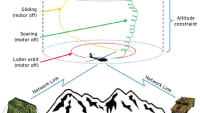
Aerospace & Defense Tech Briefs
Abaco’s FORCE2 Flight Computer Enables National and International Ground Control Station Certification
Aerospace & Defense Tech Briefs
Curtiss-Wright Black Boxes Receive European Approval
Aerospace & Defense Tech Briefs
Aitech Defense Will Provide Data Interface Technology for Boeing’s Unmanned MQ-25 Refueling Platform
Aerospace & Defense Tech Briefs
Curtiss-Wright Will Provide Data Technology Support for Boeing’s MQ-25 Unmanned Air Refueling Platform
Aerospace & Defense Tech Briefs
Assessment of Noncommercial Icing Prediction Capabilities for Army Applications
Aerospace & Defense Tech Briefs
Tactical Data Link Software
Aerospace & Defense Tech Briefs
BAE Systems Will Supply Flight Control and Target Identification Systems for Boeing’s Carrier-Based MQ-25

Aerospace & Defense Tech Briefs
Air Force Tests Fully Autonomous UAS Control System
Aerospace & Defense Tech Briefs
ANSYS Will Help Airbus Develop AI-Enabled Flight Controls for the FCAS Program’s Autonomous Wingmen
Aerospace & Defense Tech Briefs
Unmanned Hover Plane
Aerospace & Defense Tech Briefs
AeroVironment Releases New Puma 3
Aerospace & Defense Tech Briefs
New Zealand Will Become a Testbed for Airbus Unmanned Aircraft and Space Technology

Aerospace & Defense Tech Briefs
SAE International Launches Aerospace Technology Symposium at Japan Aerospace 2018
Aerospace & Defense Tech Briefs
Insitu ScanEagle SUAS Boosts Coast Guard Mission Effectiveness
Aerospace & Defense Tech Briefs
Unmanned Aerial Vehicle
Aerospace & Defense Tech Briefs
Textron Systems, Textron Aviation Defense Demonstrate Simulated Manned-Unmanned Teaming Capability
Aerospace & Defense Tech Briefs
UAV In-Flight Software Upgrades
Aerospace & Defense Tech Briefs
Martin UAV VTOL Unmanned Aircraft Taps Persistent Systems Wave Relay Data Link Technology
Aerospace & Defense Tech Briefs
Raytheon, UTC Merger Will Direct $8B R&D Budget Toward Hypersonics, Cybersecurity, AI, and Next-Gen Connected Aircraft
Aerospace & Defense Tech Briefs
Advances in Multi-UAV Operations
Aerospace & Defense Tech Briefs
Multi-Drone System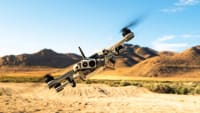
Top Stories
INSIDERDefense
 New Raytheon and Lockheed Martin Agreements Expand Missile Defense Production
NewsAutomotive
 Ford Announces 48-Volt Architecture for Future Electric Truck
INSIDERManufacturing & Prototyping
 Active Strake System Cuts Cruise Drag, Boosts Flight Efficiency
ArticlesTransportation
 Accelerating Down the Road to Autonomy
INSIDERMaterials
 How Airbus is Using w-DED to 3D Print Larger Titanium Airplane Parts
Road ReadyTransportation

Webcasts
Electronics & Computers
 Cooling a New Generation of Aerospace and Defense Embedded...
Power
 Battery Abuse Testing: Pushing to Failure
Connectivity
 A FREE Two-Day Event Dedicated to Connected Mobility
Automotive
 Quiet, Please: NVH Improvement Opportunities in the Early Design Cycle
Transportation
 Advantages of Smart Power Distribution Unit Design for Automotive &...
Aerospace
 Sesame Solar's Nanogrid Tech Promises Major Gains in Drone Endurance