




New Horizons Spacecraft to Reach Ultima Thule
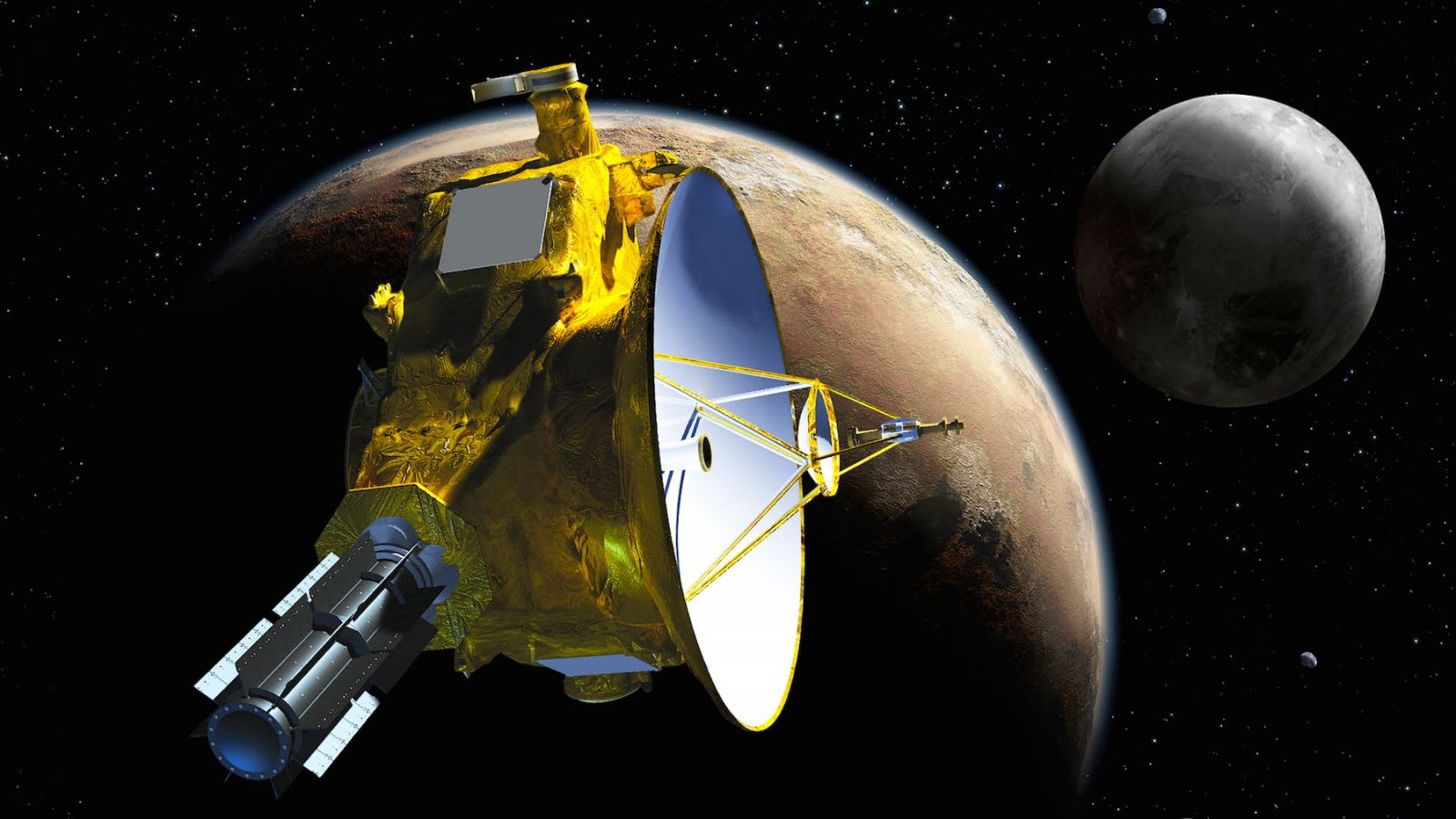
NASA’s New Horizons interplanetary space probe – part of the agency’s New Frontiers program – was launched in 2006 to perform a flyby of Pluto and capture images of our solar system’s most tentative planet. In 2015, the Pluto approach went as planned.
At 36,000 miles per hours, faster than any other mission before it, New Horizons took almost 10 years to reach Pluto.
Now, three years later and left without a mission, New Horizons will explore a mysterious object (or pair of objects) named Ultima Thule , meaning “beyond the known world.” The reddish piece of rock and ice is thought to be a castoff of an older version of our solar system, untouched for billions of years.
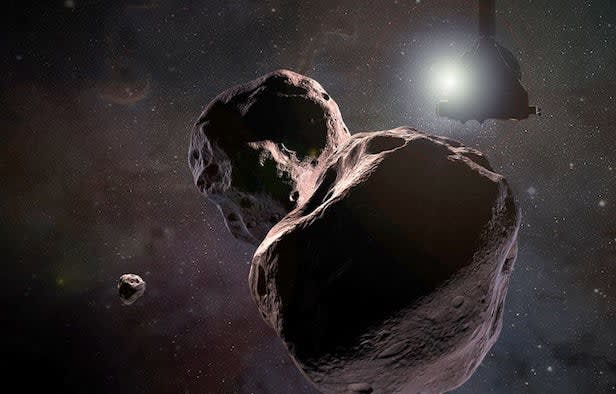
“This is pure exploration,” said Alan Stern, the mission's principal investigator, in a statement. “We are really flying toward something completely unknown, unlike any other object we've studied in the past.”
Ultima Thule is located in the Kuiper Belt, at the edge of the solar system and New Horizons will reach it on January 1 at roughly 12:30 a.m. Eastern Standard Time (EST). After a slight delay – travelling 4 billion miles back to Earth – the images are expected by 10 a.m. EST.
After that, New Horizons will continue into its twilight years and deeper into the Kuiper Belt. Scientists predict that the spacecraft will have enough power to keep itself operational through the 2030s.
William Kucinski is content editor at SAE International, Aerospace Products Group in Warrendale, Pa. Previously, he worked as a writer at the NASA Safety Center in Cleveland, Ohio and was responsible for writing the agency’s System Failure Case Studies. His interests include literally anything that has to do with space, past and present military aircraft, and propulsion technology.
Contact him regarding any article or collaboration ideas by e-mail at
More From SAE Media Group
Aerospace & Defense Tech Briefs
Made in Space Is Set to Make in Space
Aerospace & Defense Tech Briefs
NASA Selects Power and Propulsion Module for Upcoming Lunar Gateway
Aerospace & Defense Tech Briefs
Apollo Fusion Will Supply NASA JPL with MaSMi Hall Thrusters as Sole Licensed Manufacturer
Aerospace & Defense Tech Briefs
New Zealand and LeoLabs Establish the First Low-Earth Orbit Regulatory Platform
Aerospace & Defense Tech Briefs
NASA Invests in Aerospace Start-Up, University Projects on CubeSat Platform
Aerospace & Defense Tech Briefs
FADA-CATEC Uses 3D Printing to Slim down the CHEOPS Satellite
Aerospace & Defense Tech Briefs
Space Tango Takes Its Next Steps in Orbital Manufacturing
Aerospace & Defense Tech Briefs
What Does NASA Do with a Space Station Originally Developed for a Now-Cancelled Mission?
Aerospace & Defense Tech Briefs
Firefly Aerospace Is the Latest Addition to Florida’s “Space Coast”
Aerospace & Defense Tech Briefs
Lockheed Martin’s “Non-Operational” Space Fence Detects Indian Anti-Satellite Operations While Still in Test Mode
Aerospace & Defense Tech Briefs
NASA Prepares for the Moon and Mars with Expanded Deep Space Network
Aerospace & Defense Tech Briefs
NASA Selects Frontier Aerospace to Continue Development of New Deep Space Thruster
Aerospace & Defense Tech Briefs
Delta II’s Final Flight a Success
Aerospace & Defense Tech Briefs
CubeSat Spacecraft
Aerospace & Defense Tech Briefs
NASA and AeroVironment Are Building a Helicopter for Mars
Aerospace & Defense Tech Briefs
Can the Air Force Reach a 24-Hour Launch Window?
Aerospace & Defense Tech Briefs
Space Launch Providers Submit Proposals for National Security Space Launch Program
Aerospace & Defense Tech Briefs
NASA Spacecraft Reaches Farthest Target in History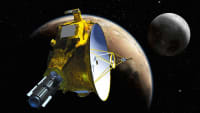
Aerospace & Defense Tech Briefs
JAXA Launches HTV7 Unmanned Cargo Spacecraft on Resupply Mission to ISS
Aerospace & Defense Tech Briefs
NASA Invites Proposal from Space-Based Large-Scale 3D-Printing Company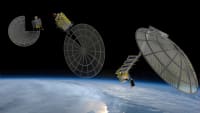
Aerospace & Defense Tech Briefs
OmegA Rocket Sustains Explosion During First Static Test, Northrop Grumman Maintains Test Was a Success
Aerospace & Defense Tech Briefs
Techstars and Starburst Start New Space Technology Business Accelerator

Aerospace & Defense Tech Briefs
Canada’s RADARSAT Constellation Satellites Receive Thermal Blankets, Ready for Launch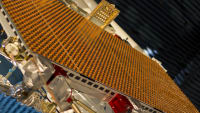
Aerospace & Defense Tech Briefs
New Zealand Will Become a Testbed for Airbus Unmanned Aircraft and Space Technology
Aerospace & Defense Tech Briefs
U.K. Space Agency Partners with Industry to Advance Spaceflight Program
Aerospace & Defense Tech Briefs
Three Stages of Separation: Bidding Farewell to the Delta II Launch Vehicle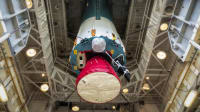
Automotive Engineering
OneWeb Ramps up Satellite Production with New Round of Funding
Aerospace & Defense Tech Briefs
Lockheed Martin Ships AEHF Satellite in Advance of ULA Rocket Launch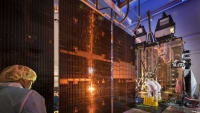
Aerospace & Defense Tech Briefs
Iridium, Aireon, SpaceX Celebrate Satellite Launch, System Deployment
Transcript
No transcript is available for this video.
Top Stories
INSIDERDefense
 New Raytheon and Lockheed Martin Agreements Expand Missile Defense Production
NewsAutomotive
 Ford Announces 48-Volt Architecture for Future Electric Truck
INSIDERManufacturing & Prototyping
 Active Strake System Cuts Cruise Drag, Boosts Flight Efficiency
ArticlesTransportation
 Accelerating Down the Road to Autonomy
INSIDERMaterials
 How Airbus is Using w-DED to 3D Print Larger Titanium Airplane Parts
Road ReadyTransportation

Webcasts
Electronics & Computers
 Cooling a New Generation of Aerospace and Defense Embedded...
Power
 Battery Abuse Testing: Pushing to Failure
Connectivity
 A FREE Two-Day Event Dedicated to Connected Mobility
Automotive
 Quiet, Please: NVH Improvement Opportunities in the Early Design Cycle
Transportation
 Advantages of Smart Power Distribution Unit Design for Automotive &...
Aerospace
 Sesame Solar's Nanogrid Tech Promises Major Gains in Drone Endurance