




A New ‘Works’ Is in the Works
Pratt & Whitney aims to cut engine development and procurement time in half with GatorWorks.
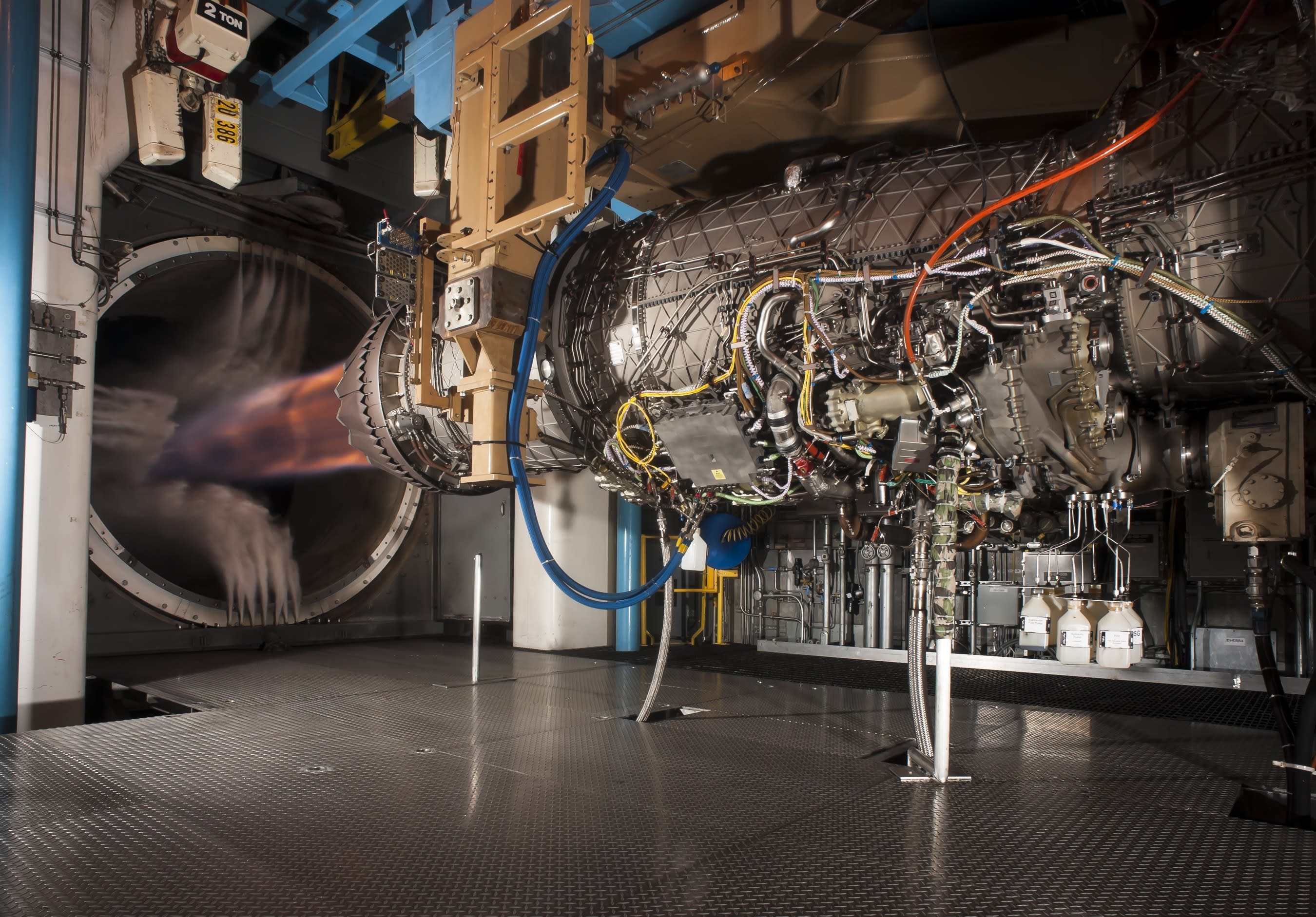
This week, Pratt & Whitney , a division of United Technologies Corp. (UTC), announced the establishment of GatorWorks, a newly formed prototyping arm that will focus on the rapid and agile development of dependable, lower-cost military engines.
According to Pratt & Whitney, GatorWorks' objective is to deliver state-of-the-art engines in half the lead time and for half the cost of traditional procurement cycles.
"The standard large engine development cycle is roughly 20 years. Our customers have asked for rapid innovation, technology development, and new product introduction. GatorWorks is the answer," says Matthew Bromberg, president of Pratt & Whitney military engines.
"Pratt & Whitney GatorWorks will seek to leverage commercial enterprise capabilities in rapid prototyping, iterative design, procurement, and testing of cutting-edge products for our customers. We've created an environment where our best engineers can reach their potential with all the tools they need, but without the unnecessary internal barriers that can sometimes slow them down" continues Bromberg.
The GatorWorks moniker pays homage to the official alias of Lockheed Aircraft Corporation’s (now Lockheed Martin ’s) Advanced Development Programs: Skunk Works . The group was formed in 1943 when the U.S. Army Air Tactical Service Command met with Lockheed Aircraft Corporation to discuss the urgent need to counter the developing German jet aircraft program.
Within 143 days (seven days before deadline), the Lockheed team designed and built the United States’ first operations jet fighter, the XP-80 Shooting Star.
The crack team’s success was based on an unconventional, rule-breaking approach that challenged bureaucratic barriers to innovation. Since then, multiple aerospace organizations have used the ‘Works’ handle to designate advanced prototyping departments, such as Boeing ’s Phantom Works and NASA ’s Eagleworks Laboratories .
Like its forerunners, Pratt & Whitney GatorWorks will seek to combine the efficiency, agility, and unconstrained boundaries of a small start-up, with the discipline and engineering rigor of the world's leading propulsion company. The new unit incorporates a mix of cross-functional teams, vertical integration, and a short list of suppliers and partners.
While the hand-picked GatorWorks team has been operational since early 2018 – focusing on developing a family of four undisclosed advanced products – the June 12 announcement marks the special projects group’s official formation.
More From SAE Media Group
Aerospace & Defense Tech Briefs
Boeing and NASA Unveil Lightweight, Ultra-Thin, More Aerodynamic Transonic Truss-Braced Wing Concept
Aerospace & Defense Tech Briefs
J-10B Fighter Demonstrates Thrust-Vectoring Supermaneuverability at Airshow China
Aerospace & Defense Tech Briefs
Pratt & Whitney Receives $437M for Continued Adaptive Engine Development
Aerospace & Defense Tech Briefs
Aerion AS2 Supersonic Bizjet on Track for Trans-Atlantic Crossing in 2023
Aerospace & Defense Tech Briefs
SAE International Launches Aerospace Technology Symposium at Japan Aerospace 2018
Aerospace & Defense Tech Briefs
United Technologies Completes Acquisition of Rockwell Collins, Sheds Non-Aero Business Units
Aerospace & Defense Tech Briefs
Boeing Completes Assembly of the First 777X
Aerospace & Defense Tech Briefs
Boeing Debuts First Hypersonic Passenger Aircraft Concept
Aerospace & Defense Tech Briefs
GE Aviation Debuts Affinity, First Civil Supersonic Engine in 55 Years
Aerospace & Defense Tech Briefs
Maintainers Design a $400 Maintenance Fixture to save the U.S. Air Force $500k per Year
Aerospace & Defense Tech Briefs
Connected Aircraft Technologies Benefit Manufacturers, Airlines, and Travelers
Aerospace & Defense Tech Briefs
Industry Invited to Participate in AeroTech Aerospace and Defense Technical Program
Aerospace & Defense Tech Briefs
Air Mobility Innovations Take Center Stage at Aerospace Systems and Technology Conference
Aerospace & Defense Tech Briefs
Sikorsky, Boeing Debut Future Vertical Lift Dual-Rotor Design with SB>1 DEFIANT Helicopter
Aerospace & Defense Tech Briefs
Airlines for America and SAE International Recognize Lufthansa Technik, 3D.aero for Nondestructive Testing Innovation
Aerospace & Defense Tech Briefs
Future of British Air Power: The Next-Gen Tempest
Aerospace & Defense Tech Briefs
GE Aviation Enhances Digital Thread with Dassault Systèmes’ 3DEXPEREINCE Platform
Aerospace & Defense Tech Briefs
SAE International Extends Call for Abstracts, Seeks Submissions for AeroTech Conference
Tech Briefs
How Jet Engine Flow Can Be Controlled Optically
Aerospace & Defense Tech Briefs
NASA’s Next X-Plane Passes Major Review
Aerospace & Defense Tech Briefs
2050 Aircraft Engine Designs Go Radical, Part 1
Aerospace & Defense Tech Briefs
Stratos Aircraft Evolves Carbon-Fiber Very Light Jet, Offers Limited Number of Kit Aircraft
Aerospace & Defense Tech Briefs
SAE International Issues, Revises Technical Reports for Aerospace Engineering
Aerospace & Defense Tech Briefs
Safran and MTU Aero Engines to Co-Develop Engine for Sixth-Generation FCAS Fighter
Aerospace & Defense Tech Briefs
Collins Aerospace Will Provide Avionics and Synthetic Vision for the Supersonic X-59 QueSST
Aerospace & Defense Tech Briefs
Boeing’s 777X Finally Gets Its Engines
Aerospace & Defense Tech Briefs
Mitsubishi Heavy Industries Aero Engines Completes Assembly of First Pratt & Whitney GTF PW1200G Engine
Aerospace & Defense Tech Briefs
New Boeing, Safran Joint Venture Dedicated to Developing Aircraft Auxiliary Power Units
Aerospace INSIDER
Honeywell Develops Cooling System Upgrade for F-35 Engine
Aerospace & Defense Tech Briefs
New Research on Noise Reduction for Next Generation Aircraft Engines
Top Stories
INSIDERManufacturing & Prototyping
 How Airbus is Using w-DED to 3D Print Larger Titanium Airplane Parts
INSIDERManned Systems
 FAA to Replace Aging Network of Ground-Based Radars
NewsTransportation
 CES 2026: Bosch is Ready to Bring AI to Your (Likely ICE-powered) Vehicle
NewsSoftware
 Accelerating Down the Road to Autonomy
EditorialDesign
 DarkSky One Wants to Make the World a Darker Place
INSIDERMaterials
 Can This Self-Healing Composite Make Airplane and Spacecraft Components Last...
Webcasts
Defense
 How Sift's Unified Observability Platform Accelerates Drone Innovation
Automotive
 E/E Architecture Redefined: Building Smarter, Safer, and Scalable...
Power
 Hydrogen Engines Are Heating Up for Heavy Duty
Electronics & Computers
 Advantages of Smart Power Distribution Unit Design for Automotive...
Unmanned Systems
 Quiet, Please: NVH Improvement Opportunities in the Early Design...
