




Developing High-Energy-Density Batteries for EVs

It’s been a long road for Nissan from its 1947 Tama EV to its advanced prototype ZEV BladeGlider sports car, but that road still stretches to—and far beyond—the technology horizon, as it continues to refine electric propulsion solutions.

The company claims world leadership in ZEV technology following the 2010 introduction of the Leaf EV, the first modern-era battery-electric passenger car. The second generation Leaf will make its premiere in September.
As previously reported in Automotive Engineeering ( http://articles.sae.org/14604/ ), Nissan Europe is leading a U.K. consortium to research and develop future generation batteries via the High Energy Density Battery (HEDB) project. Its aim is to deliver multifunctional battery systems for EVs and HEVs. Nissan manufactures EV battery packs at its Sunderland, U.K. plant.
The consortium will embrace pilot projects, product diversification and process improvement. A key member is Hyperdrive Innovation, whose founder and Commercial Managing Director, Stephen Irish, spoke recently with AE. He noted that while substantial improvements in cell chemistry have been made in recent years, "there is no magic solution regarding enhancing energy density." However, he sees potential for pack-level improvements through the consortium as well as the Battery Management Systems (BMS) developed by Hyperdrive to ensure cell longevity and efficiency while accommodating "opportunity charging.”

Vital to battery development work is understanding the duty cycles of specific vehicle types as well as cost, said Irish: “We ask ourselves where best value will be achieved—how, and how frequently, a vehicle or machine is to be used, how it’s charged, where the energy comes from." Making that energy go further concerns vehicle weight and power electronics and how they work.
While Hyperdrive’s focus is BMS development, novel chemistry solutions need to be considered, too. The company has recently worked with lithium sulfur which, in theory, can deliver specific energy density that is five times that of lithium-ion. However, Li-S is still in development "and in the real world it could be less," Irish said.
"We are not chemists but we do need to know about these developments to spot trends and to be able to develop our technologies and absorb them into our products," he explained. "For us, just as for an OEM, there has to be a clear route to market.”
Battery size matters
Sometimes, that market is complicated by what Irish terms “extreme outliers”—users who care less about a battery’s life and just want to max up-time and extract as much energy as possible from it and also charge it as quickly as possible. The other extreme concerns users who require optimal longevity for the battery and its associated electronic systems, to achieve best possible value over time.

“Personally, I would argue for the smallest battery possible for a daily commuting vehicle, saving weight and cost. Most people do not drive as far in a week or month as they think they do," Irish said. "However, it is still the market barrier of increased range that end-users want. It has to be overcome.”
Typical EV battery life expectancy is 5000 to 6000 cycles at consistent 80% discharge rates, Irish noted. Taking it to 100% discharge cuts its life by two-thirds, he said, adding that secondary re-use applications will help harvest maximum value from the cells.
Getting battery and BMS costs down is a constant battle. Achieving economies of scale is significant; supporting this is designing for commonality. “If we do bespoke systems we have to pass on non-recurring engineering (NRE) costs, which can be substantial in terms of tooling and validation testing," Irish explained. A more standard suite of products, as Hyperdrive has created, allows on-costs to be reduced while enabling faster time-to-market.
Hyperdrive also has designed a modular universal battery suitable for commercial vehicles and some off-highway applications. Together with Douglas Equipment, part of Textron, the company has developed a push-back mild hybrid tractor.
Low-temperature research
A particular area of concern for EVs is low-temperature operation. To gain experience, Hyperdrive carried out a project with the British Antarctic Survey team. Batteries were non-traction types with low current applications. The research aim was to learn as much as possible about battery and associated systems’ performance at temperature extremes of around -50°C. ICEs have problems at very low temperatures and need overnight engine heating.
Irish is confident of EV performance meeting low temperature challenges, albeit not down to extreme levels. “And an electric vehicle charging overnight will be warm in the morning with comfortable cabin and clear windshield.”
Hyperdrive's BMS has been developed to take account of temperature; it actively controls charge and discharge of the battery cells to obviate potential damage but thermal management would be needed in some applications, said Irish.
Following a broad range of engineering experience, including development projects at Jaguar Land Rover and NSK Steering Systems, Irish established Hyperdrive five years ago. Its partnership with Nissan includes installation of high performance systems incorporating Nisan cell technology into various EV and battery energy storage systems. Other consortium members are: Warwick Manufacturing Group, University of Warwick; Newcastle University; and Zero Carbon Futures.
More From SAE Media Group
Off-Highway Engineering
ABS Ramps up Commercial-Vehicle Battery-Pack Assembly
Automotive Engineering
Novelis Creates First Aluminum Sheet Battery Enclosure for Mass Electric Vehicle Production
Automotive Engineering
Solving the 'Grand Challenge' of Battery Research
Automotive Engineering
Pour Your Next EV Battery?
Battery Technology
Advancing Battery Technology: THE 2021 BATTERY SHOW Preview
Off-Highway Engineering
A Secure Technology Future Underscores U.S. Army's R&D Work
Off-Highway Engineering
TARDEC Pursues Advanced Power Generation
Automotive Engineering
Powering up the New Stop-Start Systems
Automotive Engineering
A123 Systems Is Hot on 12-V Li-Ion for Microhybrids
Automotive Engineering
Kia Pushes Energy-Density Frontier with Soul EV Battery
Automotive Engineering
Shifting to an E-Mobility Product Portfolio
Automotive Engineering
Bussmann Series Electric Vehicle Fuses
Automotive Engineering
BMW Shows Plug-In Hybrid Electric Based on X5 Sports Activity Vehicle
Off-Highway Engineering
Charging Up Electrified Powertrains
Off-Highway Engineering
Enerdel Goes Off-Road with Its Hard-Carbon Lithium-Ion Battery Technology
Aerospace & Defense Tech Briefs
OXIS Energy and Bye Aerospace Partner to Develop Advanced Lithium Sulfur Battery Cells for Aviation
Automotive Engineering
United Kingdom Develops a Pop-Up Electric Vehicle Charging Station for City Streets
Automotive Engineering
The ONE for Battery Innovation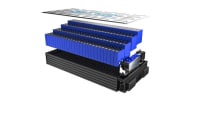
Automotive Engineering
48-V System
Aerospace & Defense Tech Briefs
Rolls-Royce and Superdielectrics Explore Supercapacitor Technology
Off-Highway Engineering
Buckeye Current’s TT Triumph
Off-Highway Engineering
Electric Power to Revolutionize Heavy-Duty Distribution Trucks
Off-Highway Engineering
Shunt Resistors
Off-Highway Engineering
Allison Transmission Expands Electrification to Accessory Systems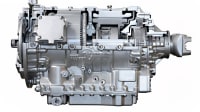
Automotive Engineering
Electric Vehicle Interface Controller
Off-Highway Engineering
Breakthroughs in 3D-Printing Give Way for Promising Textile Lithium Battery Technology
Off-Highway Engineering
Canada Will Establish a Cross-Country Electric Vehicle Charging Network
Automotive Engineering
Elevate: Hyundai’s New Four-Wheel Drive, Four-Legged Off-Road Vehicle
Automotive Engineering
High-Power Wireless Charging Technology
Automotive Engineering
2017 Chrysler Pacifica Plug-In Is Industry-First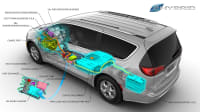
Top Stories
INSIDERManufacturing & Prototyping
 How Airbus is Using w-DED to 3D Print Larger Titanium Airplane Parts
INSIDERManned Systems
 FAA to Replace Aging Network of Ground-Based Radars
NewsTransportation
 CES 2026: Bosch is Ready to Bring AI to Your (Likely ICE-powered) Vehicle
NewsSoftware
 Accelerating Down the Road to Autonomy
EditorialDesign
 DarkSky One Wants to Make the World a Darker Place
INSIDERMaterials
 Can This Self-Healing Composite Make Airplane and Spacecraft Components Last...
Webcasts
Defense
 How Sift's Unified Observability Platform Accelerates Drone Innovation
Automotive
 E/E Architecture Redefined: Building Smarter, Safer, and Scalable...
Power
 Hydrogen Engines Are Heating Up for Heavy Duty
Electronics & Computers
 Advantages of Smart Power Distribution Unit Design for Automotive...
Unmanned Systems
 Quiet, Please: NVH Improvement Opportunities in the Early Design...
