




Automotive Engineering - October 2017
Inside this issue
Overview
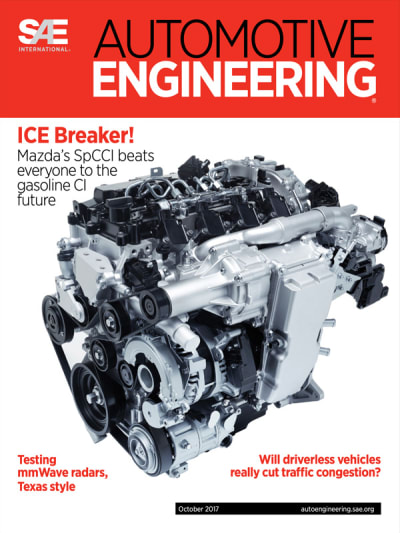
The October 2017 issue of Automotive Engineering presents a blend of insightful articles and updates on the latest advancements in the automotive industry. This issue covers a range of topics, from innovative engine technologies to the evolving landscape of automotive engineering practices.
One of the key highlights of this issue is the exploration of Mazda's new Spark Controlled Compression Ignition (SpCCI) engine. This groundbreaking technology aims to combine the benefits of gasoline and diesel engines, offering improved fuel efficiency and reduced emissions. The article delves into the technical aspects of the SpCCI engine, discussing its design, operational principles, and the potential impact it could have on the automotive market. However, specific technical specifications such as bore, stroke, rated torque, and power remain undisclosed, leaving readers eager for more detailed insights.
In addition to engine technologies, the issue also addresses the advancements in testing methodologies for automotive components. A feature article discusses the use of mmWave radar technology in automotive applications, particularly for advanced driver-assistance systems (ADAS). The article highlights the importance of accurate testing and validation processes to ensure the reliability and safety of these systems. It emphasizes the need for innovative testing environments that can simulate real-world conditions, thereby enhancing the performance and safety of vehicles equipped with such technologies.
The magazine also includes a section dedicated to the latest trends in automotive engineering education and workforce development. As the industry continues to evolve with the integration of new technologies, there is a growing demand for skilled professionals who can navigate the complexities of modern automotive design and engineering. The article discusses various educational initiatives and partnerships aimed at preparing the next generation of engineers for the challenges ahead.
Furthermore, the issue features a variety of product reviews and industry news, providing readers with updates on the latest tools and technologies available to automotive engineers. This includes insights into software solutions that facilitate design and simulation processes, as well as advancements in materials science that contribute to lighter and more efficient vehicle designs.
The editorial section reflects on the broader implications of these technological advancements, considering how they align with global trends in sustainability and environmental responsibility. The automotive industry is under increasing pressure to reduce its carbon footprint, and the innovations discussed in this issue are positioned as critical steps toward achieving these goals.
Overall, the October 2017 issue of Automotive Engineering serves as a comprehensive resource for professionals in the automotive field. It not only highlights cutting-edge technologies and methodologies but also addresses the educational and workforce challenges that accompany these advancements. With a focus on innovation and sustainability, this issue provides valuable insights that can help shape the future of automotive engineering.
Features
-
Articles
U.K. Hipercar Project Delivers High Performance with Low Emissions
Regulars
-
Editorial
-
Supplier Eye
-
The Navigator
-
What We're Driving
-
Technology Reports
Developing High-Energy-Density Batteries for EVs
Federal-Mogul Reveals Cool Solutions for Downsized Engines
Continental Unveils New 3D Display Cluster
U.S. Dept. of Transportation Issues New Autonomous-Vehicle Guidelines
Stories
Top Stories
INSIDERManufacturing & Prototyping
 How Airbus is Using w-DED to 3D Print Larger Titanium Airplane Parts
INSIDERManned Systems
 FAA to Replace Aging Network of Ground-Based Radars
NewsTransportation
 CES 2026: Bosch is Ready to Bring AI to Your (Likely ICE-powered) Vehicle
NewsSoftware
 Accelerating Down the Road to Autonomy
EditorialDesign
 DarkSky One Wants to Make the World a Darker Place
INSIDERMaterials
 Can This Self-Healing Composite Make Airplane and Spacecraft Components Last...
Webcasts
Defense
 How Sift's Unified Observability Platform Accelerates Drone Innovation
Automotive
 E/E Architecture Redefined: Building Smarter, Safer, and Scalable...
Power
 Hydrogen Engines Are Heating Up for Heavy Duty
Electronics & Computers
 Advantages of Smart Power Distribution Unit Design for Automotive...
Unmanned Systems
 Quiet, Please: NVH Improvement Opportunities in the Early Design...
Power

Similar Stories
ArticlesRF & Microwave Electronics
 Testing mmWave Radars in the Loop
What We’re DrivingAutomotive

What We’re DrivingTransportation

NewsAutomotive

NewsRF & Microwave Electronics
 Temperature-Sensitive SMD Fuse
