




Smart Sensors Drive Automated Systems in Off-Highway

Smart sensors are helpful in developing automated routines that can save a great deal of time for the operator and either increase efficiency or reduce setup time. Microcontrollers and electronic control units are often the focus of intelligent machine control strategies, but these digital marvels can’t do much without input from sensors that provide input from the analog world.
Over the next several years, more equipment will add automated systems that pave the way to autonomous operations. Much of the control technology will be borrowed from passenger cars. However, the challenges facing design engineers creating off-highway equipment sensor systems are far more complex.
“On many off-highway vehicles, there are many things you can put on the vehicle; there can be hundreds of variants,” said Benedikt Schonlau, senior manager of automated driving functions at IAV. “We need to address them all with one set of sensors. On something like a tractor that pulls many different things, you can need four or more cameras and six to eight laser scanning sensors.”

Steer-by-wire systems are among many systems linked to autonomous vehicles. In most systems, digital steering controls will provide input for smart hydraulic valves that move the wheels. The sensors that provide input for these controls also generate input used for diagnosing problems. Sensors will often be buried deep inside these valves. Tight proximity to moving parts lets sensors provide precise information quickly. For example, Danfoss Power Solutions mounts a position sensor in the hydraulic valve.
“A sensor in the valve looks at spool positioning,” said Tom Rudolph, director of portfolio eSteering at Danfoss. “This tight coupling helps when you need to decide quickly whether there is a fault.”
When sensors constantly feed information to controllers, systems are receiving information that can be used to determine when faults are about to occur. Predictive diagnostics is being used to let technicians perform routine maintenance only when it’s needed instead of relying on set timetables. Prognostics can also help users arrange vehicle repairs before failures lead to unplanned downtime.
“We’re seeing a lot more investment in prognostics; most if not all companies are investing in it,” said Stephan Tarnutzer, vice president of electronics at FEV. “In many cases, they’re ahead of passenger vehicles. That’s also true in some parts of data analysis.”
The increased use of sensors and controllers is altering the displays that show data. Larger screens with touch input are becoming commonplace in many types of vehicles. These displays help simplify the user interface, giving operators information that’s relevant to the jobs being performed at the time.
“Smart sensors and advanced displays are instrumental in helping improve operator efficiency and lower operating costs,” said Kirk Lola, business development manager at Parker Hannifin’s Electronic Controls Division. “Full color, touch-capable displays allow for better operator productivity and overall machine productivity. They offer the ability to dynamically change screens and operator interfaces depending on the machine operating mode or fault conditions.”
More From SAE Media Group
Off-Highway Engineering
The Drive for Driverless Vehicles
Automotive Engineering
Part Two of the SAE International AutoDrive Challenge Kicks off Today
Automotive Manufacturing and Machining
Manufacturing Systems Get Smart, Self Heal
Off-Highway Engineering
Displays Add Color to Simplify Operator Tasks
Off-Highway Engineering
Switches Under Pressure?
Off-Highway Engineering
Joysticks Increase Safety and Reliability While Reducing Weight
Automotive Engineering
U.S. Dept. of Transportation Issues New Autonomous-Vehicle Guidelines
Automotive Engineering
‘Cruising Chauffeur’ Demos SAE Level 3 Autonomy
Off-Highway Engineering
How Can Engineers Help Ensure the Safety, Reliability of Automated Vehicles?
Automotive Engineering
Hella's Vehicle-Damage Detection Technology Moves Toward Production
Off-Highway Engineering
Moving Hydraulics Forward with Smarter Machinery
Off-Highway Engineering
Connected-Vehicle Technology
Aerospace Manufacturing and Machining INSIDER
Army Launches CMOSS Prototyping Competition for Computer Chassis and Cards
Automotive Engineering
Renesas Increases Its Focus on Platforms
Off-Highway Engineering
Big Data’s Benefits Keep A-Comin’
Off-Highway Engineering
Unmanned Equipment Presents New Design Challenges
Automotive Engineering
Electromechanical Joining System
Automotive Engineering
Lidar Heats up as Sensor Demand Rises
Off-Highway Engineering
Military Vehicles Battle for Autonomy at Lower Cost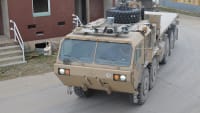
Automotive Engineering
‘Zonal’ for the Win
Automotive Engineering
Delphi Showcasing Next-Gen Autonomous System at CES 2017
Off-Highway Engineering
SAE International, GM, and Students Gear up for AutoDrive Challenge Year 2 at Mcity
Aerospace & Defense Tech Briefs
Air Force Facility Dedicated to AI and Automation Opens in Pittsburgh
Aerospace & Defense Tech Briefs
Honeywell’s New Sensors Self-Diagnose Internal Failures

Off-Highway Engineering
CAN Controller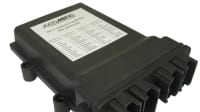
Automotive Engineering
Touch Panel Computer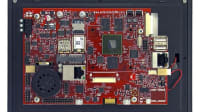
Aerospace & Defense Tech Briefs
How SpaceVPX is Influencing the Design of Next Generation Spacecraft Avionics
Top Stories
INSIDERManufacturing & Prototyping
 How Airbus is Using w-DED to 3D Print Larger Titanium Airplane Parts
INSIDERManned Systems
 FAA to Replace Aging Network of Ground-Based Radars
NewsTransportation
 CES 2026: Bosch is Ready to Bring AI to Your (Likely ICE-powered) Vehicle
NewsSoftware
 Accelerating Down the Road to Autonomy
EditorialDesign
 DarkSky One Wants to Make the World a Darker Place
INSIDERMaterials
 Can This Self-Healing Composite Make Airplane and Spacecraft Components Last...
Webcasts
Defense
 How Sift's Unified Observability Platform Accelerates Drone Innovation
Automotive
 E/E Architecture Redefined: Building Smarter, Safer, and Scalable...
Power
 Hydrogen Engines Are Heating Up for Heavy Duty
Electronics & Computers
 Advantages of Smart Power Distribution Unit Design for Automotive...
Unmanned Systems
 Quiet, Please: NVH Improvement Opportunities in the Early Design...
