




Aurora Flight Sciences Partners with Uber in Contested Airspace

Uber announced in late April a partnership with Aurora Flight Sciences to develop electric vertical takeoff and landing (eVTOL) aircraft for its Uber Elevate Network. Aurora’s eVTOL concept is derived from its existing XV-24A LightningStrike VTOL X-Plane subscale vehicle demonstrator (SVD) aircraft for the U.S. Department of Defense and from other autonomous aircraft the company has developed over the years.

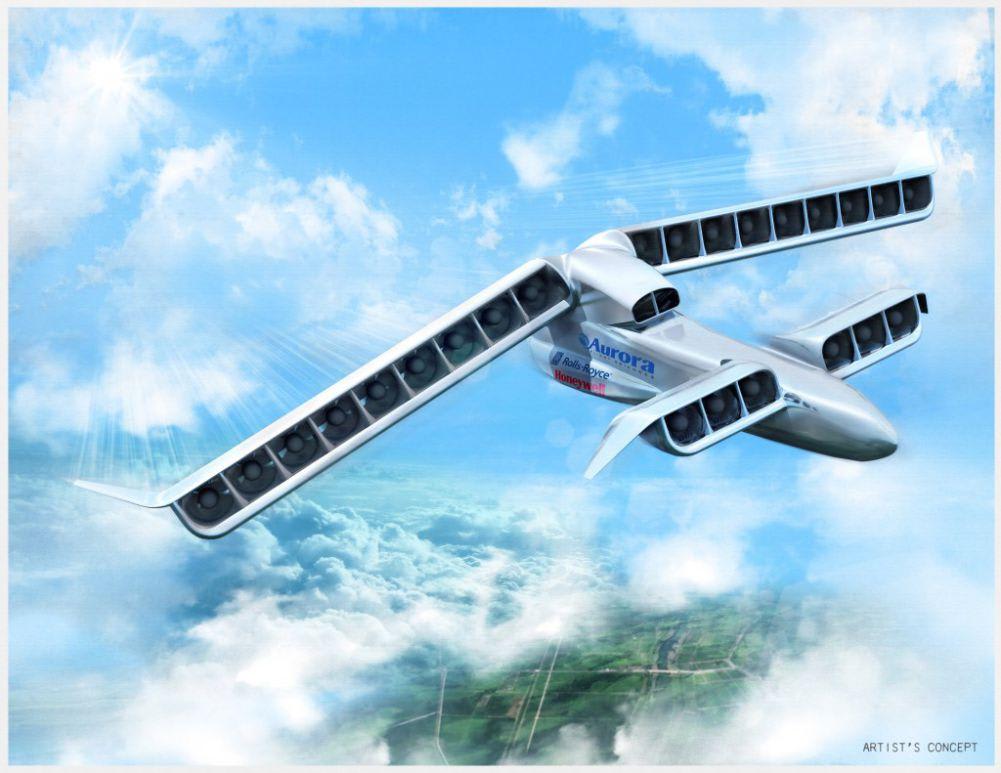
Aurora has adapted and combined the autonomous flight guidance system from its Centaur optionally piloted aircraft, the lidar-based perception and collision avoidance system from the AACUS program, and the battery electric propulsion system from the XV-24A SVD to create the innovative eVTOL design.
“Uber is taking a big step forward toward making the world’s first VTOL network a reality and our partnership with Aurora Flight Sciences will help get us off the ground,” said Mark Moore, Director of Engineering for Uber. “The Elevate VTOL network will help improve urban mobility around the world and transform the way we travel.”
The partnership agreement provides the basis for a system of urban transportation solutions that will enable users of the Uber Elevate Network to request an Aurora eVTOL aircraft via Uber’s computer or mobile software applications. The first successful test flight of a subscale demonstrator eVTOL vehicle occurred on April 20, 2017. Aurora’s current goal will be delivering 50 full-scale aircraft for testing by 2020.
This announcement came shortly after the April 4, 2017 announcement that the XV-24A SVD successfully completed its test flight program. The 325-lb XV-24A SVD, funded by DARPA, demonstrated key technical features of the full-scale 12,000-lb LightningStrike XV-24A, including outbound and inbound transition flight. The XV-24A flight test program is currently scheduled to begin in late 2018.
The XV-24A, which is expected to perform manned or unmanned operations, utilizes a tilt-wing system powered by an electric distributed propulsion (EDP) system. Twenty four variable-pitch ducted fans driven by electric motors provide thrust for both hover and cruise and are designed to achieve a top sustained flight speed between 300 and 400 knots. A single Rolls-Royce AE 1107C turboshaft engine—used on the V-22 Osprey—drives three Honeywell generators that provide power to the wing and canard electric motors. Aurora aims for the XV-24A to have a 15% increase in hover efficiency and a two-fold increase in speed over modern helicopters.
“The Uber Elevate mission is all about low noise, high reliability, and low cost,” said Aurora CEO John Langford.
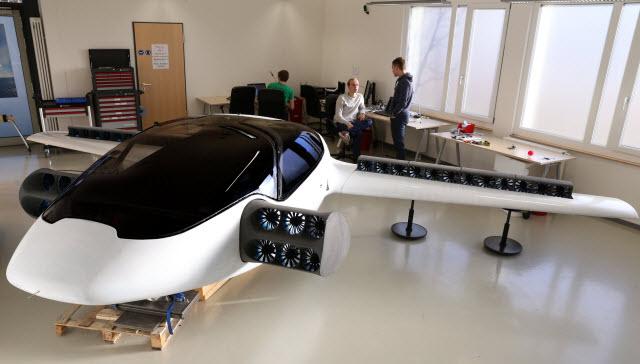
The XV-24A’s EDP system is similar to another eVTOL craft in development—Lilium’s two-seater Lilium Jet prototype, which also announced successful flight tests on April 20, 2017. Similarly, Lilium is aiming to capture the market on small VTOL craft on-demand ridesharing.

The Lilium Jet zero-emissions EDP system is mounted to 12 vectoring flaps on stationary wings. It operates much in the same way as Aurora’s XV-24A and XV-24A SVD where downward pointing engines lift the aircraft and then transition to a horizontal position for conventional flight. The Lilium Jet design is based on redundancy and maintainability, with 36 individually shielded engines sharing identical components. Lilium claims the aircraft is capable of approximately 160 knots with a range of 300 km.
Lilium currently developing the Lilium Eagle, a larger, five-seat eVTOL craft designed specifically for on-demand air taxi and ride-sharing services.
More From SAE Media Group
Aerospace & Defense Tech Briefs
Aurora Developing Distributed Hybrid-Electric Propulsion System for VTOL X-Plane
Aerospace & Defense Tech Briefs
Rolls-Royce to Work with Airframe Manufacturers, Seek Partners for EVTOL Project
Aerospace INSIDER
Air Force to Buy Archer eVTOL Under New Contracts
Aerospace & Defense Tech Briefs
Air Mobility Innovations Take Center Stage at Aerospace Systems and Technology Conference
Aerospace & Defense Tech Briefs
Bell Nexus Full-Scale Air Taxi Design Debuts, Taps Novel VTOL, Hybrid Propulsion, Energy Storage, and Avionics Technologies
Aerospace INSIDER
These Four Companies Will Build DARPA High-Speed VTOL X-Plane Prototypes
Aerospace & Defense Tech Briefs
Vertical Flight Society Applauds EVTOL Innovation, Bell Nexus UAM Concept
Aerospace & Defense Tech Briefs
Aurora Wins DARPA VTOL X-Plane Program Contract
Aerospace & Defense Tech Briefs
CityAirbus Urban Air Mobility Vehicle Completes First Flight
Aerospace & Defense Tech Briefs
Sikorsky, Boeing Debut Future Vertical Lift Dual-Rotor Design with SB>1 DEFIANT Helicopter
Aerospace INSIDER
DoD's First Electric Aircraft Charging Station is a BETA Supercharger
Aerospace & Defense Tech Briefs
Gulfstream G500 Earns FAA Type and Production Certificates
Aerospace & Defense Tech Briefs
Rising Star Awards: Women in Engineering Aerospace Winner - Heather Cummings
Aerospace & Defense Tech Briefs
Boeing to Leverage Aurora Acquisition for Technical Know-How
Aerospace INSIDER
Air Force Receives First eVTOL Six Months Ahead of Schedule
Aerospace & Defense Tech Briefs
Vertical Takeoff and Landing Drone
Aerospace & Defense Tech Briefs
Airbus Zephyr S Breaks World Flight Endurance Record During Maiden Flight
Aerospace INSIDER
Air Force Pilots Perform Remote Flights with Joby eVTOL
Aerospace & Defense Tech Briefs
Lilium Starts Production of eVTOL Jet Batteries
Aerospace INSIDER
Quarterhorse Hypersonic Test Aircraft Completes First Flight

Aerospace & Defense Tech Briefs
Boeing and NASA Unveil Lightweight, Ultra-Thin, More Aerodynamic Transonic Truss-Braced Wing Concept
Aerospace & Defense Tech Briefs
LIFT Aircraft Unveils Personal Multirotor Aircraft for Experiential Entertainment
Aerospace & Defense Tech Briefs
Transport Canada Grants Astro Aerospace a Flight Test Certificate for Autonomous Urban Air Mobility Vehicle
Aerospace & Defense Tech Briefs
Bye Aerospace’s Sun Flyer Is Now the “EFlyer”
Aerospace & Defense Tech Briefs
Additive Manufacturing, Composites Help Grow Global Electric Aircraft Market

Aerospace & Defense Tech Briefs
Flight Propulsion Goes Electric
Aerospace & Defense Tech Briefs
Dart Aerospace’s Latest Emergency Float System Receives Certification in the U.S. and Europe
Aerospace & Defense Tech Briefs
Boeing’s CAV Makes First Outdoor Flight
Top Stories
INSIDERManufacturing & Prototyping
 How Airbus is Using w-DED to 3D Print Larger Titanium Airplane Parts
INSIDERManned Systems
 FAA to Replace Aging Network of Ground-Based Radars
NewsTransportation
 CES 2026: Bosch is Ready to Bring AI to Your (Likely ICE-powered) Vehicle
NewsSoftware
 Accelerating Down the Road to Autonomy
EditorialDesign
 DarkSky One Wants to Make the World a Darker Place
INSIDERMaterials
 Can This Self-Healing Composite Make Airplane and Spacecraft Components Last...
Webcasts
Defense
 How Sift's Unified Observability Platform Accelerates Drone Innovation
Automotive
 E/E Architecture Redefined: Building Smarter, Safer, and Scalable...
Power
 Hydrogen Engines Are Heating Up for Heavy Duty
Electronics & Computers
 Advantages of Smart Power Distribution Unit Design for Automotive...
Unmanned Systems
 Quiet, Please: NVH Improvement Opportunities in the Early Design...
