




Boom Aims to Conquer Concorde by 2023
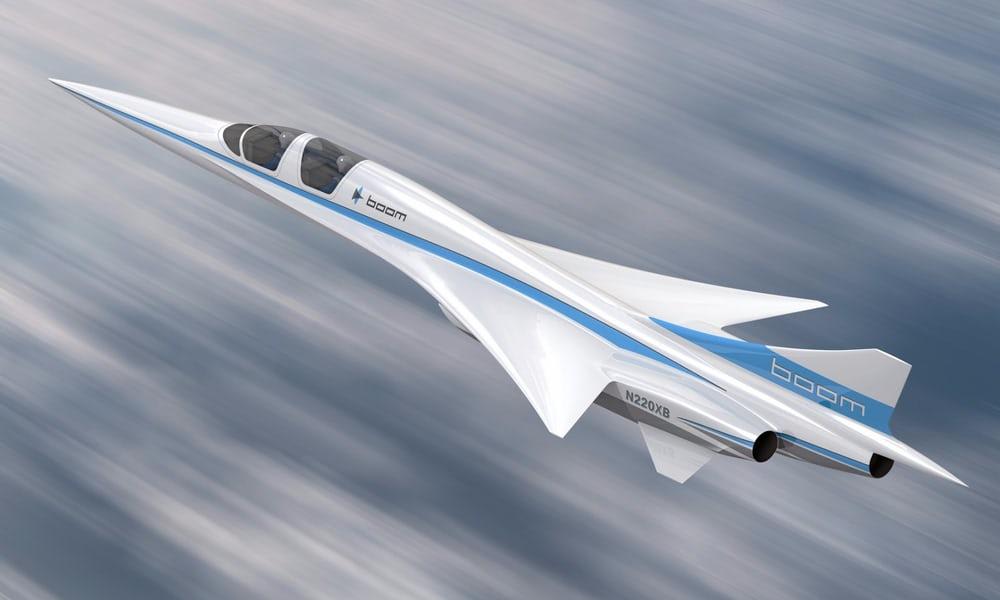
Colorado-based Boom Technology’s “Baby Boom” XB-1 supersonic demonstrator—a one-third scale stepping stone to a supersonic 40-seat passenger airliner—will make its first test flight late-2017. Although currently under construction, the XB-1 is described as “the first independently developed supersonic jet and history’s fastest civil aircraft.”
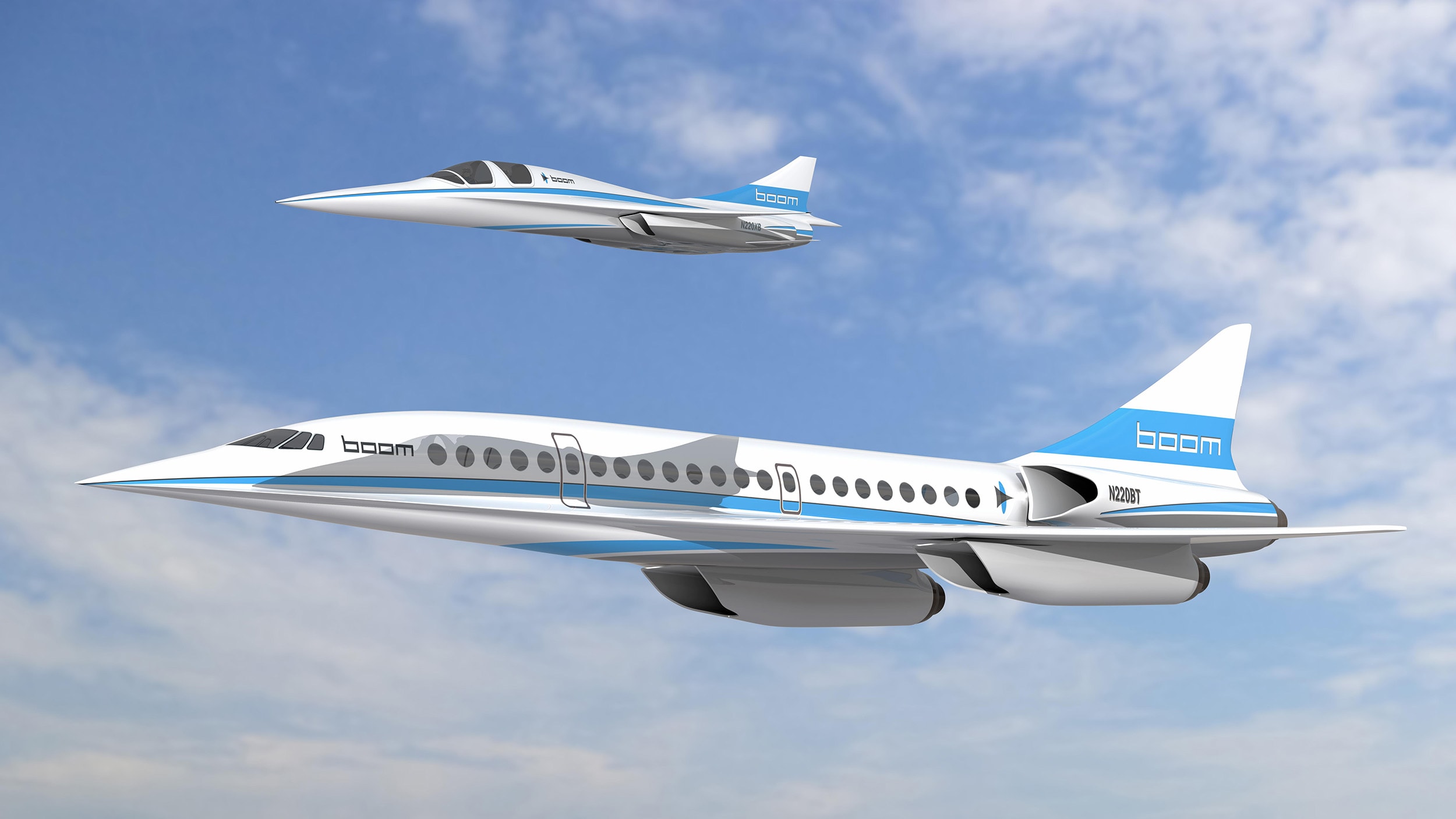
The XB-1 currently sits at Denver’s Centennial Airport, where the first subsonic test flights will occur. Supersonic test flights will be conducted in the supersonic test corridor near Edwards Air Force Base in Southern California. The demonstrator bears the registration N220XB, a nod to the Mach 2.2 speed goal for Boom’s passenger airliner—10% faster than the Concorde.
Boom promises the final aircraft, which is slated for service in 2023, will halve air travel times, sending passengers between London and New York in three hours and 15 minutes.
Boom has already attracted commitments for 25 aircraft—including 10 from Richard Branson’s Virgin Group, which has partnered with and invested heavily in Boom. Virgin Group will also contribute engineering and manufacturing services and test flight support and operations to Boom.
Other airframe manufacturers, including Lockheed Martin and Boeing, are also in various stages of designing supersonic airliners and private business jets. However, manufacturers are struggling with new Section 14 rules for take-off noise emissions that take effect in 2017.
Boom—a two-year-old start-up—is confident they will be able to pass Section 14 rules. “Medium bypass engines and throttle back at takeoff get you to Chapter 14 compliance,” said Boom Chief Executive and founder Blake Scholl. This contrasts with other strategies, such as Aerion’s plan to submit type certification for the AS2 business jet in 2017 to operate under the comparatively relaxed Chapter 4 noise rules.
The XB-1 demonstrator will be powered by three 3500-lb thrust General Electric J85-21 turbojet engines, while the full size airliner will incorporate three medium-bypass turbofan engines for noise reduction and efficiency.
While Boom supports a lift on the U.S. supersonic flight ban over land, the company is confident it can find a market even with the ban in place.
More From SAE Media Group
Aerospace & Defense Tech Briefs
NASA Takes a Respectable-Sized Step Toward Supersonic Flight
Aerospace & Defense Tech Briefs
Aerion AS2 Supersonic Bizjet on Track for Trans-Atlantic Crossing in 2023

Aerospace & Defense Tech Briefs
HondaJet Goes on Show
Aerospace & Defense Tech Briefs
Sierra Nevada Breathes Life into D328, Determined to Make It Fly Again, and Evolve
Aerospace & Defense Tech Briefs
Boeing Completes Assembly of the First 777X
Aerospace & Defense Tech Briefs
Bombardier C Series Taking off in Europe
Aerospace & Defense Tech Briefs
Boeing’s Next EcoDemonstrator Test Bed Will Be a 777
Aerospace & Defense Tech Briefs
Aerion Progresses on the AS2 with Help from Airbus, and Announces First Fleet Customer
Aerospace & Defense Tech Briefs
Lockheed Martin Offering Its 'Production Ready' T-50A for USAF Trainer Competition
Aerospace & Defense Tech Briefs
Russia to Develop Supersonic Passenger Jet
Aerospace INSIDER
Lockheed Martin Delivers 500th C-130J Super Hercules Airlifter
Aerospace INSIDER
KC-46A Pegasus Approved to Refuel 97% of Joint Force Receivers
Aerospace & Defense Tech Briefs
KC-46A Tanker Completes Its First Flight

Aerospace & Defense Tech Briefs
Embraer Debuts Its KC-390 Military Transport Aircraft
Aerospace & Defense Tech Briefs
Boeing's Pegasus Makes First Refueling Flight
Aerospace & Defense Tech Briefs
Dassault Aviation Rolls Out, Preps Falcon 8X for First Flight
Aerospace & Defense Tech Briefs
Bizjets Hope to Get a Lift from New Technology
Tech Briefs
NASA's X-59 Supersonic Plane Takes Flight
Aerospace & Defense Tech Briefs
Embraer's First E190-E2 Jet Takes off Early
Aerospace & Defense Tech Briefs
Aerion and Honeywell Collaborate on Revolutionary Flight Deck for Supersonic Bizjet
Motion Design INSIDER
Tailless Jet Flies Free with Novel Control Technique
Aerospace & Defense Tech Briefs
T-X down to Two Main Contenders
Aerospace & Defense Tech Briefs
Boeing and Embraer Take Relationship to Next Level
Aerospace & Defense Tech Briefs
Spike Aerospace Validates Supersonic Aero Design with Subsonic Demonstrator
Aerospace & Defense Tech Briefs
Light Attack Reconnaissance Helicopter Secures Vertical Lift Dominance
Aerospace INSIDER
Autonomous Black Hawk® Flies Missions Without Pilots on Board
Top Stories
INSIDERManufacturing & Prototyping
 How Airbus is Using w-DED to 3D Print Larger Titanium Airplane Parts
INSIDERManned Systems
 FAA to Replace Aging Network of Ground-Based Radars
NewsTransportation
 CES 2026: Bosch is Ready to Bring AI to Your (Likely ICE-powered) Vehicle
NewsSoftware
 Accelerating Down the Road to Autonomy
EditorialDesign
 DarkSky One Wants to Make the World a Darker Place
INSIDERMaterials
 Can This Self-Healing Composite Make Airplane and Spacecraft Components Last...
Webcasts
Defense
 How Sift's Unified Observability Platform Accelerates Drone Innovation
Automotive
 E/E Architecture Redefined: Building Smarter, Safer, and Scalable...
Power
 Hydrogen Engines Are Heating Up for Heavy Duty
Electronics & Computers
 Advantages of Smart Power Distribution Unit Design for Automotive...
Unmanned Systems
 Quiet, Please: NVH Improvement Opportunities in the Early Design...
