




HondaJet Goes on Show

An important element in its recent world tour was the participation of the new HondaJet at the European Business Aviation Convention and Exhibition (EBACE), held at Geneva, which was its first European appearance.


The new Japanese entry into this most competitive sector was part of a global sales and marketing initiative that has involved a series of launch events aimed at agents and potential customers for the 4-6 seat twin-engine light jet. This is a market that Honda has been keen to enter as its unique product features both an all-new airframe and jet engines manufactured by the same company.
Power comes from two new lightweight GE Honda HF120 turbofans of 2050 lb thrust each. In the well-equipped cockpit there is a Garmin all-glass G3000 avionics system with three 14-in landscape format displays and dual touch-screen controllers. There is an all-metal natural laminar-flow wing aerofoil with winglets, and a composite fuselage supplied by GKN, manufactured in the U.S.
A most unusual design feature of the aircraft is the rear, over-wing mounted engines, which have not been seen since the German VFW-614 in the late 1960s. This configuration is claimed by Honda to offer reduced aerodynamic drag, improved performance, and a very quiet cabin. At first glance the airplane looks like any other small jet in its class, but it is only when seen close up that the unusual engine positioning becomes more obvious.
The HondaJet cabin interior has a “bigger on the inside than the outside” look with best-in class luggage space and legroom and multi-axis sliding passenger seats. The company has concentrated on fitting out the new bizjet with an attractive and comfortable interior with attention to detail, so that its small size does not result in an enclosed environment, yet includes all the passenger features that will be expected from discriminating customers.
Offering a blend of a modern specification with value-for-money (around $4.5 million), HondaJet is still at the early stages of being seen as a major player in the market, up against such well established rivals as Cessna, LearJet, and Embraer, who all offer much larger product lines, as well as the entry-level and light jet niche in the business jet market. The HondaJet program has been underway for a long time—over a decade—and the company is now anxious to show that it has eventually emerged with a competitive product.
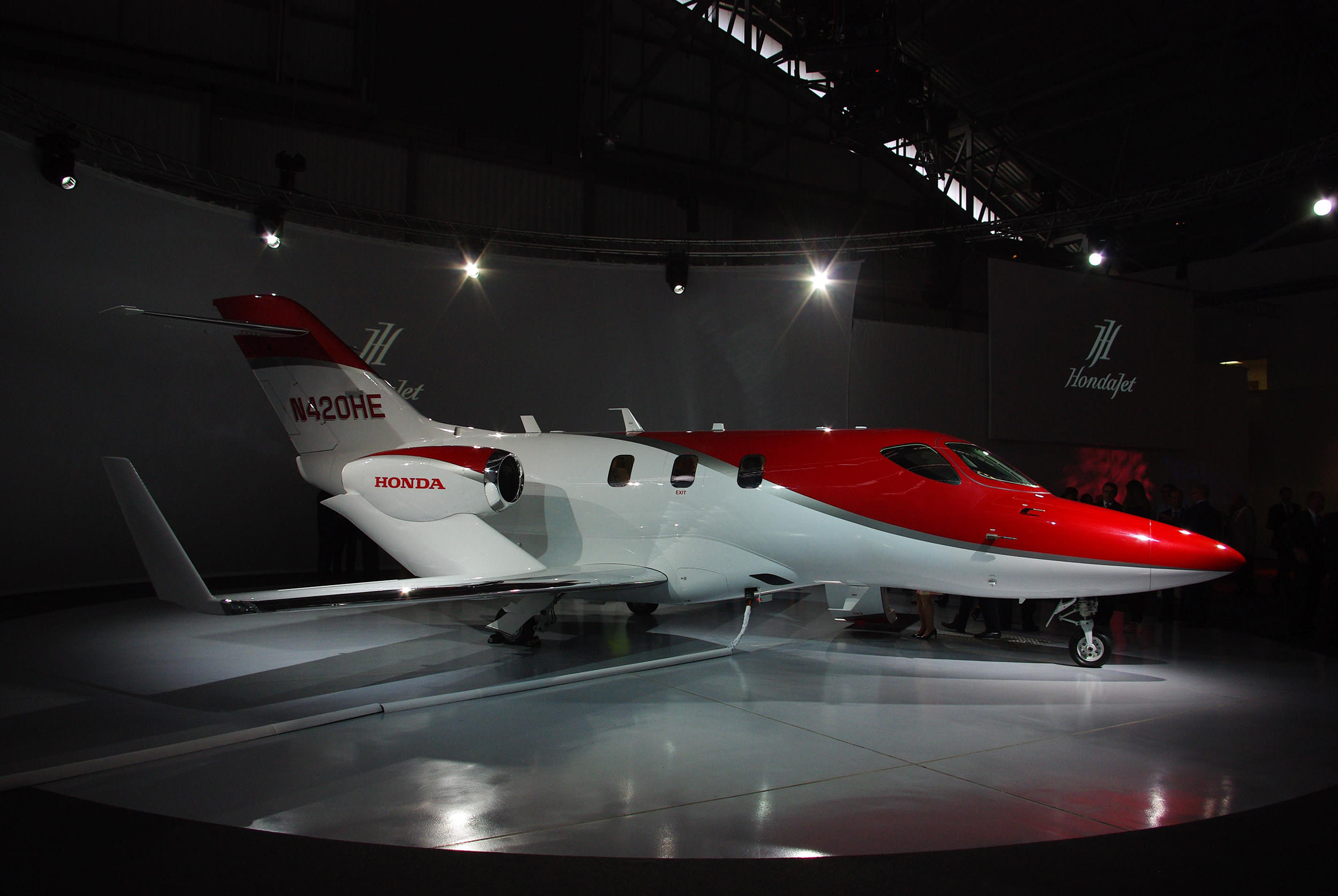
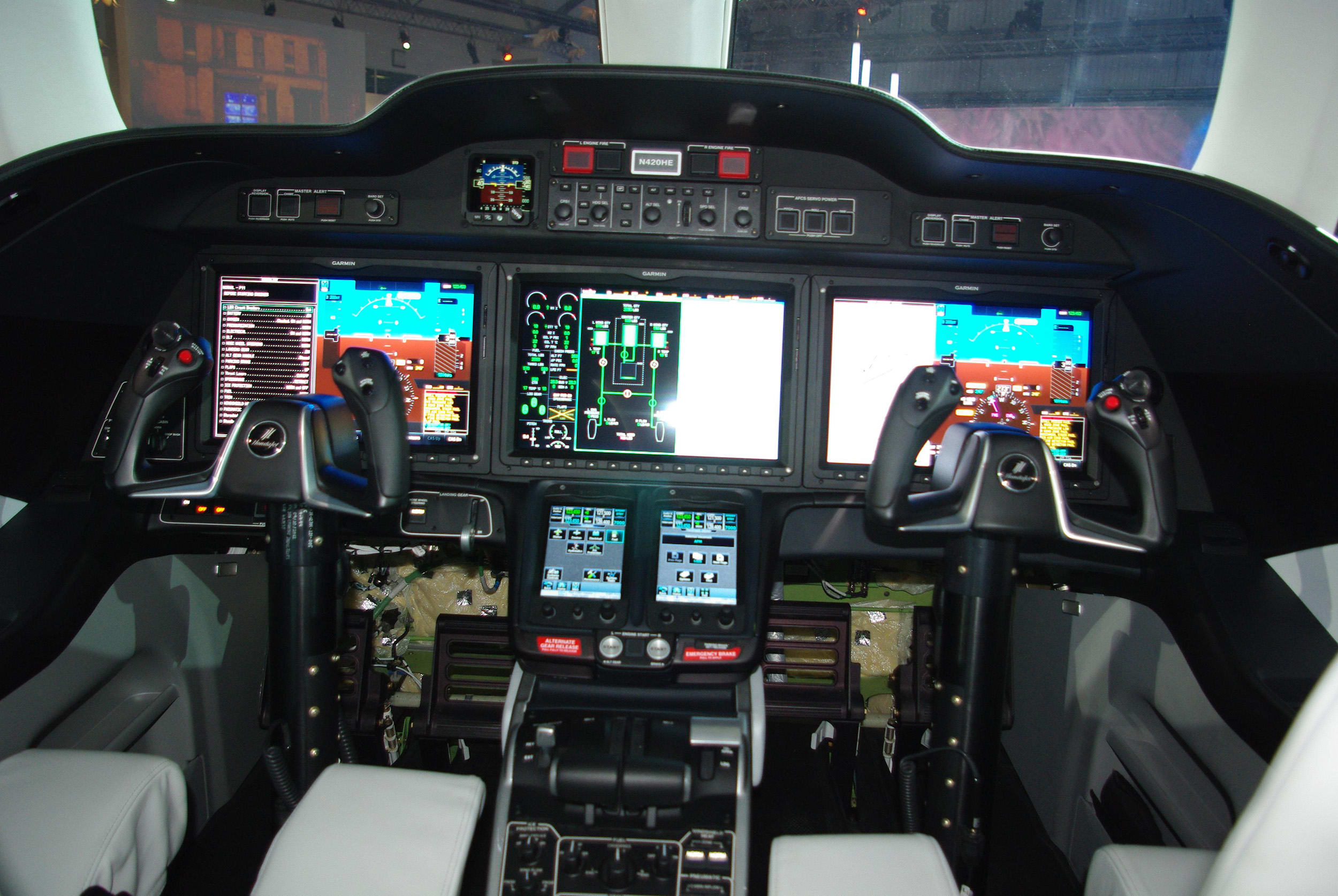
HondaJet has established a new global headquarters, final assembly plant, and customer service center at Greensboro, NC, which has a capacity to deliver up to 80-100 aircraft each year. So far, over 100 aircraft are currently on order and the company is very much hoping that the international exposure of the demonstrator aircraft will lift the sales momentum this year.
More From SAE Media Group
Aerospace & Defense Tech Briefs
Embraer Debuts Its KC-390 Military Transport Aircraft
Aerospace & Defense Tech Briefs
Cessna Enters New Class of Business Jet with Clean Sheet, 4500-Nmi Aircraft
Aerospace & Defense Tech Briefs
Bizjets Hope to Get a Lift from New Technology
Aerospace & Defense Tech Briefs
Embraer's First E190-E2 Jet Takes off Early
Aerospace & Defense Tech Briefs
Dassault Aviation Rolls Out, Preps Falcon 8X for First Flight
Aerospace & Defense Tech Briefs
Boeing Completes Assembly of the First 777X
Aerospace & Defense Tech Briefs
Sierra Nevada Breathes Life into D328, Determined to Make It Fly Again, and Evolve
Aerospace & Defense Tech Briefs
Boeing and Embraer Take Relationship to Next Level
Aerospace & Defense Tech Briefs
Gulfstream Makes Progress on G600 and G500 Programs, the Latter Completing First Flight
Aerospace & Defense Tech Briefs
Jet Aviation Geneva Approved to Service Gulfstream, Bombardier Aircraft in India
Motion Design INSIDER
Tailless Jet Flies Free with Novel Control Technique
Aerospace & Defense Tech Briefs
Boom Aims to Conquer Concorde by 2023

Aerospace INSIDER
Lockheed Martin Delivers 500th C-130J Super Hercules Airlifter
Aerospace & Defense Tech Briefs
HondaJet Is the Most Delivered Very Light Business Jet in 2019
Aerospace & Defense Tech Briefs
Lockheed Martin Offering Its 'Production Ready' T-50A for USAF Trainer Competition
Aerospace & Defense Tech Briefs
Aerion Progresses on the AS2 with Help from Airbus, and Announces First Fleet Customer
Aerospace & Defense Tech Briefs
Bombardier C Series Taking off in Europe
Aerospace & Defense Tech Briefs
Boeing's Pegasus Makes First Refueling Flight
Aerospace INSIDER
KC-46A Pegasus Approved to Refuel 97% of Joint Force Receivers

Aerospace & Defense Tech Briefs
Boeing’s Next EcoDemonstrator Test Bed Will Be a 777
Aerospace & Defense Tech Briefs
Lockheed Martin LM-100J Starts Taking (A Similar) Shape
Aerospace & Defense Tech Briefs
KC-46A Tanker Completes Its First Flight
Aerospace & Defense Tech Briefs
Global Contenders to Break the Commercial Aircraft Duopoly
Aerospace & Defense Tech Briefs
Ahead of USAF T-X Decision, Leonardo Finds Market for T-100’s Little Brother – the Single-Engine Aermacchi M-345
Aerospace & Defense Tech Briefs
T-X down to Two Main Contenders
Aerospace & Defense Tech Briefs
Jet Aviation, Honeywell Partner on Business Jet Avionics
Top Stories
INSIDERManufacturing & Prototyping
 How Airbus is Using w-DED to 3D Print Larger Titanium Airplane Parts
INSIDERManned Systems
 FAA to Replace Aging Network of Ground-Based Radars
NewsTransportation
 CES 2026: Bosch is Ready to Bring AI to Your (Likely ICE-powered) Vehicle
NewsSoftware
 Accelerating Down the Road to Autonomy
EditorialDesign
 DarkSky One Wants to Make the World a Darker Place
INSIDERMaterials
 Can This Self-Healing Composite Make Airplane and Spacecraft Components Last...
Webcasts
Defense
 How Sift's Unified Observability Platform Accelerates Drone Innovation
Automotive
 E/E Architecture Redefined: Building Smarter, Safer, and Scalable...
Power
 Hydrogen Engines Are Heating Up for Heavy Duty
Electronics & Computers
 Advantages of Smart Power Distribution Unit Design for Automotive...
Unmanned Systems
 Quiet, Please: NVH Improvement Opportunities in the Early Design...
