




Ford Promises Full-Autonomous Car in 2021

Get ready for the “pod” car: Ford announced today that it intends to mass-produce a driverless, fully autonomous vehicle for commercial ride-sharing or ride-hailing service in 2021.

The vehicle apparently will be the embodiment of today’s notion of the driverless-vehicle extreme: it will have no steering wheel, brake or accelerator pedals, said president and CEO Mark Fields during the announcement at the company’s Palo Alto, CA, research campus. Fields compared the impact of vehicle autonomy to the company's innovation of the moving assembly line.
The Ford driverless vehicle will operate at Level 4 autonomy on the SAE-standard 5-level autonomous-technology scale , meaning it is classified as offering “high automation” that can operate the vehicle under all conditions in certain driving “modes” without the potential need for human attention or intervention.
“The next decade will be defined by automation of the automobile, and we see autonomous vehicles as having as significant an impact on society as Ford’s moving assembly line did 100 years ago,” said Fields in a release. “We’re dedicated to putting on the road an autonomous vehicle that can improve safety and solve social and environmental challenges for millions of people–not just those who can afford luxury vehicles.”
Ford also said it is tripling its current autonomous-vehicle test fleet to 30 Fusion Hybrid sedans, which operate on roads and test facilities in California, Arizona and Michigan; by next year, the autonomous test fleet will near 100 vehicles.
The company also announced it is expanding its Palo Alto technology campus with two new buildings and 150,000 square feet of work space, with the intention of doubling the facility’s workforce by sometime next year.
Autonomous-tech investments and acquisitions
Concurrently, Ford said it is investing in or acquiring four companies engaged in development of crucial aspects of autonomous technology. Best-known may be Velodyne, based in Silicon Valley, which develops LIDAR (Light Detecting And Ranging) systems. Ford is investing in Velodyne to speed the advance of smaller and less-costly LIDAR equipment. The company said was one of the first to engage with Velodyne in LIDAR research more than a decade ago.
A licensing agreement with Nirenberg Neuroscience LLC will give Ford access to Nirenberg’s machine-vision and -learning technology, based on understanding of the neural code used by the eyes to transmit data to the brain. Nirenberg has developed a machine-vision platform for robust navigation and object and facial recognition capabilities. Ford said Nirenberg’s technology will impart “human-like intelligence to the machine-learning modules of its autonomous-vehicle virtual-driver system.”
Ford has acquired SAIPS, another machine-vision and -learning specialist based in Israel and also previously announced an investment in Civil Maps, a Berkley, CA- based developer of high-resolution 3D maps.
More From SAE Media Group
Automotive Engineering
Ford Scores Greater Autonomous Capability with New Velodyne Ultra Puck LiDAR
Automotive Engineering
‘Cruising Chauffeur’ Demos SAE Level 3 Autonomy
Automotive Engineering
SAE Publishes Terminology Standard for Automated Driving Systems
Automotive Engineering
Autonomous Vehicle Challenge Ramps up Competition at Convergence
Automotive Engineering
Car Sickness, Occupant Seating and Politics Will Shape Autonomous Vehicle Interiors
Automotive Engineering
Driver Still Has a Seat in Delphi's Automated-Driving Vision
Automotive Engineering
Google Goes Hands- and Feet-Free in Pursuit of Driverless Cars
Automotive Engineering
Nvidia’s New Level 2+ Autonomy Platform Is Making Cars Safer Today
Automotive Engineering
Delphi Adds to Autonomy Arsenal
Off-Highway Engineering
Forward-Looking Lidar Can Revolutionize Driver-Assistance Systems
Autonomous Vehicle Engineering
Why Car Washes Threaten Automated Vehicles
Automotive Engineering
Nissan's ProPILOT Assist Is More Than Lane-Keeping
Automotive Engineering
Continental Shows Next-Generation Highly Automated Car
Automotive Engineering
It Takes Two
Automotive Engineering
Self-Parking Vehicle Via Valeo Valet
Automotive Engineering
SAE Convergence 2016: Automakers, Suppliers Firm That Autonomous Driving Not Decades Away
Automotive Engineering
Lower-Cost Lidar Is Key to Self-Driving Future
Automotive Engineering
JLR Prepares to Leave the Road — Autonomously
Automotive Engineering
SAE Offers Free Summary Document on Levels of Vehicle Automation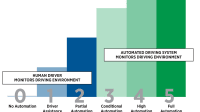
Off-Highway Engineering
Peloton Develops a Level 4 Automated Platooning System, but Keeps the Driver in Charge
Automotive Engineering
Daimler and Uber Team up to Bring More Self-Driving Cars to the Road
Automotive Engineering
CES 2017: Automotive Suppliers Eclipsing OEMs in Advanced Tech
Automotive Engineering
Continental Demonstrates New Sensing Technologies for SAE Level 4 Capability
Automotive Engineering
The Impact of Shifting to the ‘Softer’ Side
Automotive Engineering
ZF and Hella Launch Sensor-Systems Development Partnership
Automotive Engineering
700 Miles, Hands-Free!
Automotive Engineering
Toyota Sticking with Measured, ‘Teammate’ Approach to Autonomous Development
Automotive Engineering
Google's Krafcik Talks Self-Driving Vehicle Development

Automotive Engineering
Delphi Showcasing Next-Gen Autonomous System at CES 2017
Top Stories
INSIDERManufacturing & Prototyping
 How Airbus is Using w-DED to 3D Print Larger Titanium Airplane Parts
INSIDERManned Systems
 FAA to Replace Aging Network of Ground-Based Radars
NewsTransportation
 CES 2026: Bosch is Ready to Bring AI to Your (Likely ICE-powered) Vehicle
NewsSoftware
 Accelerating Down the Road to Autonomy
EditorialDesign
 DarkSky One Wants to Make the World a Darker Place
INSIDERMaterials
 Can This Self-Healing Composite Make Airplane and Spacecraft Components Last...
Webcasts
Defense
 How Sift's Unified Observability Platform Accelerates Drone Innovation
Automotive
 E/E Architecture Redefined: Building Smarter, Safer, and Scalable...
Power
 Hydrogen Engines Are Heating Up for Heavy Duty
Electronics & Computers
 Advantages of Smart Power Distribution Unit Design for Automotive...
Unmanned Systems
 Quiet, Please: NVH Improvement Opportunities in the Early Design...
