




Toyota’s 'Trigger' for Innovation
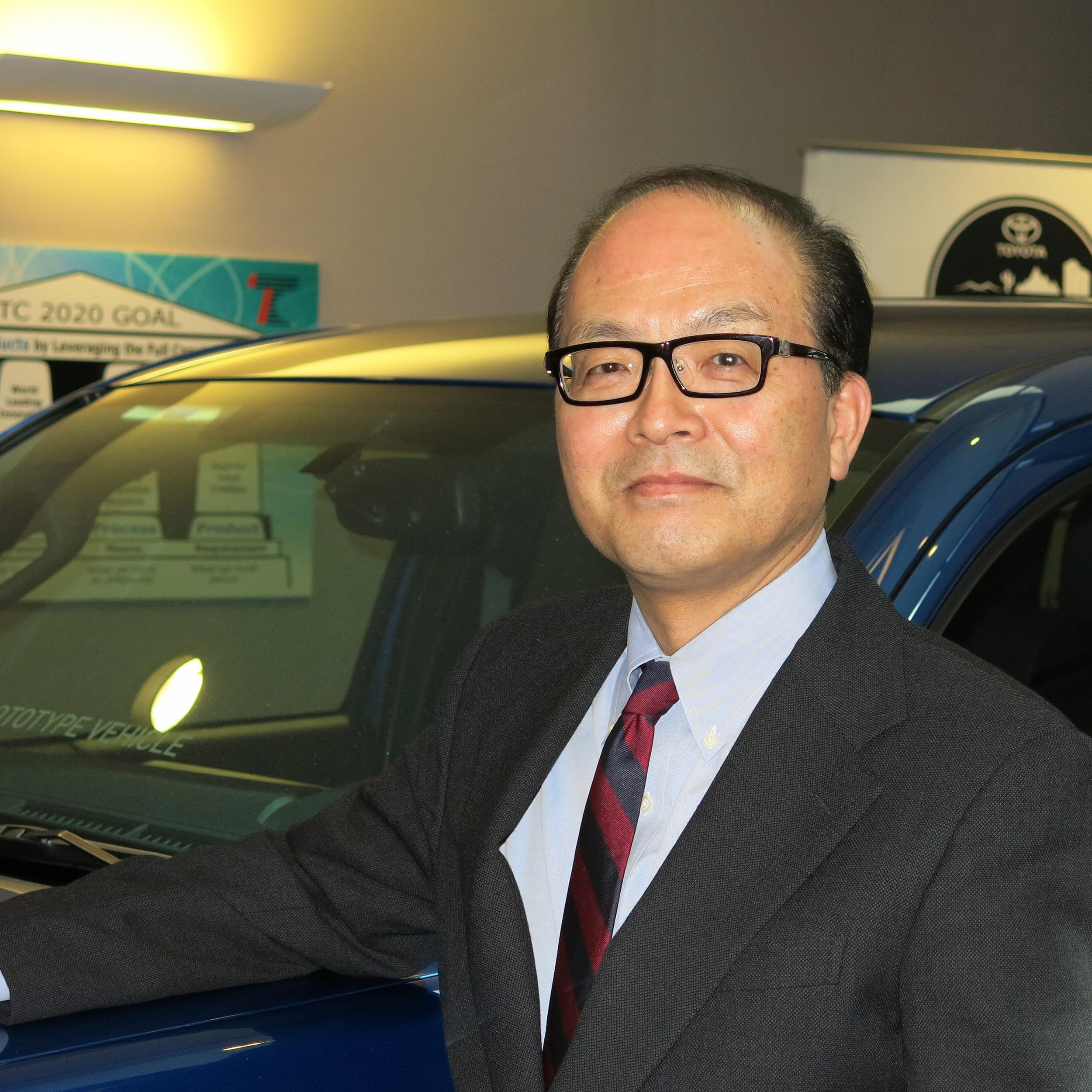
“SAE is the ‘engineers’ foundation,’” reflected Seiya Nakao. “When I was a young engineer, we learned a lot from SAE, and personally this is a good opportunity for me to return something to it.” Nakao, President of the 1M-ft2 Toyota Technical Center (TTC) near Saline, MI, is serving as General Chairman of the SAE 2016 World Congress and Exhibition. He is clearly excited about his company’s leadership role in the event and the 100 technical papers being presented by Toyota. Nakao believes this year’s World Congress, and its “Powering Possibilities” theme, will serve as a “trigger” for new innovation. Automotive Engineering spoke with Nakao-san recently at TTC; an excerpt from our interview follows:
What is your own vision of mobility in the next 30 years?
I believe in variety. There should be a lot of options for people to choose; driving by themselves, autonomous vehicles, car sharing. But while in the next 25-30 years we will still have gasoline hybrids and PHEVs, this will be a very important transition time for fuel cell and electric vehicles. And it will be hugely exciting for new technology.
TTC is undergoing a big expansion. What role will TTC play in the new mobility era?
Our main job here consists of two ‘pillars:’ vehicle development and cutting-edge technology and research. So while we evolve the current technologies such as hybrid, we also have to develop or invent new solutions—longer-range batteries and affordable fuel cell system. And, of course, infrastructure.
Will TTC take on more of a core vehicle-development role?
In vehicle development we’re now doing U.S.-exclusive product such as Avalon and Tundra. But in the coming years, in my opinion, we will take a main role in full vehicle development, such as the ‘K’ platform [Camry]. That kind of shift in responsibility will happen, I believe. And on the Research side, we created the new Toyota Research Institute (TRI), a company that researches artificial intelligence along with other advanced disciplines. That technology is used to create autonomous vehicles, and we believe it should definitely be led by us. And other cutting-edge technologies such as battery systems—the U.S.A. is the best place for research in these areas.
Are you confident there will be a battery “breakthrough,” as the battery guys keep promising?
Should I answer that officially or personally? [laughs] Actually, I hope so. But my personal impression is, I haven’t seen good progress in this area. It’s kind of struggling point for Toyota. But we don’t give up; we’re aggressively developing these technologies.
How will Toyota’s recent reorganization impact product development?
We’re now producing 10 million vehicles per year. But our organizational structure was stuck where it was 30 years ago. We had many [silos] that prevented cross-functional engagement and quick decision making. That’s why Akio Toyoda decided to make the change. His purpose is very clear: quick decisions! So we destroyed the old [highly centralized] organization and created what are essentially four product-based divisions.
What do the Production guys—the traditional "core" of Toyota and key to its profitability—have to say about this?
The Toyota Production System is very efficient and low cost—great system. But, unfortunately, Production became too strong! So we have the new idea. We will start the new system April 18, officially.
How are things going so far?
[chuckles] Not so perfect! But we will improve that through kaizen. As Akio Toyoda said, ‘This is not a solution. It is an opportunity.’
Toyota in recent years has collaborated with Fuji Heavy, Mercedes, Tesla, Ford, and Mazda. Are technology and product-development partnering now vital activities?
They are necessary, especially for autonomous and connected-vehicle technology developments. The speed of new developments in those areas is so fast—faster than I expected. If we tried to do it by ourselves, we couldn’t catch up. That’s why we are doing a lot with academia, with a lot of fine universities, and even with government. But even that’s not enough. So we will expedite the collaborations.
If Google or Apple came to you wanting Toyota to build their cars, would that be an interesting proposition?
Oh, yeah! [laughs] Internally we are discussing a lot. The smartphone is kind of the de facto standard already, and if we ignore it, the customer isn’t satisfied. So we have to seriously think of how to collaborate with them [tech companies].
Do you see changes coming in the automotive engineering profession?
We need to develop new talent in autonomous driving, artificial intelligence, computer science, robotic science, advanced battery chemistry, nanotechnology. Or hire them. In my opinion, the foundation is still mechanical engineering, but some young engineers see that as being ‘old-fashioned stuff.’ We have to change the job’s style! I definitely see the future automotive engineer having a combination of mechanical, electrical/electronic, and computer-science engineering competencies.
Are you worried that young professionals no longer stay with the same company for very long?
Yes. The highest turnover ratio in our systems is probably five to seven years’ experience.
More From SAE Media Group
Automotive Engineering
Can Toyota’s Mirai Be the Next Prius?
Automotive Engineering
Engineering ‘Electron Guzzlers’
Battery & Electrification Technology
Putting a New ‘Charge’ in EV Recharging
Automotive Engineering
Toyota Targets 2015 for First Fuel-Cell Car
Automotive Engineering
Mainstreaming Hybrids and EVs
Automotive Engineering
Toyota Announces Access to Fuel-Cell Patents at CES
Off-Highway Engineering
Arctic Autonomy
NASA Spinoff
Scaling Up Hydrogen
Automotive Engineering
Volvo’s Electric High-Wire Act
Automotive Engineering
The Soft Underbelly of The EV Transition
Automotive Engineering
Toyota Promising Big Battery, EV Action, but Circumspect on Absolutes
Automotive Engineering
WCX17: College Students Participate in EV Car Sharing Study
Tech Briefs
Videos of the Month
Tech Briefs
Top 10 Most-Read Tech Briefs Stories of 2022
Off-Highway Engineering
Cummins and Isuzu Announce Battery-electric Truck Collaboration
Automotive Engineering
GM Pushes for Industry Standards as It Readies More EVs, AVs
Automotive Engineering
SAE WCX 2022: Sustainability Is a Lifecycle Mindset
Automotive Engineering
Denso Exhibits More Compact HVAC Design at NAIAS
Automotive Engineering
Ford Pumps $4.5B into Electrifying 40% of Its Global Product Line by 2020
Automotive Engineering
Fuel-Economy and Greenhouse-Gas Emissions Rules Debated
Automotive Engineering
LEAF Turns to the 2020s
Automotive Engineering
Making over the World’s Leading Hybrid
Off-Highway Engineering
Volvo CE Previews ConExpo 2023 Display
Automotive Engineering
2019 Toyota Avalon Hybrid
NASA Spinoff
View from the Sky Helps Predict Crop Yields
Tech Briefs
Rising Star Awards 2025 Judges
Off-Highway Engineering
SAE WCX 2022: Paving the Way for the Hydrogen Highway
Autonomous Vehicle Engineering
Volvo Leads the Shift to ‘Driver Understanding’
Automotive Engineering
Plug-In Hybrid Brings Honda into Sharper Clarity
Top Stories
INSIDERManufacturing & Prototyping
 How Airbus is Using w-DED to 3D Print Larger Titanium Airplane Parts
INSIDERManned Systems
 FAA to Replace Aging Network of Ground-Based Radars
NewsTransportation
 CES 2026: Bosch is Ready to Bring AI to Your (Likely ICE-powered) Vehicle
NewsSoftware
 Accelerating Down the Road to Autonomy
EditorialDesign
 DarkSky One Wants to Make the World a Darker Place
INSIDERMaterials
 Can This Self-Healing Composite Make Airplane and Spacecraft Components Last...
Webcasts
Defense
 How Sift's Unified Observability Platform Accelerates Drone Innovation
Automotive
 E/E Architecture Redefined: Building Smarter, Safer, and Scalable...
Power
 Hydrogen Engines Are Heating Up for Heavy Duty
Electronics & Computers
 Advantages of Smart Power Distribution Unit Design for Automotive...
Unmanned Systems
 Quiet, Please: NVH Improvement Opportunities in the Early Design...
