




Igus Develops 3D-Printable Bearing Material with Low-Friction Properties

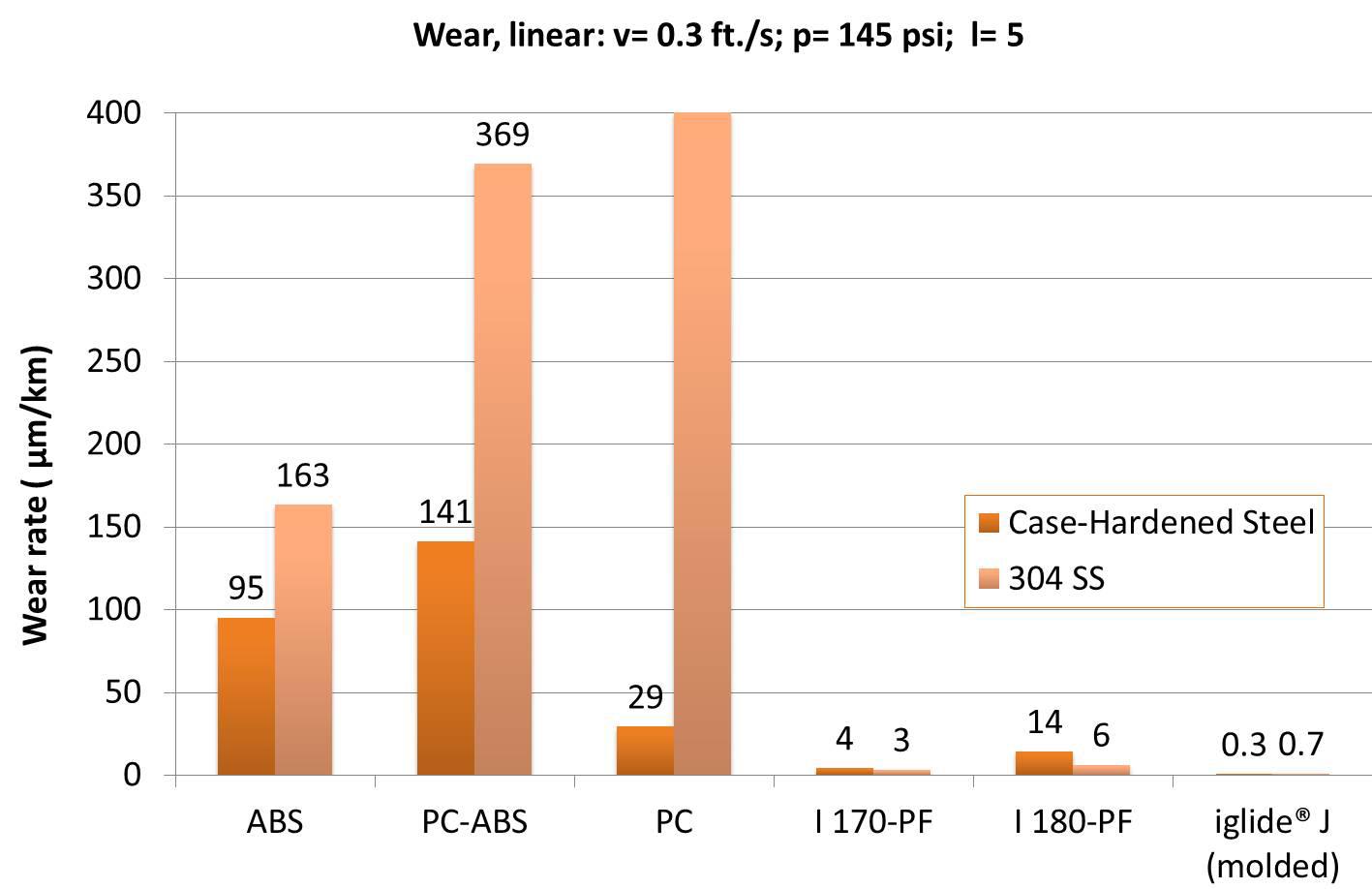
igus has developed what it claims is the world’s first tribologically enhanced plastic filament for 3D printers, which are used to print full-size, three-dimensional objects. Specifically created for motion control applications, the low-friction material is 50 times more resistant to wear and abrasion than conventional 3D printer materials, according to the German plastics company.
“The material was developed using igus’s decades of tribo-polymer research and development, as well as experience in thorough material testing,” Nicole Lang, Product Manager for iglide bearings, shared with SAE Magazines via email, noting that the chemistry behind the new product is proprietary. “[I] can say that the low-friction properties are the same as other iglide materials, using tiny particles of solid lubricant embedded in microscopic chambers in the plastic material.”
The filament is not only suitable for creating custom bearings, but other parts as well. “Anything,” Lang said when asked what those other products are.
igus now has two tribo-filament materials becoming available; the first is iglide I 170-PF, and the newest addition is I 180-PF. “The I 170 is more brittle than the I 180, but I 170 has better wear rates overall,” Lang noted.
The company also offers access to 3D models of products in STL format, which can be downloaded and used directly as input data for 3D printing.
Researchers at igus began exploring filaments for 3D printers to offer customers more flexibility in their product designs—for example, designing various custom parts or manufacturing prototypes more quickly and cost-effectively. 3D printing promises to reduce the tooling costs of part production, and it eliminates waste by only printing the desired object, resulting in additional cost savings.
“igus has its own chemical specialist focused entirely on the 3D printing industry,” according to Lang. (The specialist actually built the delta 3D printer pictured above.) “igus has more than 40 years of materials research and testing under their belts before venturing into the 3D industry.”
A specific development timeline was not available; however, the company was founded in 1964, so its experts likely began work on 3D printer materials sometime in the mid to late 2000s.
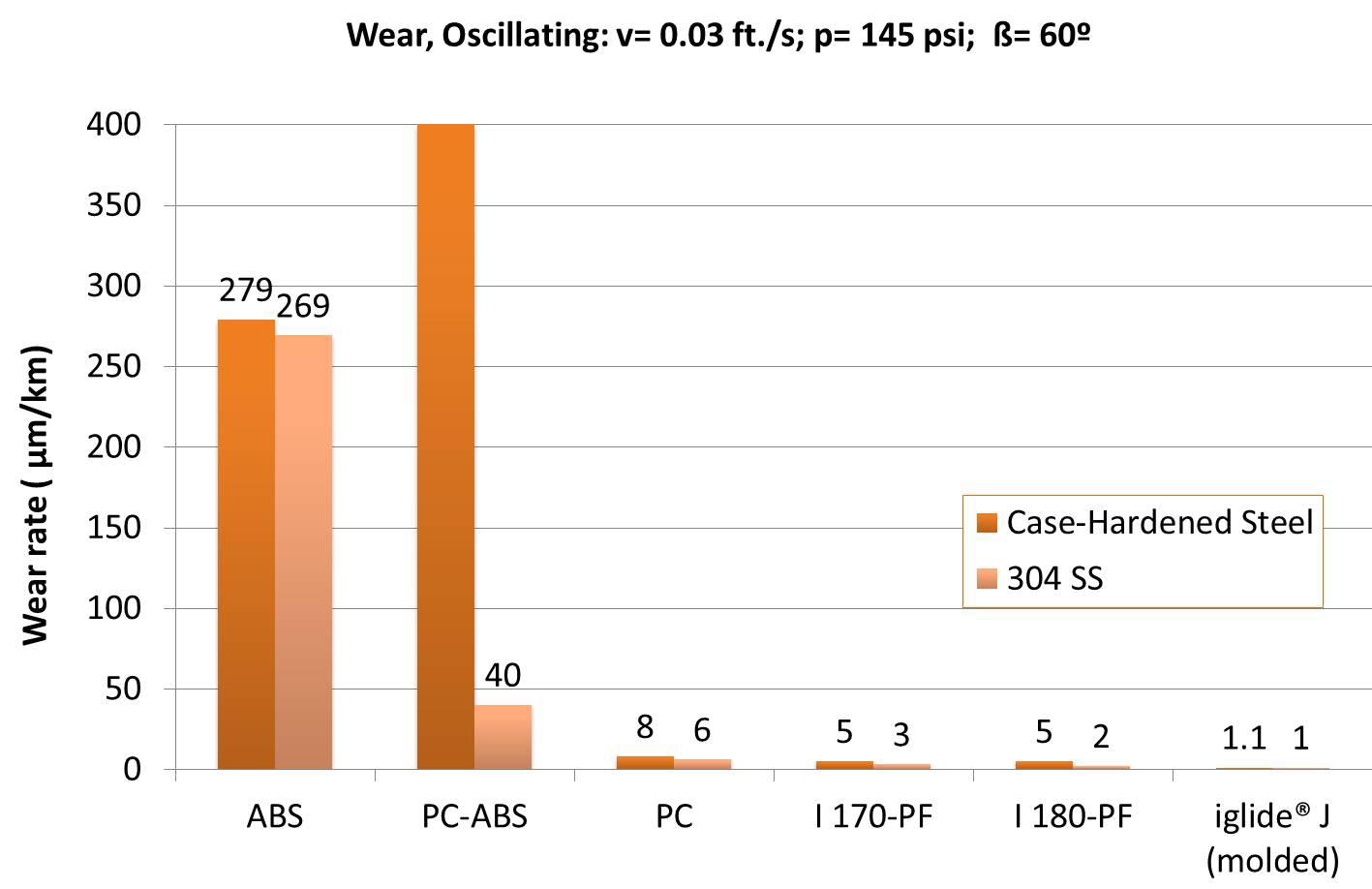
The tribo-filaments have already completed “countless tests” at the igus test laboratory in Cologne, Germany. These included a multitude of wear tests, both torsional and linear, as well as testing for temperature rating, printing speed, and filament feeding.
“Custom bearings created with the iglide tribo-filament can be used in any application,” Lang noted. “The limitations are only marked by the abilities of 3D printers at this time. At the moment, printed components are not as perfect as molded parts, but the material is intended to be used as any other iglide bearing, which are used in a vast range of industries,” including the aerospace, automotive, and off-highway industries.
The filament will be produced with spool diameters of 1.75 and 3.00 mm (0.07 and 0.12 in), at a mass of 250 g (8.8 oz) per spool. Starter kits with approximately 25 g (0.9 oz) of material—“enough to print at least one moderately sized component,” according to Lang—will be available for initial trials.
igus Inc. (USA), based in East Providence, RI, is currently filling pre-orders, Lang noted. “We hope to have the filament available for full release by the end of the summer.”
The company eventually plans to expand the range of 3D filament materials, based on solutions for customer problems.
More From SAE Media Group
Aerospace & Defense Tech Briefs
Portable 3D Printing Factory
Aerospace & Defense Tech Briefs
Roush to Support the Aerospace Industry with the King of Metal 3D Printers
Aerospace & Defense Tech Briefs
Testing Services

Aerospace & Defense Tech Briefs
Metal-Plated, High-Temperature Plastics

Defense INSIDER
Army Leverages New Alliance for 3-D Printing Goals
Aerospace & Defense Tech Briefs
SAE International Issues First Technical Standards for Aerospace Additive Manufacturing
Aerospace Manufacturing and Machining INSIDER
Can This Self-Healing Composite Make Airplane and Spacecraft Components Last for Centuries?
Defense INSIDER
New 3D-Printed Antenna Designs Reduce Cost, Weight and Size

Aerospace & Defense Tech Briefs
Robotic Rotational Molding Creates New Opportunities for Military and Aerospace Applications



Aerospace & Defense Tech Briefs
3D-Printing Powders
Tech Briefs
3D-Printed Active Materials for Robots
Aerospace & Defense Tech Briefs
Additive Manufacturing Adoption Up, Growing Rapidly in Aerospace
Tech Briefs
Self-Healing, Recyclable, Shape Memory Polymers
Aerospace Manufacturing and Machining INSIDER
Researchers Push Limits in High-Temp, Polymer Additive Manufacturing
Aerospace & Defense Tech Briefs
3D Printing Metal Parts on a Ship

Aerospace & Defense Tech Briefs
Aviation Fluid-Repellent Sealant Tape
Aerospace INSIDER
Air Force Wind Tunnel Team Takes 3D Printing Program to Next Dimension

Aerospace Manufacturing and Machining INSIDER
Thermoplastic Drive Shaft System Developed for Aerospace Applications
Aerospace INSIDER
Technique Enables 3D Printing of Aerospace-Grade Carbon Fiber Composites

Aerospace & Defense Tech Briefs
Axial and Radial Seals
Top Stories
INSIDERManufacturing & Prototyping
 How Airbus is Using w-DED to 3D Print Larger Titanium Airplane Parts
INSIDERManned Systems
 FAA to Replace Aging Network of Ground-Based Radars
NewsTransportation
 CES 2026: Bosch is Ready to Bring AI to Your (Likely ICE-powered) Vehicle
NewsSoftware
 Accelerating Down the Road to Autonomy
EditorialDesign
 DarkSky One Wants to Make the World a Darker Place
INSIDERMaterials
 Can This Self-Healing Composite Make Airplane and Spacecraft Components Last...
Webcasts
Defense
 How Sift's Unified Observability Platform Accelerates Drone Innovation
Automotive
 E/E Architecture Redefined: Building Smarter, Safer, and Scalable...
Power
 Hydrogen Engines Are Heating Up for Heavy Duty
Electronics & Computers
 Advantages of Smart Power Distribution Unit Design for Automotive...
Unmanned Systems
 Quiet, Please: NVH Improvement Opportunities in the Early Design...
