




The Future Lies in Emissions, Comfort, and Performance
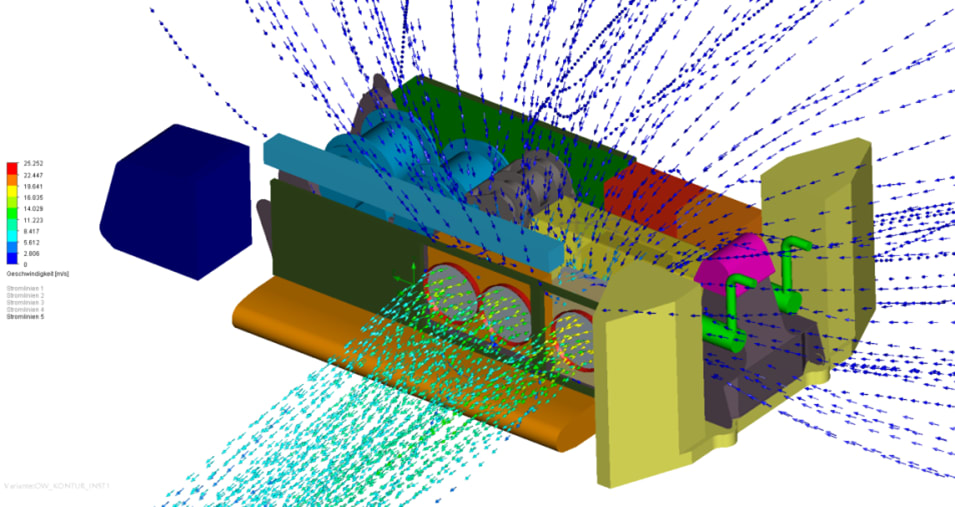
The key factors in the next 20 years in the off-highway industry lie in reducing emissions to meet regulations, increasing comfort-levels for drivers, and increasing vehicle performance.

It’s not just the common automotive industry that is being affected by emissions regulations, the makers of off-highway machines and equipment are also under pressure to improve emissions ratings. Emissions are linked to fuel consumption and efficiency. Reducing fuel consumption is important but so is increasing the efficiency of not only the engine itself but many components and systems from heat exchangers to hydraulic systems. Reducing losses and optimizing performance will influence the overall vehicle’s efficiency. Fluid systems and thermal management simulations using computational fluid dynamics (CFD) contribute to better operating performance of all related components and systems.

New hybrid systems for energy recuperation have reached the market already and their numbers are expected to grow in the future. Hybrids are influencing fuel consumption and are contributing to reduction in total cost of ownership. For example, the Pactronic hybrid drive of the Liebherr HS 8300 HD Hybrid duty cycle crawler crane reduces fuel consumption and emissions significantly while increasing the hoisting and lowering speeds and reducing noise exposure.
There is still enormous potential in reducing losses and emissions in other systems of off-highway machines and equipmnt. Besides reducing emissions, meeting the increasing requirements for comfort, especially with regard to noise and thermal comfort in the cabins of the operators, is challenging OEMs. Engineers are being tasked to design better working conditions in a more comfortable environment that will enable operators to be more focused and reduce dangerous situations and errors.
Regardless of all emissions reductions and hybridization, increased performance is still required and cannot suffer under these trends. The workload for such machines is not becoming less—customers want to do more in less time, carry bigger loads, load and unload faster, etc. At the end of the day it all comes back to the definition of power and performance, which is the rate at which work is performed.
An additional challenge is increasing competition from the Asian market. The Chinese and Japanese OEMs provide lower or nearly equal quality products at lower prices, forcing western OEMs to offer higher value, lower emissions products by increasing quality, performance, and comfort. Depending on the customers’ requirements, OEMs have to meet their needs or lose to the competition.
It’s a thin line between using the best technology to achieve these demands and still staying within the budget of the customers. But thermal simulation and analysis is an investment in the future, reducing expensive test runs and prototypes needed to try out new technologies and helping to find the optimum performance of a component or system.
Roland Feldhinkel, GM of Mentor Graphics Mechanical Analysis Division, wrote this article for SAE Off-Highway Engineering.
More From SAE Media Group
Off-Highway Engineering
Danfoss Targets Excavators with New Digital-Hydraulics System
Off-Highway Engineering
Engine Developers Increase Efforts to Decrease Fuel Usage


Aerospace Manufacturing and Machining INSIDER
GE Concludes Phase 1 Testing on XA100 Adaptive Cycle Engine
Off-Highway Engineering
In Pursuit of a Dedicated Hydrogen ICE for Heavy-Duty Vehicles
Off-Highway Engineering
Many ICE Paths Lead to Reduced Emissions
Off-Highway Engineering
Making the Case for Mild Hybrid Systems for Heavy-Duty Vehicles
Off-Highway Engineering
Plans May Grow Enough to Transform Fuels
Aerospace INSIDER
Honeywell Develops Cooling System Upgrade for F-35 Engine

Off-Highway Engineering
JCB Debuts Clean-Sheet Hydrogen Combustion Engine
Automotive Engineering
ZF Introduces Complete E-Drive System for Passenger, Commercial Vehicles
Aerospace & Defense Tech Briefs
Electric Hybrid Propulsion System
Automotive Engineering
Thermal Management Plucks CAFE's Low-Hanging Fruit
Off-Highway Engineering
Unique Hybrids Required
Tech Briefs
Making Hydrogen Power a Practical Proposition
Automotive Engineering
The International Fight over EFuels, Internal Combustion’s Would-Be Savior

Off-Highway Engineering
Dana Rexroth Completes Validation Testing on R2 HVT
Off-Highway Engineering
Combustion Engines Carry on in Construction
Off-Highway Engineering
Isuzu Simplifies Fuel Changeovers
Off-Highway Engineering
Deutz Takes Open Approach to Propulsion
Tech Briefs
High-Power Direct Borohydride Fuel Cells
Off-Highway Engineering
Focus on Alternative Powertrain Technologies for ICPC 2015
Off-Highway Engineering
Hose Assemblies
Automotive Engineering
BMW, Classiq Find Better Architectures Through Quantum Computing

Motion Design INSIDER
Megawatt Electrical Motor Could Help Electrify Aviation
Automotive Engineering
Bosch Debuts New CV-Specific Electric Motor and Inverter
Top Stories
INSIDERManufacturing & Prototyping
 How Airbus is Using w-DED to 3D Print Larger Titanium Airplane Parts
INSIDERManned Systems
 FAA to Replace Aging Network of Ground-Based Radars
NewsTransportation
 CES 2026: Bosch is Ready to Bring AI to Your (Likely ICE-powered) Vehicle
NewsSoftware
 Accelerating Down the Road to Autonomy
EditorialDesign
 DarkSky One Wants to Make the World a Darker Place
INSIDERMaterials
 Can This Self-Healing Composite Make Airplane and Spacecraft Components Last...
Webcasts
Defense
 How Sift's Unified Observability Platform Accelerates Drone Innovation
Automotive
 E/E Architecture Redefined: Building Smarter, Safer, and Scalable...
Power
 Hydrogen Engines Are Heating Up for Heavy Duty
Electronics & Computers
 Advantages of Smart Power Distribution Unit Design for Automotive...
Unmanned Systems
 Quiet, Please: NVH Improvement Opportunities in the Early Design...
