




Tata Elxsi Focuses on ADAS as Bridge to Autonomy

Auto industry watchers are giving plenty of attention to the advanced driver assistance systems (ADASs) that will one day be linked together to provide autonomous driving. As design teams around the globe strive to improve safety with these standalone systems, Tata Elxsi is leveraging its digital signal processing to build a presence in ADAS development.
The independent public company is focusing on ADAS as executives strive to take advantage of the new growth opportunities in automotive electronics. Though the design-services company has broad skills in electronics, one of its strengths fits well with ADAS and autonomy, which will use cameras to monitor roadways, other vehicles, and even drivers.
“One of our main focuses is image processing,” said Anil Sondur, Vice President at Tata Elxsi’s Transportation Business Unit. “A lot of changes are happening in DSPs; they are coming with built in features. We’re benefiting from these advances.”
Currently, the company is focusing on three areas of ADAS that all use cameras. These systems will soon begin migrating from luxury vehicles to more mainstream vehicles, Sondur predicted.
“Lane departure warning, pedestrian detection, and 360-degree sensing are primary areas for us. In model year 2014-2016, the transition to these features will accelerate dramatically,” he said.
As engineers and customers alike become more comfortable with these standalone safety technologies, design teams will focus on pulling them together to provide limited autonomy. Most observers predict that, in initial offerings, cars will only employ brake and steering automation in limited types of driving. Minimal levels of autonomy may first show up in very slow driving conditions.
“The car will take care of driving when you’re in bumper-to-bumper traffic,” Sondur said.
Though some consumer-oriented pundits predict that autonomous features won’t be a major cost adder, that view isn’t typically shared by many in the automotive industry. The price of standalone systems may well come down significantly, but the myriad challenges of linking them together will not come without cost.
“Going forward, we’ll be building autonomous vehicles using ADAS,” Sondur said. “Autonomy will be restricted to high-end luxury vehicles, it takes a lot of extra money to get limited autonomous driving.”
Pulling together information from multiple sensors located around the vehicle and making intelligent decisions is foremost among the many challenges. Design teams will have to determine where data will be processed and how it will be transferred.
“You can either combine functions into one ECU or move to higher bandwidth networks,” Sondur said. “People are starting with multiple CAN networks, but there’s a lot of work going on with FlexRay and Ethernet.”
Automotive OEMs are taking many steps designed to pave the way for autonomy. One of these is to adopt standards that make it easier to link together modules developed by a range of manufacturers. After many years, AUTOSAR (AUTomotive Open System ARchitecture) is finally gaining acceptance.
“AUTOSAR is coming in in a big way, it will absolutely grow. A lot of OEMs now insist on AUTOSAR compliance,” Sondur said.
More From SAE Media Group
Off-Highway Engineering
Forward-Looking Lidar Can Revolutionize Driver-Assistance Systems
Autonomous Vehicle Engineering
Why Car Washes Threaten Automated Vehicles
Automotive Engineering
Nissan's ProPILOT Assist Is More Than Lane-Keeping
Automotive Engineering
The Ever-Changing Mobility Landscape
Automotive Engineering
2016 SAE Congress: Fear of the Driverless Car as 2020 Approaches
Automotive Engineering
Reality Check for Robot Cars
Automotive Engineering
Continental Advances Driver Assistance Towards Future Autonomy
Automotive Engineering
‘Cruising Chauffeur’ Demos SAE Level 3 Autonomy
Automotive Engineering
Autoliv, Seeing Machines Team up to Develop Driver Monitoring Systems
Automotive Engineering
Toyota Sticking with Measured, ‘Teammate’ Approach to Autonomous Development
Automotive Engineering
Continental Shows Next-Generation Highly Automated Car
Automotive Engineering
Congestion, Autonomy, and Connectivity Key Issues for MY 2054 Cars
Automotive Engineering
SAE WCX 2022: OEM Learnings from Level 2 ADAS
Automotive Engineering
Google Goes Hands- and Feet-Free in Pursuit of Driverless Cars
Automotive Engineering
Continental’s Latest EHorizon Platform Expands Real-Time Driver Information
Automotive Engineering
NHTSA’s V2V Rollout Plan Gets Support, Questions
Automotive Engineering
Google's Krafcik Talks Self-Driving Vehicle Development
Automotive Engineering
Car Sickness, Occupant Seating and Politics Will Shape Autonomous Vehicle Interiors
Automotive Engineering
Image Recognition Processor
Automotive Engineering
Can Ads Help in Vehicle-To-Vehicle Rollout?
Automotive Engineering
Cybersecurity, Safety Issues Require Government/industry Cooperation
Off-Highway Engineering
Mercedes-Benz Future Truck 2025 Demonstrates Autonomous Technology
Automotive Engineering
Annual Traffic Safety Forum Looks at NHTSA Data, OE Teen Driving Aids
Automotive Engineering
Honda Introduces 'Industry First' Intelligent Adaptive Cruise Control
Automotive Engineering
Nvidia’s New Level 2+ Autonomy Platform Is Making Cars Safer Today
Off-Highway Engineering
Level 3 Automation Not Attractive for Trucks
Automotive Engineering
Daimler and Uber Team up to Bring More Self-Driving Cars to the Road
Automotive Engineering
As V2I Evolves, Costs, Maintenance Concerns Emerge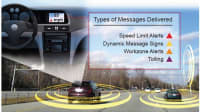
Off-Highway Engineering
Side-Object Detection for OTR Vehicles Displayed at Conexpo 2017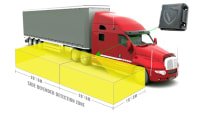
Off-Highway Engineering
Revolutionizing ADAS with Forward-Looking Lidar, Part I
Top Stories
INSIDERManufacturing & Prototyping
 How Airbus is Using w-DED to 3D Print Larger Titanium Airplane Parts
INSIDERManned Systems
 FAA to Replace Aging Network of Ground-Based Radars
NewsTransportation
 CES 2026: Bosch is Ready to Bring AI to Your (Likely ICE-powered) Vehicle
NewsSoftware
 Accelerating Down the Road to Autonomy
EditorialDesign
 DarkSky One Wants to Make the World a Darker Place
INSIDERMaterials
 Can This Self-Healing Composite Make Airplane and Spacecraft Components Last...
Webcasts
Defense
 How Sift's Unified Observability Platform Accelerates Drone Innovation
Automotive
 E/E Architecture Redefined: Building Smarter, Safer, and Scalable...
Power
 Hydrogen Engines Are Heating Up for Heavy Duty
Electronics & Computers
 Advantages of Smart Power Distribution Unit Design for Automotive...
Unmanned Systems
 Quiet, Please: NVH Improvement Opportunities in the Early Design...
