




Denso Joins Driver Distraction Consortium
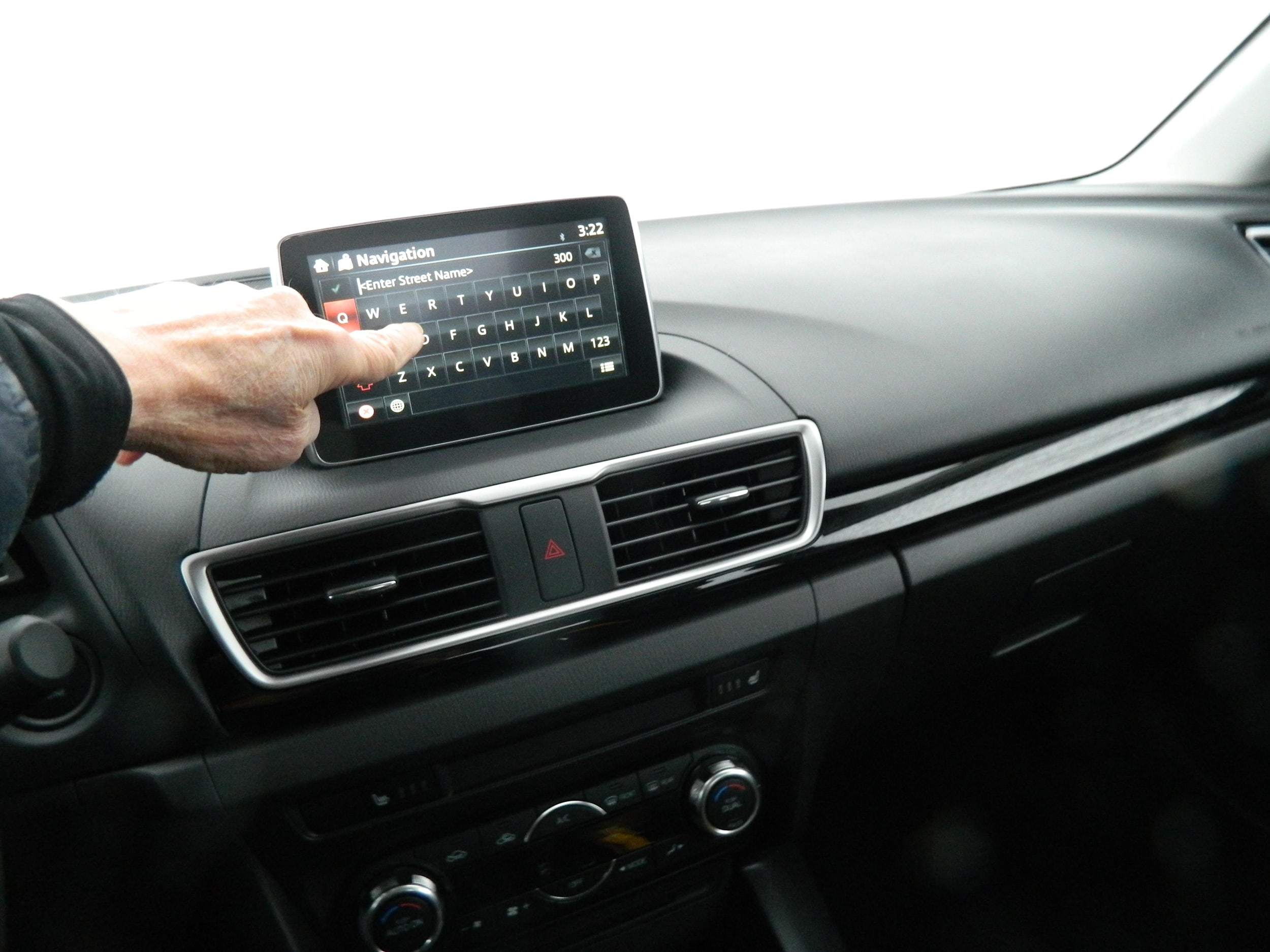
Research into driver distraction has largely been done on a cut-and-try basis to date. A group of researchers comes up with a list of ideas, thinks of ways to put them into hardware, then develops a set of human trials to measure the effects. A new consortium, announced at the North American International Auto Show by Denso, intends to look at the issue from a more basic research viewpoint.
The goal is to produce a "toolkit," a way of evaluating an HMI (human machine interface) for intuitiveness, convenience, and safe usability for a wide demographic range, so a manufacturer can determine not only what works, but for whom (teens, older drivers, tech-oriented vs. not). Denso produces modules, but that's just one part of the picture, explained Doug Patton, Senior Vice President, Engineering Division. That toolkit eventually would lead to hardware, he noted. But each manufacturer has a different level of feature content and sales/driver demographic.
Custom, customizable solutions
So the research likely would will be used differently by the OE members of the consortium (Honda, Subaru, and Jaguar Land Rover), which presents an engineering challenge to suppliers, to provide custom and customizable solutions.
Also in the consortium, and assigned technical leadership roles, are the MIT AgeLab, which focuses on technology needed through a person's lifespan, and Touchstone Evaluations. Touchstone is an automotive science-based firm that is researching driver multi-tasking, attention, and assessment of distractions, with the expectation it will lead to innovation in user interfaces. The consortium is named AHEAD (Advanced Human Factors Evaluator for Automotive Distraction). The car makers will have to pick complementary technologies, while giving car buyers what they want.
"We know drivers want to be connected while driving," Patton said, "but how do we safely give them what they want? We need to evaluate driver workload, but there's no quantifiable and objective metrology (way to measure the workload) model in place." That's the key part of the consortium's task.
Patton said he expects within a year to see useful initial data on the effects of traffic and how the workloads increase and decrease from different types of inputs—visual, auditory, and physical (using touchscreen keypads, gestures, etc.). He views Denso's work from the AHEAD research to be over a four-year period.
Keypad seen fading
He told Automotive Engineering that he sees greater use of voice-activated components, "because not everyone is tech savvy." He added that he sees the keypad as a fading HMI and that various forms of heads-up display are likely to come into wider use.
Although basic research should lead to more universally helpful changes, Denso also points to the several well-publicized U.S. teen driving statistics, led by the one that a teen is involved in an auto accident every 55 s.
The other key statistics are that driving kills three times more teens than any other cause, that a male teen driver is more at risk than a female, and that a mid-teen (16-17 years old) driver's crash risk increases when there are young passengers in the car.
Denso calls it the "Teen Driving Challenge," and said its research team has some technology it believes will help reduce the risks. It will present its developments at the Intelligent Transport Systems Congress later this year.
More From SAE Media Group
Off-Highway Engineering
Displays Add Color to Simplify Operator Tasks
Automotive Engineering
HMI’s Simple Challenge: Control Everything Possible Without Any Difficulty
Off-Highway Engineering
HMIs Offer Something for Everyone
Automotive Engineering
WCX17: Tech Leaders Talk AI, Cyber and Next-Gen HMI
Off-Highway Engineering
Big Data’s Benefits Keep A-Comin’
Automotive Engineering
Securing the Software-Defined Vehicle
Off-Highway Engineering
Addressing Configuration Controls in an Era of Multiple Security Frameworks
Automotive Engineering
Mitsubishi Electric Introduces Advanced HMI
Aerospace Manufacturing and Machining INSIDER
Army Launches CMOSS Prototyping Competition for Computer Chassis and Cards
Automotive Engineering
Flaw Detector
Automotive Engineering
Haptic Feedback for Gesture-Control HMI
Automotive Engineering
Designing and Assessing Vehicle Safety Functions with a Use Case Approach


Automotive Engineering
Development Kit for Gesture Recognition
Automotive Engineering
Harman Readies New Vehicle-Hacker Defense System for 2018
Off-Highway Engineering
Europe’s Blockchain-Based Smart E-Mobility Challenge Will Conclude This May in Germany
Off-Highway Engineering
How Can Engineers Help Ensure the Safety, Reliability of Automated Vehicles?
Aerospace & Defense Tech Briefs
AIA Predicts Flying Air Taxis, Supersonic Air Travel, and Space Industry for 2050
Automotive Engineering
WCX17: Vehicle Connectivity Brings Privacy, Redundancy Issues
Aerospace & Defense Tech Briefs
Korea Airports Corp. Adopts Altibase Data Management with IoT for Airport Traffic Control
Off-Highway Engineering
‘Smart’ Oil Cap Brings Low-Cost Connectivity to Perkins Engines
Automotive Engineering
WCX17: IAV and HPE Showcase Connectivity Via Demo Car
Automotive Engineering
Assuring Data Integrity: Vital for Connected-Vehicle Markets
Off-Highway Engineering
Autocoding Shortens Development Time, Simplifies Validation
Automotive Engineering
SAE 2014 Convergence Preview
Automotive Engineering
Automakers See Possibilities, Limits for Gesture Controls
Automotive Engineering
Vehicle Development Heads into the Cloud
Automotive Engineering
Toyota Ups Funding for Collaborative Safety Research Center
Automotive Engineering
Digital and Reconfigurable Instrument Cluster
Top Stories
INSIDERManufacturing & Prototyping
 How Airbus is Using w-DED to 3D Print Larger Titanium Airplane Parts
INSIDERManned Systems
 FAA to Replace Aging Network of Ground-Based Radars
NewsTransportation
 CES 2026: Bosch is Ready to Bring AI to Your (Likely ICE-powered) Vehicle
NewsSoftware
 Accelerating Down the Road to Autonomy
EditorialDesign
 DarkSky One Wants to Make the World a Darker Place
INSIDERMaterials
 Can This Self-Healing Composite Make Airplane and Spacecraft Components Last...
Webcasts
Defense
 How Sift's Unified Observability Platform Accelerates Drone Innovation
Automotive
 E/E Architecture Redefined: Building Smarter, Safer, and Scalable...
Power
 Hydrogen Engines Are Heating Up for Heavy Duty
Electronics & Computers
 Advantages of Smart Power Distribution Unit Design for Automotive...
Unmanned Systems
 Quiet, Please: NVH Improvement Opportunities in the Early Design...
