




HMIs Offer Something for Everyone

Equipment buyers typically focus on factors like horsepower and lifting capability, but human-machine interfaces may be the most important factor for off-highway vehicle operators. Differentiating these HMIs and customizing them for various models are critical factors during the development process.
Design teams must also figure out how to maintain a consistent look and feel across all the company’s vehicles. Design tools are making it simpler for developers to handle these and other tasks, often by providing a library of software modules that can be inserted to let OEMs quickly create software for common functions so they can focus on the more complex aspects of user interface development.
“Pre-programmed visual elements, which allow for easy customization, are available for use with a multitude of operating parameters on different vehicles,” said Evan Artis, Product Manager, Electronic Controls & Software, at Eaton’s Hydraulics Group. “This allows customers to bypass much of the effort that is typically required on the front-end of application development for visual HMI devices, facilitating rapid deployment.”
Those pre-programmed software modules continue to advance. When design teams get similar requests from a number of customers, they often create software that solves the issues. Some developers are already focusing on over-the-air updating, which will help OEMs reduce the cost of fixing software bugs and update programs in the field.
“Our tools are now enabling over-the-air updates,” said Mike Juran, CEO at Altia, a supplier of UI engineering tools. “This helps OEMs keep the HMIs fresh, improve usability, add features, or fix bugs without needing a recall.”
This ability to alter software is a critical factor for HMI suppliers. They must make it simple for their OEM customers to create HMIs that provide brand recognition and a friendly look and feel.
“The ability to build smart operator interfaces that clearly differentiate the vehicle from the competition is very important for vehicle OEMs,” said Christiana Seethaler, Product Development Director, TTControl. “A customizable logo can be shown during boot-up of the device. Furthermore, the display application can be programmed in a way that allows end-users to adapt HMI parameters such as the menu to individual needs and preferences.”
As it becomes easier to change some parameters after vehicles leave the production line, fleet owners may get into the act. They may add company-specific images or information.
“Large fleet owners like Amazon or WalMart may want to create their own experience for their own drivers,” said Manuela Papadopol, Marketing Director at Elektrobit, which makes HMI design tools. “It wouldn’t be difficult for them to create a specialized HMI that runs on top of the vehicle software.”
More From SAE Media Group
Automotive Engineering
Digital and Reconfigurable Instrument Cluster
Automotive Engineering
HMI’s Simple Challenge: Control Everything Possible Without Any Difficulty
Off-Highway Engineering
Enhanced Traceability for Asset Management
Automotive Engineering
Mid-Air Haptics Evaluation and Prototyping
Automotive Engineering
Mitsubishi Electric Introduces Advanced HMI
Aerospace & Defense Tech Briefs
Electronic Flight Bag Users Forum Focuses on Regulatory, AID, Security, Connectivity, Other Pressing Issues
Off-Highway Engineering
Autocoding Shortens Development Time, Simplifies Validation
Off-Highway Engineering
Displays Add Color to Simplify Operator Tasks
Automotive Engineering
Flaw Detector
Automotive Engineering
Programming-Free LCD User Interface
Automotive Engineering
Development Kit for Gesture Recognition
Off-Highway Engineering
Big Data’s Benefits Keep A-Comin’
Automotive Engineering
OTA Updating Brings Benefits, Challenges
Off-Highway Engineering
Danfoss Introduces Robust Telematics Platform
Aerospace & Defense Tech Briefs
Curtiss-Wright Upgrades AVDU Rugged LCD Touchscreen Display Software for Greater Flexibility, Reliability
Off-Highway Engineering
Real-Time Jobsite Management
Tech Briefs
How Programmable Switches Enable Smarter Display
Off-Highway Engineering
‘Smart’ Oil Cap Brings Low-Cost Connectivity to Perkins Engines
Off-Highway Engineering
Europe’s Blockchain-Based Smart E-Mobility Challenge Will Conclude This May in Germany
Automotive Engineering
Haptic Feedback for Gesture-Control HMI
Automotive Engineering
New AUTOSAR Platform Offers More Freedom for Vehicle Electrical Architectures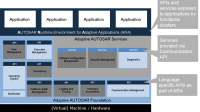
Automotive Engineering
Vehicle Development Heads into the Cloud
Aerospace & Defense Tech Briefs
Automation Streamlines Accreditation to Speed Aerospace and Defense Technology Deployment
Off-Highway Engineering
Hackers Aim to Exploit Vulnerabilities in CVs, Pushing Security to the Forefront
Off-Highway Engineering
International Truck Offers Over-The-Air Programming for 2017 Cummins Engines
Automotive Engineering
Denso Joins Driver Distraction Consortium
Off-Highway Engineering
Customizing, Updating Software Gets Easier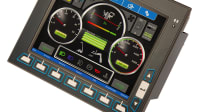
Automotive Engineering
New Open Source Software Simplifies Remote-Access Communications
Aerospace Manufacturing and Machining INSIDER
Army Launches CMOSS Prototyping Competition for Computer Chassis and Cards
Automotive Engineering
Nvidia Partners with AdaCore to Secure Self-Driving Firmware
Top Stories
INSIDERManufacturing & Prototyping
 How Airbus is Using w-DED to 3D Print Larger Titanium Airplane Parts
INSIDERManned Systems
 FAA to Replace Aging Network of Ground-Based Radars
NewsTransportation
 CES 2026: Bosch is Ready to Bring AI to Your (Likely ICE-powered) Vehicle
NewsSoftware
 Accelerating Down the Road to Autonomy
EditorialDesign
 DarkSky One Wants to Make the World a Darker Place
INSIDERMaterials
 Can This Self-Healing Composite Make Airplane and Spacecraft Components Last...
Webcasts
Defense
 How Sift's Unified Observability Platform Accelerates Drone Innovation
Automotive
 E/E Architecture Redefined: Building Smarter, Safer, and Scalable...
Power
 Hydrogen Engines Are Heating Up for Heavy Duty
Electronics & Computers
 Advantages of Smart Power Distribution Unit Design for Automotive...
Unmanned Systems
 Quiet, Please: NVH Improvement Opportunities in the Early Design...
