




FAA Selects Six Sites for UAS Research

After a 10-month selection process involving 25 proposals from 24 states, the U.S. FAA has chosen six unmanned aircraft systems (UAS) research and test site operators across the country. In selecting the six test site operators, the FAA considered geography, climate, location of ground infrastructure, research needs, airspace use, safety, aviation experience, and risk. In totality, these six test applications achieve cross-country geographic and climatic diversity and help the FAA meet its UAS research needs. The six test site operators include: the University of Alaska, State of Nevada, New York’s Griffiss International Airport, North Dakota Department of Commerce, Texas A&M University-Corpus Christi, and Virginia Polytechnic Institute and State University (Virginia Tech). The University of Alaska’s research plan includes the development of a set of standards for unmanned aircraft categories, state monitoring, and navigation. Nevada’s project objectives concentrate on UAS standards and operations as well as operator standards and certification requirements. Griffiss International plans to work on developing test and evaluation as well as verification and validation processes under FAA safety oversight. North Dakota plans to develop UAS airworthiness essential data and validate high reliability link technology. Texas A&M plans to develop system safety requirements for UAS vehicles and operations with a goal of protocols and procedures for airworthiness testing. Virginia Tech plans to conduct UAS failure mode testing and identify and evaluate operational and technical risks areas.
More From SAE Media Group
Aerospace & Defense Tech Briefs
3D Optical Scanner
Aerospace & Defense Tech Briefs
SAE International Launches Aerospace Technology Symposium at Japan Aerospace 2018

Aerospace & Defense Tech Briefs
Designing Quieter Aircraft Via Acoustic Simulation
Aerospace INSIDER
Production Ready B-21 Bomber on Track for First Flight This Year
Aerospace & Defense Tech Briefs
MagniX and AeroTEC to Fly All-Electric ECaravan May 28
Aerospace INSIDER
Reliable Robotics to Provide Aircraft Automation Study for US Air Force
Aerospace & Defense Tech Briefs
General Atomics Moves Toward Global RPA Flight Certification for MQ-9B SkyGuardian
Aerospace & Defense Tech Briefs
Textron Systems, Textron Aviation Defense Demonstrate Simulated Manned-Unmanned Teaming Capability
Aerospace & Defense Tech Briefs
NVision Aids Aircraft Repair Station in Quickly Obtaining FAA Approval
Aerospace & Defense Tech Briefs
Industry Invited to Participate in AeroTech Aerospace and Defense Technical Program
Aerospace & Defense Tech Briefs
ANSYS Will Help Airbus Develop AI-Enabled Flight Controls for the FCAS Program’s Autonomous Wingmen
Aerospace & Defense Tech Briefs
Improving Low-Altitude UAS Navigation
Aerospace & Defense Tech Briefs
Lockheed Martin Brings Fury Closer to Mission Readiness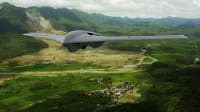
Aerospace & Defense Tech Briefs
Camber to Lead Integration for Lone Star UAS Test Site
Aerospace & Defense Tech Briefs
Air Mobility Innovations Take Center Stage at Aerospace Systems and Technology Conference
Aerospace & Defense Tech Briefs
BlackBird to Purchase 110 All-Electric Bye Aerospace EFlyer Aircraft
Aerospace & Defense Tech Briefs
Rolls-Royce to Work with Airframe Manufacturers, Seek Partners for EVTOL Project
Aerospace Manufacturing and Machining INSIDER
Cable Installation Simulator
Aerospace INSIDER
New Web-Based Software Enables Quick Drone Design
Aerospace & Defense Tech Briefs
Rolls-Royce Optimizes Maintenance, Service, Product Development with IFS Maintenix, Real-Time Data
Aerospace & Defense Tech Briefs
Sensuron Enables Real-Time Structural Health Monitoring Onboard NASA’s X-56 UAV

Aerospace & Defense Tech Briefs
Aerion Taps Siemens’ Xcelerator Portfolio to Enable Next-Generation Global Transportation Networks
Aerospace & Defense Tech Briefs
SES to Outfit Sikorsky UH-60A Black Hawk Helicopters with Unitech Composites Weapons Pylons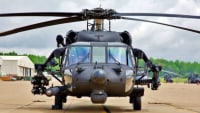
Aerospace & Defense Tech Briefs
Airlines for America and SAE International Recognize Lufthansa Technik, 3D.aero for Nondestructive Testing Innovation
Aerospace & Defense Tech Briefs
Personal Air Transport Drives Need for Advanced VTOL Technologies, Standards
Aerospace & Defense Tech Briefs
NASA to Test Quiet Thump Supersonic Propulsion Technique, Measure Sound Levels and Community Response
Aerospace & Defense Tech Briefs
Unleashing AI in Aviation Will Accelerate Move to Zero-Pilot Cargo and Passenger Aircraft
Top Stories
INSIDERManufacturing & Prototyping
 How Airbus is Using w-DED to 3D Print Larger Titanium Airplane Parts
INSIDERManned Systems
 FAA to Replace Aging Network of Ground-Based Radars
NewsTransportation
 CES 2026: Bosch is Ready to Bring AI to Your (Likely ICE-powered) Vehicle
NewsSoftware
 Accelerating Down the Road to Autonomy
EditorialDesign
 DarkSky One Wants to Make the World a Darker Place
INSIDERMaterials
 Can This Self-Healing Composite Make Airplane and Spacecraft Components Last...
Webcasts
Defense
 How Sift's Unified Observability Platform Accelerates Drone Innovation
Automotive
 E/E Architecture Redefined: Building Smarter, Safer, and Scalable...
Power
 Hydrogen Engines Are Heating Up for Heavy Duty
Electronics & Computers
 Advantages of Smart Power Distribution Unit Design for Automotive...
Unmanned Systems
 Quiet, Please: NVH Improvement Opportunities in the Early Design...
