




Unlocking the Digital Potential in Composite Manufacturing

The University of Sheffield Advanced Manufacturing Research Centre (AMRC) has worked with the National Composites Centre (NCC), Cranfield University and aerospace engineering specialists, Meggitt, to develop and demonstrate a novel sensor technology for capturing data during liquid resin processes. The sensor system is a significant step toward the digitalization of resin transfer molding (RTM) by providing accurate data capture of resin infusion. This can be used to validate computer simulations of the process, enabling industry to reduce the number of initial experimental trials, facilitate a ‘right first time’ approach, crucially reducing the time and cost spent manufacturing components.
Research into dielectric sensors originated at Cranfield University before it was further developed at the NCC, a world-leading composites research center, through its Technology Pull-Through (TPT) program; it was then applied in industry by Meggitt. The TPT program partners with universities to evaluate and mature their low-TRL research ready for industry adoption.
Conducting trials of the sensors at typical aerospace material processing conditions of 7 Bar and 180°C, the NCC showed the sensors could precisely detect resin as it flowed inside the preform, as well as its cure progression – both properties invisible as the process happens. Furthermore, the sensors provided no adverse effects on either the process or part quality.
Upon hearing of the successful use of the sensors in the NCC TPT programme, Meggitt approached the NCC and the AMRC to use the technology in an ATI-funded project the two High Value Manufacturing Catapult centers were conducting together to produce industrial scale aircraft components. The NCC and AMRC teams worked alongside Meggitt to successfully integrate the sensors into a closed RTM tool, with no modifications to the tool being required. In trials, the sensors successfully captured data on the resin flow progression and degree of cure, agreeing with results from previous reports and theoretical models.
Dr Peter Karapapas, principal engineer at Meggitt, said: “We were interested in applying this sensor technology as a way of building in a smart function to the RTM process for monitoring part production. This is with the aim of minimizing the time and effort required in post-production NDT and inspection on future components as we move towards digital manufacturing. The sensors were robust and effective during the demonstration on the large-scale composite housing part designed for a civil aviation jet engine air-oil heat exchanger.”
More From SAE Media Group
Aerospace Manufacturing and Machining INSIDER
Can This Self-Healing Composite Make Airplane and Spacecraft Components Last for Centuries?
Aerospace & Defense Tech Briefs
Next Generation Carbon Fiber Composites 3D Printer for Hypersonic Research


Aerospace INSIDER
Researchers Turn to Carbon Nanotubes to Build Better Heat Shields
Electronics & Sensors INSIDER
Piezo Composites with Carbon Fibers for Motion Sensors
Aerospace & Defense Tech Briefs
‘Nanostitches’ Enable Lighter and Tougher Composite Materials
Electronics & Sensors INSIDER
An Electronic Fiber for Stretchable Sensing
Tech Briefs
Thin Heat Shield for Superfast Aircraft
Aerospace & Defense Tech Briefs
Quantitative Diagnostics of Multilayered Composite Structures with Ultrasonic Guided Waves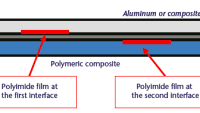
Aerospace INSIDER
Non-Contact Method Measures Aircraft Internal Stresses

Robotics & Automation INSIDER
A New Way to Build Soft Robots That Can Walk on Water
Aerospace & Defense Tech Briefs
Infusing Lightweight Composite Structures
Tech Briefs
Conductive Carbon Fiber Polymer Composite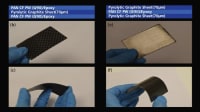
Aerospace Manufacturing and Machining INSIDER
How Airbus is Using w-DED to 3D Print Larger Titanium Airplane Parts
Aerospace INSIDER
Tests Show How Plastic Parts Deform During Flight
Aerospace INSIDER
A New Approach to 3D Printing Tool Recycling for Aerospace Manufacturers
Aerospace & Defense Tech Briefs
Aerospace Production: Overcoming Challenges in Composite Machining


Aerospace & Defense Tech Briefs
Unlocking the Potential of 3D-Printed Polymers in Aerospace and Defense
Electronics & Sensors INSIDER
Researchers Develop Recyclable, Healable Electronics
Tech Briefs
Moisture Sensor Based on NASA Humidity Sensor
Aerospace & Defense Tech Briefs
Breaking Bonds
Tech Briefs
Calibration System for Automated Fiber Placement
Automotive Engineering
Linking Embroidery and Carbon Fiber to save Weight and Cost
Top Stories
NewsSensors/Data Acquisition
 Microvision Aquires Luminar, Plans Relationship Restoration, Multi-industry Push
INSIDERRF & Microwave Electronics
 A Next Generation Helmet System for Navy Pilots
INSIDERWeapons Systems
 New Raytheon and Lockheed Martin Agreements Expand Missile Defense Production
NewsAutomotive
 Ford Announces 48-Volt Architecture for Future Electric Truck
INSIDERAerospace
 Active Strake System Cuts Cruise Drag, Boosts Flight Efficiency
ArticlesTransportation

Webcasts
Aerospace
 Cooling a New Generation of Aerospace and Defense Embedded...
Energy
 Battery Abuse Testing: Pushing to Failure
Power
 A FREE Two-Day Event Dedicated to Connected Mobility
Automotive
 Quiet, Please: NVH Improvement Opportunities in the Early Design Cycle
Electronics & Computers
 Advantages of Smart Power Distribution Unit Design for Automotive &...
Unmanned Systems
 Sesame Solar's Nanogrid Tech Promises Major Gains in Drone Endurance