




Design Enables Safe Storage of Lithium Ions
This technology charges lithium batteries faster and reduces the risk of device explosions.

Cellphone batteries often heat up and at times can burst into flames. In most cases, the cause can be traced back to lithium batteries. Despite providing long-lasting electric currents that can keep devices powered up, lithium batteries can internally short-circuit, heating up the device.
Researchers have developed a technology that can prevent lithium batteries from heating and failing. The carbon nanotube design for the battery’s conductive plate (the anode) enables the safe storage of a large quantity of lithium ions, thereby reducing the risk of fire. Further, the new anode architecture will help lithium batteries charge faster than current commercially available batteries by preventing lithium from accumulating outside the anode, which over time can cause unintended contact between the contents of the battery’s two compartments — one of the major causes of device explosions.
When lithium batteries are in use, charged particles move between the battery’s two compartments. Electrons given up by lithium atoms move from one side of the battery to the other; lithium ions travel the other direction. When charging the battery, lithium ions and electrons go back to their original compartments. The property of the anode, or the electrical conductor that houses lithium ions within the battery, plays a decisive role in the battery’s properties. A commonly used anode material is graphite. In these anodes, lithium ions are inserted between layers of graphite; however, this design limits the amount of lithium ions that can be stored within the anode and even requires more energy to pull the ions out of the graphite during charging.
Sometimes, lithium ions do not evenly deposit on the anode. Instead, they accumulate on the anode’s surface in chunks, forming tree-like structures called dendrites. Over time, the dendrites grow and eventually pierce the material that separates the battery’s two compartments. This breach causes the battery to short-circuit and can set the device ablaze. Growing dendrites also affect the battery’s performance by consuming lithium ions, rendering them unavailable for generating a current.
Another anode design involves using pure lithium metal instead of graphite. Compared to graphite anodes, those with lithium metal have a much higher energy content per unit mass or energy density. But they too can fail in the same catastrophic way due to the formation of dendrites.
To address this problem, the researchers designed anodes using highly conductive, lightweight carbon nanotubes. These carbon nanotube scaffolds contain spaces or pores for lithium ions to enter and deposit; however, these structures do not bind to lithium ions favorably. The team made two other carbon nanotube anodes with slightly different surface chemistry — one laced with an abundance of molecular groups that can bind to lithium ions and another that had the same molecular groups but in a smaller quantity. With these anodes, they built batteries to test the propensity to form dendrites.
As expected, the researchers found that scaffolds made with just carbon nano-tubes did not bind to lithium ions well. Consequently, there was almost no dendrite formation but the battery’s ability to produce large currents was also compromised. Scaffolds with an excess of binding molecules formed many dendrites, shortening the battery’s lifetime.
The carbon nanotube anodes with an optimum quantity of the binding molecules prevented the formation of dendrites. In addition, a vast quantity of lithium ions could bind and spread along the scaffold’s surface, thereby boosting the battery’s ability to produce large, sustained currents.
The anodes handle currents five times more than commercially available lithium batteries; particularly useful for large-scale batteries, such as those used in electric cars, that require quick charging.
For more information, contact Amy Halbert at
More From SAE Media Group
Battery Technology
Hybrid Membrane Doubles the Lifetime of Rechargeable Batteries
Battery Technology
New Materials Move Li-Ion Batteries Toward the Solid-State Endgame
Tech Briefs
Using Silicon for Battery Anodes
Battery Technology
Semi-Liquid Metal Anode
Battery Technology
Nanostructured Alloy for Battery Anodes

Tech Briefs
Lithium Metal Battery Allows Cold Charging
Automotive Engineering
New Materials Move Li-Ion Batteries Toward the Solid-State Endgame
Battery Technology
Spreadable Way to Stabilize Solid-State Batteries
Battery & Electrification Technology
New Priming Method for Improving Battery Lifecycle



Battery & Electrification Technology
Niobium: Magic Metal for Battery Anodes?
Tech Briefs
Stable, Efficient, Anode-Free Sodium Battery
Tech Briefs
Long-Life Lithium-Metal Battery

Tech Briefs
Coating Extends Lithium Metal Battery Life
Battery & Electrification Technology
Manufacturing Advances in Solid-State Batteries
Tech Briefs
Anode Material for Safer Fast-Charging Batteries
Battery & Electrification Technology
Designing Safer, Higher-Performance Lithium Batteries
Battery & Electrification Technology
Technique Extends Next-Generation Lithium Metal Batteries


Battery Technology
Multipurpose Batteries Make it Easier to Get Around on Mars
Battery Technology
Cobalt-Free Cathodes for Lithium-Ion Batteries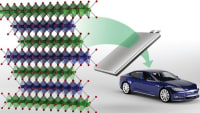
Battery Technology
Mapping Performance Variations to See How Lithium-Metal Batteries Fail
Automotive Engineering
Niobium: Magic Metal for Battery Anodes?
Tech Briefs
Stable, Efficient, Anode-Free Sodium Battery
Top Stories
INSIDERDefense
 New Raytheon and Lockheed Martin Agreements Expand Missile Defense Production
NewsAutomotive
 Ford Announces 48-Volt Architecture for Future Electric Truck
INSIDERManufacturing & Prototyping
 Active Strake System Cuts Cruise Drag, Boosts Flight Efficiency
ArticlesTransportation
 Accelerating Down the Road to Autonomy
INSIDERMaterials
 How Airbus is Using w-DED to 3D Print Larger Titanium Airplane Parts
Road ReadyTransportation

Webcasts
Electronics & Computers
 Cooling a New Generation of Aerospace and Defense Embedded...
Power
 Battery Abuse Testing: Pushing to Failure
Connectivity
 A FREE Two-Day Event Dedicated to Connected Mobility
Automotive
 Quiet, Please: NVH Improvement Opportunities in the Early Design Cycle
Transportation
 Advantages of Smart Power Distribution Unit Design for Automotive &...
Aerospace
 Sesame Solar's Nanogrid Tech Promises Major Gains in Drone Endurance
Similar Stories
NewsEnergy
 New Battery Electrolyte May Boost Performance of EVs
BriefsEnergy
 Internal Short Circuit (ISC) Device Helps Improve Lithium-Ion Battery Design
BriefsMaterials
 Using Silicon for Battery Anodes
VideosSensors/Data Acquisition
 Manufacturing Nano-Powder-Based Ceramic for Fireproof Lithium-ion Batteries
Q&ANanotechnology
 Q&A: Brookhaven's Dr. Yimei Zhu Observes How Lithium Moves Inside Batteries