




Fuel Cell Boosts Electric-Powered Drones and Aircraft
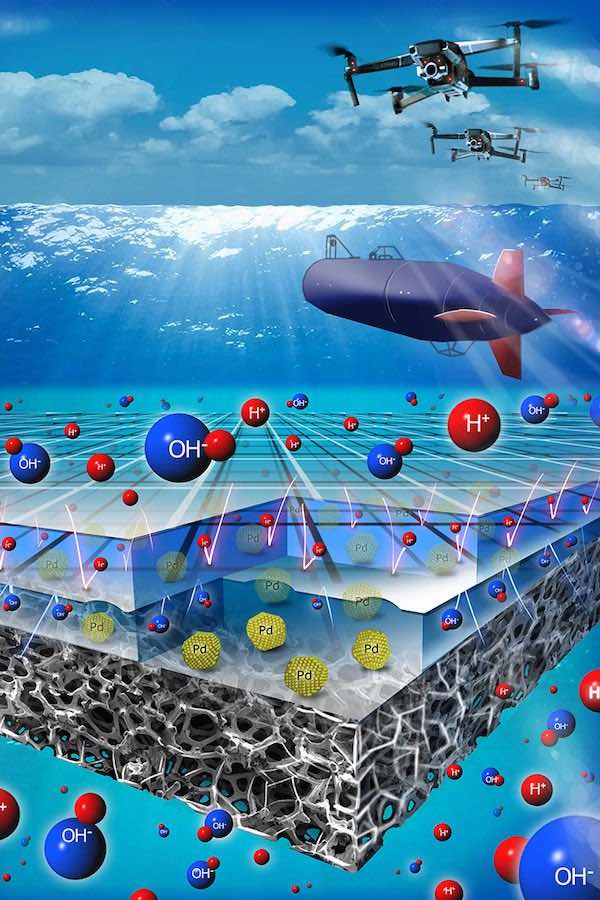
Engineers developed a direct borohydride fuel cell that operates at double the voltage of today’s commercial fuel cells. Using a pH-gradient-enabled microscale bipolar interface (PMBI), the fuel cell can be used in high-power applications such as drone flight, and eventually electric aircraft.
The fuel cell uses an acidic electrolyte at one electrode and an alkaline electrolyte at the other electrode. The PMBI keeps the acid and alkali from mixing, forming a sharp pH gradient and enabling the successful operation of the system.
More From SAE Media Group
Tech Briefs
Fuel Cell Boosts Electric-Powered Vehicles


Aerospace & Defense Tech Briefs
Engineering an Aircraft Hydrogen Powertrain

Aerospace INSIDER
NASA Uses Electric Propulsion in Experimental Plane
Aerospace INSIDER
Soft Magnetic Materials Are Key to Electric Aircraft
NASA Spinoff
Battery Innovations Power All-Electric Aircraft
Aerospace & Defense Tech Briefs
Design and Analysis of a Small Unmanned Aerial System (UAS) Power Distribution System

Aerospace Manufacturing and Machining INSIDER
Amprius Eyes Mass Production for Next Generation Electric Aircraft Battery
Aerospace & Defense Tech Briefs
Small UAV Satcom System
Aerospace & Defense Tech Briefs
The Future of Aircraft Electrification
Tech Briefs
Making Hydrogen Power a Practical Proposition
Tech Briefs
High-Power Direct Borohydride Fuel Cells

Aerospace INSIDER
NASA, GE Complete Historic Hybrid-Electric Propulsion Tests
Aerospace Manufacturing and Machining INSIDER
Small Low-Cost Engines for Drones and Collaborative Combat Aircraft
Aerospace INSIDER
Airbus Preparing to Fly New Prototype eVTOL This Year

Aerospace INSIDER
NASA Creates a Better Electric Aircraft Battery
Tech Briefs
How Jet Engine Flow Can Be Controlled Optically



Aerospace INSIDER
Stall Warning Monitor Keeps Turbine Engines Healthy
Aerospace & Defense Tech Briefs
Designing Connectivity Solutions for an Electric Aircraft Future
Aerospace INSIDER
Honeywell Develops Cooling System Upgrade for F-35 Engine
Aerospace INSIDER
Sweden Taps GKN, Saab to Design Concepts for Future Fighter Jet
Top Stories
INSIDERManufacturing & Prototyping
 How Airbus is Using w-DED to 3D Print Larger Titanium Airplane Parts
INSIDERManned Systems
 FAA to Replace Aging Network of Ground-Based Radars
NewsTransportation
 CES 2026: Bosch is Ready to Bring AI to Your (Likely ICE-powered) Vehicle
NewsSoftware
 Accelerating Down the Road to Autonomy
EditorialDesign
 DarkSky One Wants to Make the World a Darker Place
INSIDERMaterials
 Can This Self-Healing Composite Make Airplane and Spacecraft Components Last...
Webcasts
Defense
 How Sift's Unified Observability Platform Accelerates Drone Innovation
Automotive
 E/E Architecture Redefined: Building Smarter, Safer, and Scalable...
Power
 Hydrogen Engines Are Heating Up for Heavy Duty
Electronics & Computers
 Advantages of Smart Power Distribution Unit Design for Automotive...
Unmanned Systems
 Quiet, Please: NVH Improvement Opportunities in the Early Design...
